
Basal Rate: What It Is and How It Affects Diabetes Management
When you have diabetes, your body doesn’t make enough insulin—or doesn’t use it well. That’s where basal rate, the steady, low dose of insulin delivered throughout the day to manage blood sugar between meals and while sleeping. Also known as background insulin, it keeps your glucose from creeping up when you’re not eating. Think of it like a slow drip of insulin that mimics what a healthy pancreas would do naturally. Without it, your liver keeps releasing sugar into your bloodstream, and your blood sugar rises—even if you haven’t eaten anything.
Basal rate isn’t the same as bolus insulin, which you take to cover meals. It’s the quiet, constant part of your treatment. People using insulin pumps set their basal rate based on their body’s needs, which can change by time of day. For example, many need more insulin overnight due to the dawn phenomenon, when hormones naturally spike blood sugar before waking. Others might need less during exercise or illness. If your basal rate is too high, you risk low blood sugar. Too low, and your numbers climb without a clear reason. It’s not guesswork—it’s something your care team fine-tunes using data from your glucose monitor over days or weeks.
Basal rate is also critical for those on multiple daily injections. Even if you don’t use a pump, long-acting insulins like glargine or detemir are meant to act as your basal insulin. Getting this right affects everything: your A1C, your energy levels, and your risk of long-term complications. It’s not just about numbers on a screen—it’s about feeling steady, not crashing or soaring.
Related concepts like insulin therapy, the planned use of insulin to control blood sugar in diabetes, and insulin pump, a device that delivers insulin continuously through a small tube inserted under the skin are built around this foundation. You can’t manage your bolus doses well if your basal rate is off. And if you’re on a pump, a misconfigured basal rate can make all your meal corrections useless.
What you’ll find in the posts below are real-world stories and science-backed tips about how basal rate interacts with other diabetes treatments. You’ll see how it connects to insulin combinations, hypoglycemia risks, and even drug interactions that can throw off your numbers. Whether you’re adjusting your pump settings, switching insulins, or trying to understand why your fasting glucose is still high, the answers start with your basal rate. This isn’t theoretical—it’s daily life for millions managing diabetes. Let’s get you the clarity you need to make it work.
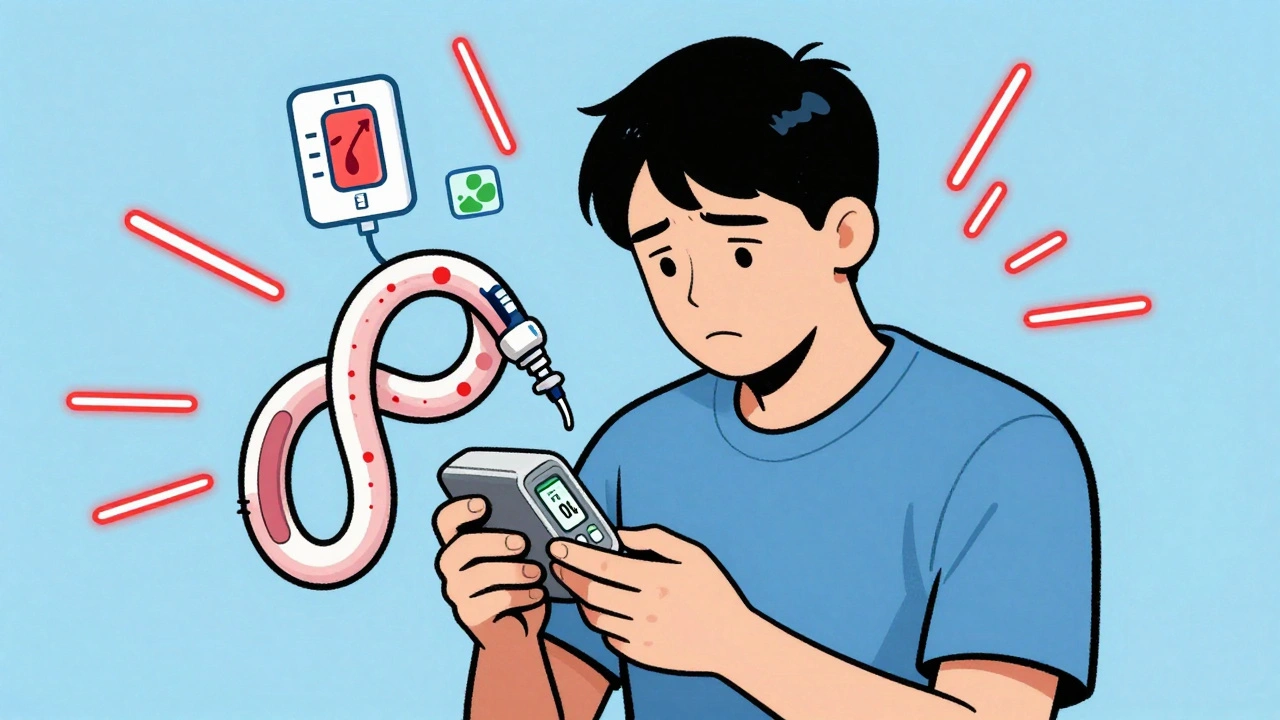
Continuous Subcutaneous Insulin Infusion: Pump Settings and Safety Guide
Learn how to set up and safely use an insulin pump with accurate basal rates, bolus calculations, site care, and emergency protocols. Essential for anyone using continuous subcutaneous insulin infusion therapy.