
When a patient skips doses because they can't afford their pills, it's not just a personal struggle - it's a systemic failure that costs the entire healthcare system billions. The link between generic drug prices and patient adherence is one of the clearest, most data-backed relationships in health economics. Lower out-of-pocket costs for generic medications don't just make pills more affordable - they save lives, reduce hospitalizations, and shrink the overall bill for care.
Why Cost Stops People From Taking Their Medicine
Every year, millions of Americans skip, cut, or delay their prescriptions because of cost. A 2023 JAMA Network Open survey of over 2,100 adults found that 32.7% admitted to not filling a prescription, taking less than prescribed, or using someone else’s medication to save money. That’s more than one in three people. For many, the choice isn’t between health and laziness - it’s between medicine and rent, food, or gas. The numbers don’t lie. Research shows that for every $10 increase in a patient’s out-of-pocket cost for a medication, adherence drops by 2% to 4%. This isn’t a small effect. For drugs like GLP-1 agonists used to treat diabetes, each $10 rise in cost leads to a 3.7% drop in adherence - and a 5.2% increase in emergency room visits. That’s not just a bad day for the patient. It’s a spike in hospital bills, longer recovery times, and avoidable complications.Generics Aren’t Just Cheaper - They Work Just as Well
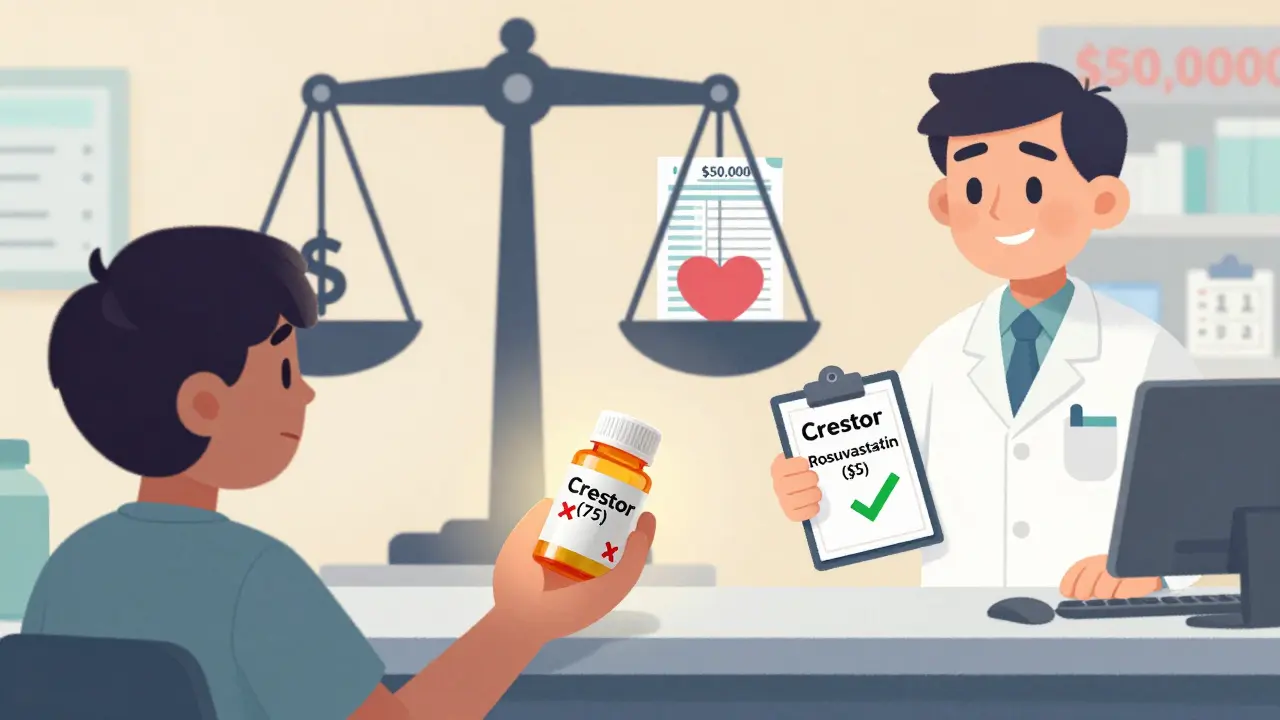
The FDA requires generic drugs to have the same active ingredient, dosage, strength, and route of administration as the brand-name version. They must also be bioequivalent, meaning they deliver the same amount of medicine into the bloodstream within 80-125% of the brand drug’s levels. In plain terms: if a brand-name pill works, its generic twin works just as well. Yet generics cost 80-85% less. A statin like brand-name Crestor might cost $75 per month with a copay. The generic version, rosuvastatin, can be as low as $5. That’s not a marketing trick. That’s a real, measurable difference in what patients can afford. Studies prove this gap matters. In a 2012 study of Medicare Part D patients, researchers found that when atorvastatin and rosuvastatin were moved from a higher-cost tier to the lowest tier, adherence jumped by 5.9%. That’s not a marginal improvement - that’s hundreds of thousands of people finally taking their heart medication consistently. Another study on breast cancer drugs showed that patients on generics had 73.1% adherence compared to 68.4% for those on brand-name versions - and far fewer people stopped treatment altogether.The Tier System Is a Hidden Barrier
Insurance plans use tiered formularies to control costs, but they often make adherence harder. A typical structure might look like this:- Tier 1 (Generic): $5-$10 copay
- Tier 2 (Preferred Brand): $30-$50 copay
- Tier 3 (Non-Preferred Brand): $70-$100+ copay
The Ripple Effect: Fewer Hospital Visits, Lower Costs
When patients take their meds as prescribed, the system saves money. A 2011 study found that adherent patients had 15-20% fewer hospitalizations. That’s not just a win for insurance companies - it’s a win for families, employers, and public health. Medication non-adherence is estimated to cause up to 100,000 preventable deaths each year in the U.S. and generate $100-$300 billion in avoidable healthcare spending. That’s more than the entire annual budget of many U.S. states. And it’s mostly preventable. Take diabetes. If a patient skips their metformin or insulin, their blood sugar rises. That leads to nerve damage, kidney failure, or amputations. Each of those outcomes costs tens of thousands of dollars. But the daily cost of the pill? Maybe $5. The math is simple: pay $5 now, or pay $50,000 later.What’s Changing - And What’s Coming
The Inflation Reduction Act of 2022 capped insulin costs at $35 per month for Medicare beneficiaries. That alone is expected to improve adherence for hundreds of thousands of people. Starting in 2025, the annual out-of-pocket cap for Medicare Part D will be $2,000 - a massive shift from the previous system where patients paid 5% of costs after hitting a high threshold. The FDA’s Generic Drug User Fee Amendments (GDUFA III) are funding $1.1 billion to speed up approval of new generics. By 2027, over 1,500 new generic drugs are expected to hit the market. More generics means more competition, which means more price drops. Tools like GoodRx and SingleCare are also helping patients compare prices across pharmacies. A pill that costs $40 at one pharmacy might be $7 at another. Many people don’t even know this is possible - and they shouldn’t have to hunt for it.Why This Matters Beyond the U.S.
Americans pay 256% more for brand-name drugs than people in other wealthy countries like Australia, Canada, Germany, or the UK. That’s not because we’re sicker. It’s because our system lets drug companies set prices without limits. In Australia - where drug prices are regulated - a generic statin might cost $5 AUD (about $3.30 USD) with no copay for concession cardholders. Adherence rates there are consistently higher than in the U.S. Not because Australians are more disciplined - because the cost doesn’t force them to choose.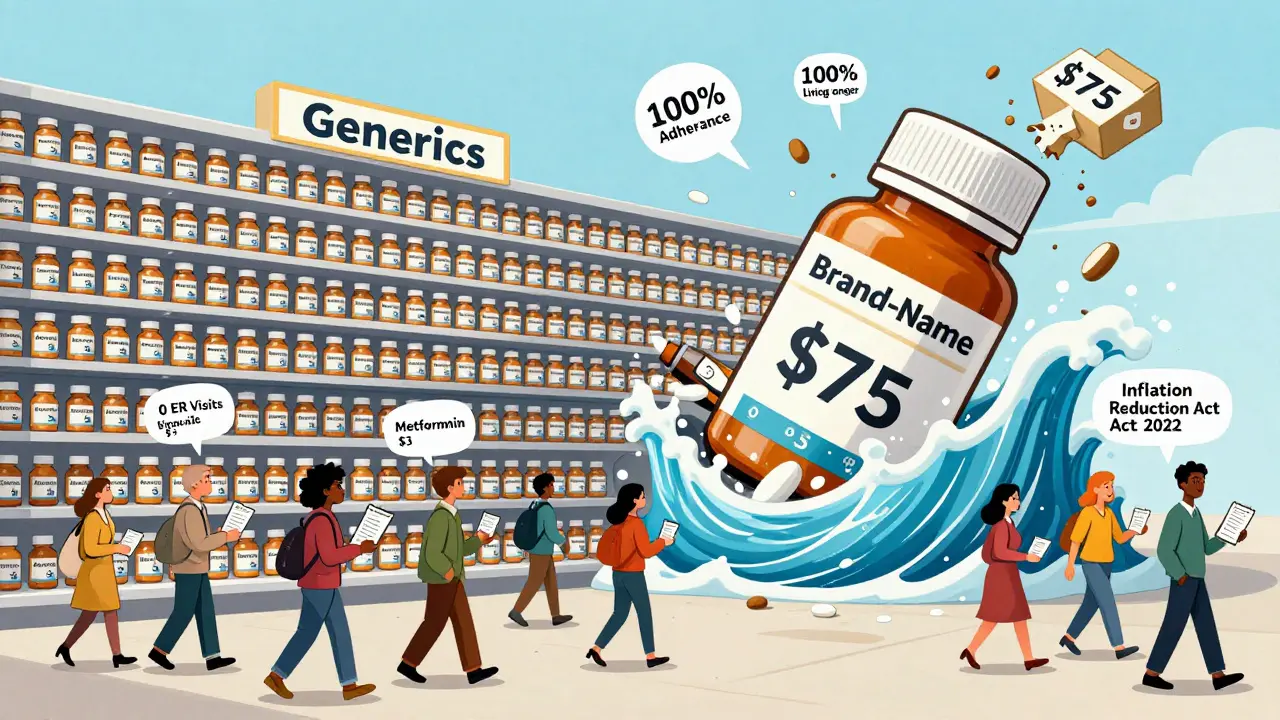
What Patients Can Do Right Now
If you’re struggling to afford your meds:- Ask if a generic version exists - even if your doctor didn’t suggest it.
- Use GoodRx or SingleCare to compare prices at nearby pharmacies.
- Ask your pharmacy if they have a discount program - many do.
- Request a 90-day supply - it’s often cheaper per pill than a 30-day refill.
- Call your insurance and ask why your drug is in a high tier. Ask if there’s a therapeutic alternative.
What Providers Can Do
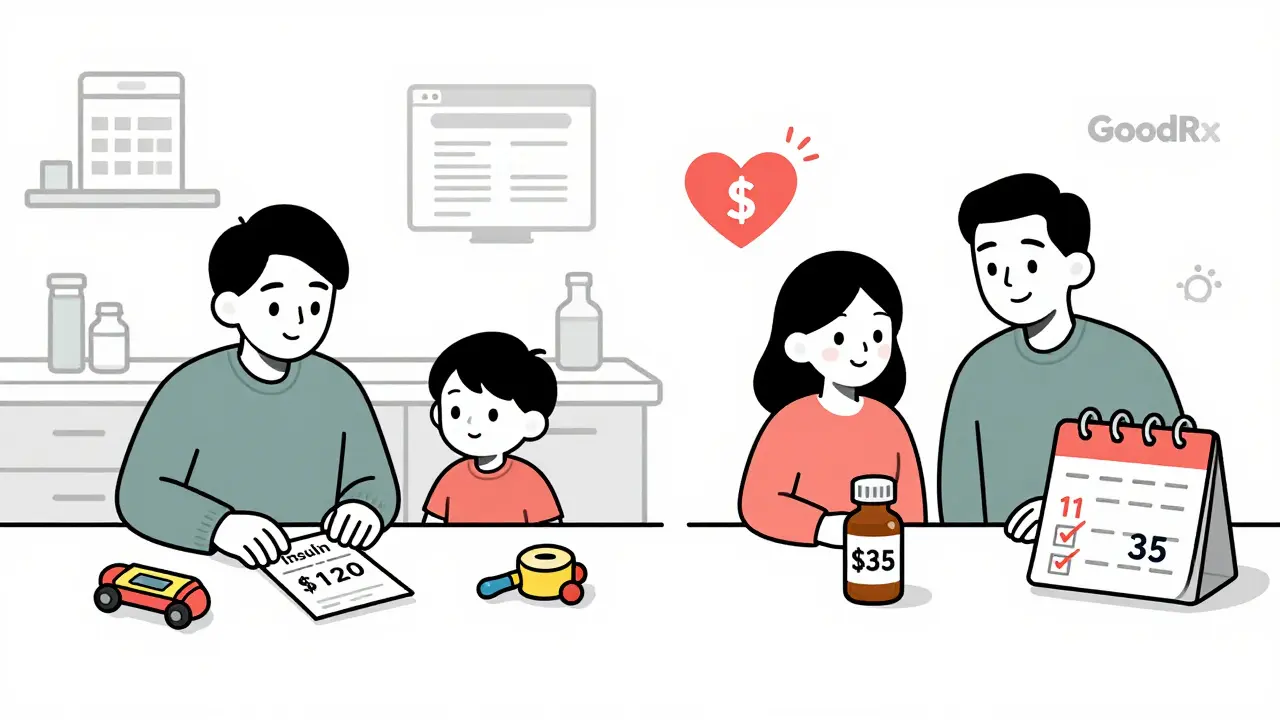
Doctors and pharmacists need to stop treating cost as a private issue. Ask patients: “Have you ever skipped a dose because of cost?” - and mean it. Studies show that when providers ask, adherence improves. Patients want help. They just need someone to ask. Integrating real-time cost tools into EHRs isn’t a luxury - it’s a necessity. If a doctor writes a prescription for a $120 drug when a $5 generic works just as well, they’re not just prescribing medicine - they’re prescribing financial risk.Final Thought: Price Isn’t Just a Number - It’s a Health Decision
Lower generic prices don’t just make pills cheaper. They make health possible. When someone can afford their medication, they’re more likely to stay out of the hospital, keep working, care for their family, and live longer. The data is overwhelming. The solutions are clear. The only question left is: why are we still waiting?Are generic drugs really as effective as brand-name drugs?
Yes. The FDA requires generic drugs to have the same active ingredient, strength, dosage form, and route of administration as the brand-name version. They must also be bioequivalent - meaning they deliver the same amount of medicine into the bloodstream within 80-125% of the brand drug’s levels. Thousands of studies confirm that generics perform just as well in real-world use.
Why do some people still prefer brand-name drugs?
Some people believe brand-name drugs work better due to marketing, personal experience, or confusion about how generics are made. Others may have had a bad reaction to an earlier generic version - but that’s often due to inactive ingredients, not the active drug. Switching to a different generic manufacturer can help. In most cases, the therapeutic outcome is identical.
How much can I save by switching to a generic?
On average, patients save 80-85% by switching from brand-name to generic drugs. For example, a brand-name statin might cost $75/month with a copay, while the generic version costs $5-$10. For chronic medications taken long-term, that’s hundreds - sometimes thousands - of dollars saved per year.
Can insurance companies force me to use a generic?
Insurance plans can require you to try a generic first before covering the brand-name version - this is called “step therapy.” But your doctor can request an exception if they believe the brand is medically necessary. Always ask your pharmacist or insurer if a generic is required - and if you can appeal the decision.
What if I can’t afford even the generic?
Many pharmaceutical companies offer patient assistance programs that provide free or low-cost medications to those who qualify. Nonprofits like NeedyMeds and RxAssist help people find these programs. Also, ask your pharmacy about discount cards - GoodRx, SingleCare, and others often lower prices even further. Never assume you can’t afford it - there are often options you don’t know about.


10 Comments
Let’s cut the crap: if you’re still pushing brand-name drugs when generics work just as well, you’re not a doctor-you’re a middleman. I’ve seen patients skip insulin because their copay was $90. Then they show up in the ER with DKA. The system’s broken. Generic statins cost $5. Brand? $75. The math isn’t hard. Stop pretending this is about quality-it’s about profit margins.
And don’t give me that ‘some people react differently’ nonsense. If it’s bioequivalent, it’s bioequivalent. The FDA doesn’t lie. If your patient had a bad reaction, it was probably the filler, not the drug. Switch manufacturers. Problem solved.
I used to skip my blood pressure med because it cost $40-I’d rather eat than take a pill. Then my pharmacist handed me a GoodRx coupon and said ‘try this.’ Generic was $3. I’ve been on it for 14 months. No side effects. No crashes. Just… alive.
Doctors don’t ask. Pharmacies don’t explain. We just suffer in silence until we can’t anymore. This isn’t complicated. Make it cheap. Make it clear. Make it easy.
Oh wow. Another ‘generics are fine’ lecture. Tell that to the guy who switched from brand-name Plavix and had a stroke. Or the one whose seizure meds didn’t ‘work’ after switching. Yeah, sure, 99% of the time it’s fine. But when it’s not? You’re gambling with someone’s life.
And don’t get me started on how Big Pharma and the FDA collude to approve generics with inconsistent fillers. I’ve seen batches that crumble in your hand. You think that’s normal? It’s not. It’s negligence dressed up as savings.
Here’s the truth nobody wants to admit: we’re not saving money by pushing generics-we’re just shifting the burden. Who pays for the ER visits when people skip meds? Taxpayers. Who pays for the long-term dialysis? Taxpayers. Who pays for the lost productivity? Taxpayers.
So why not just make drugs cheap upfront? Why let drug companies gouge us for 15 years, then act shocked when people can’t afford them? This isn’t a healthcare issue. It’s a moral failure. And we’re all complicit.
My mom’s on 7 meds. 6 are generics. She’s 78. No hospitalizations in 3 years. She doesn’t know what ‘bioequivalent’ means. She just knows she can afford to take them. That’s all that matters.
Stop overcomplicating it. If it works. If it’s safe. If it’s cheaper. Use it. End of story.
In India we see this every day. A man with diabetes pays 10 rupees for metformin. He takes it. He works. He feeds his kids. No one talks about bioequivalence. No one checks FDA reports. They just know if the pill stops the shaking, it’s good enough.
Maybe we’re missing the point. It’s not about science. It’s about dignity. When you can afford to live, you choose life. Not because you’re smart. Because you’re human.
Who really benefits from these ‘cost-saving’ policies? Big Pharmacy. The insurers. The PBMs. The same people who lobbied to block Medicare from negotiating prices. The same people who let generics sit on shelves for years while they patent minor changes to brand drugs.
Generics aren’t the solution. They’re the distraction. The real fix? Single-payer. Price controls. No more patents on life-saving drugs. Until then, we’re just rearranging deck chairs on the Titanic.
My cousin took a generic for her thyroid and ended up in the hospital. Her TSH went wild. They said ‘it’s fine’ but she was dizzy for weeks. Turns out the filler had gluten. She’s celiac.
So yeah, generics are ‘the same’-except when they’re not. And no one tells you. No one checks. No one apologizes. Just ‘oh well, try another batch.’
That’s not healthcare. That’s Russian roulette with your endocrine system.
It is important to recognize that while the data presented is compelling, the human element must not be overlooked. Patient adherence is influenced by a complex interplay of socioeconomic, psychological, and cultural factors. While cost is a significant barrier, it is not the only one.
Furthermore, the assertion that generics are universally interchangeable must be tempered with clinical nuance. While bioequivalence is established under controlled conditions, real-world variability in absorption, patient metabolism, and comorbid conditions may necessitate individualized approaches.
Thus, while promoting access to affordable medications is a laudable goal, it must be done in conjunction with comprehensive patient education and provider support-not merely as a cost-cutting measure.
As a healthcare provider, I’ve seen firsthand how a $5 generic can mean the difference between a patient managing their condition and ending up on a ventilator. I ask every patient: ‘Have you ever skipped a dose because of cost?’ I don’t ask because I’m curious. I ask because I need to fix it.
And when they say yes? I write the script for the generic. I hand them a GoodRx card. I call the pharmacy. I don’t wait for them to figure it out. Because if I don’t, who will?
Policy changes matter. But right now, in this exam room, I have power. I use it. Not because I’m noble. Because it’s my job.