
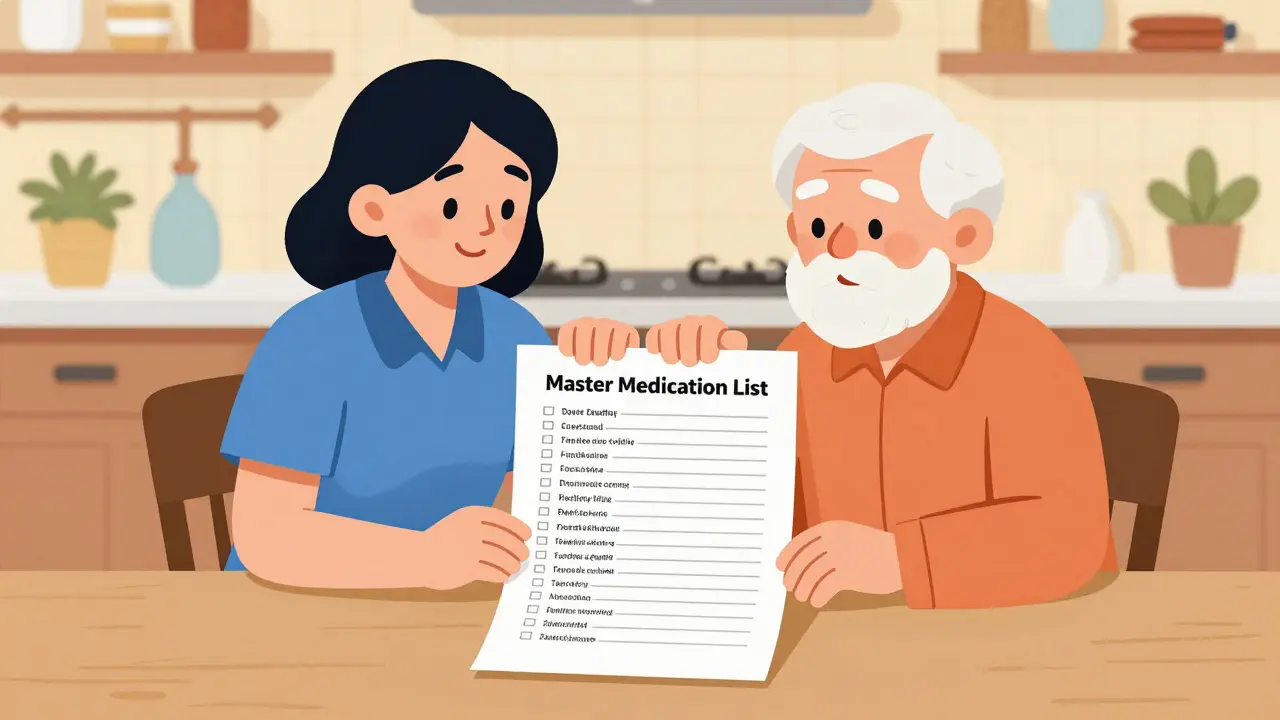
Whether you're a spouse, a child, or a professional aide, your role isn't just to hand over a pill; it's to build a safety net that prevents errors and keeps your loved one out of the hospital. By shifting from a casual "can you take your meds?" approach to a structured support system, you can significantly reduce the risk of adverse drug events and give yourself some peace of mind.
The Master Medication List: Your Single Source of Truth
One of the biggest dangers in home care is the "fragmented prescription." This happens when a patient sees a cardiologist, a GP, and a neurologist, and none of them know what the others are prescribing. To fix this, you need a master list. Not just a scrap of paper, but a comprehensive document that acts as the final authority for every doctor and pharmacist involved.
According to the Agency for Healthcare Research and Quality (AHRQ), a complete list should include 17 specific data points. At a minimum, make sure you record the brand and generic names, the exact dose (like Lisinopril 10mg), the precise time of day, and the reason the drug was prescribed. You should also document any side effects you've noticed.
The real magic happens during "transitions of care." When a loved one moves from a hospital bed back to their living room, the risk of medication errors jumps by 50-60%. This is the exact moment you must pull out your list and verify every single medication against the discharge papers. If something doesn't match, don't guess-call the provider immediately.
Smart Tools to Stop Missed Doses
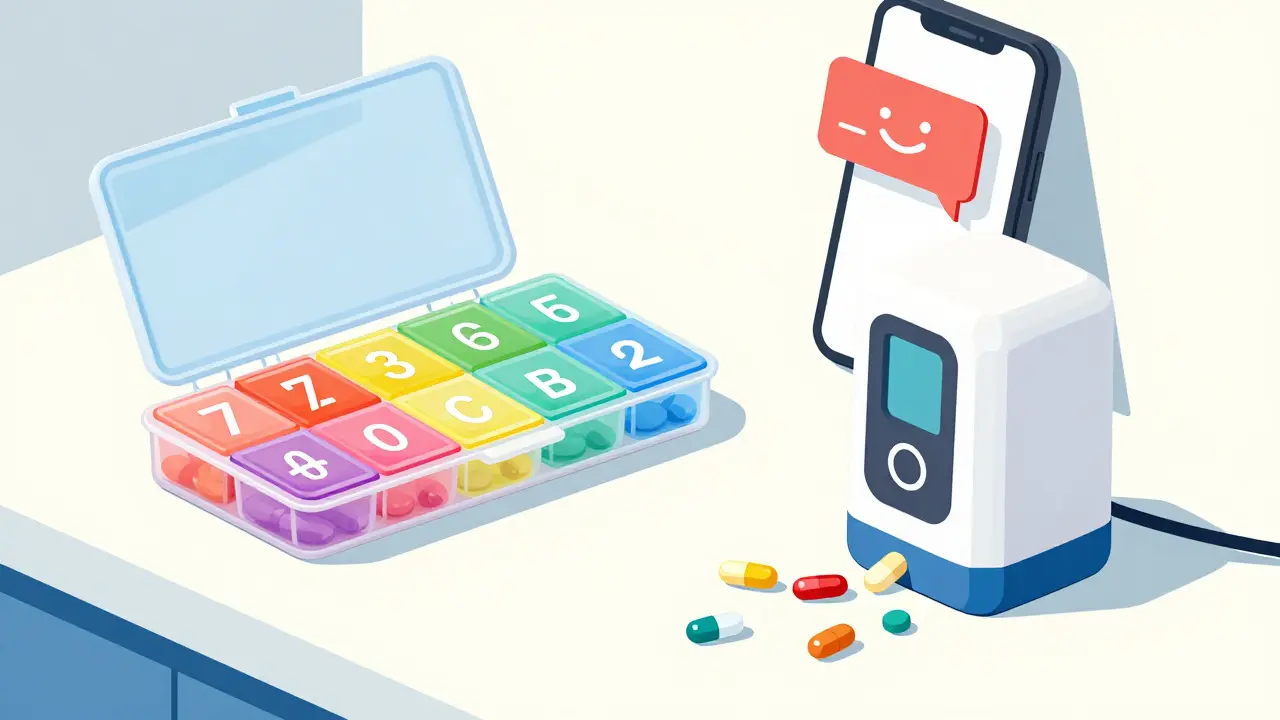
Relying on memory is a recipe for disaster. Depending on the patient's cognitive health, you'll need different levels of support. For those who are mostly independent but forgetful, a simple 7-day AM/PM pill organizer can reduce errors by 37%. It provides a visual cue that is hard to ignore.
For those with more severe memory loss or high-risk medications, look into electronic pill dispensers. Systems like Hero Health use alarms and locked compartments to ensure the right pill is taken at the right time, which has been shown to decrease missed doses by up to 62% in clinical trials. If you're tech-savvy, apps like Medisafe provide push notifications that alert both the patient and the caregiver if a dose is missed.
| Tool Type | Best For | Key Benefit | Risk Level |
|---|---|---|---|
| Manual Pill Organizer | Mild forgetfulness | Low cost, visual confirmation | Medium (can be filled incorrectly) |
| Electronic Dispenser | Cognitive impairment | Automatic alerts, locked access | Low (prevents double-dosing) |
| Adherence Apps | Tech-literate caregivers | Remote monitoring, notifications | Medium (requires smartphone use) |
| Pharmacy Auto-Refill | Chronic long-term use | Prevents gaps in therapy | Low (ensures supply) |
Creating a Routine with Habit Stacking
Telling someone to "take your pill at 8 AM" is a vague instruction. Instead, use a technique called "habit stacking." This means you anchor the new medication habit to something they already do every single day without thinking.
For example, if your father always drinks a glass of water right after brushing his teeth, place the medication bottle next to the toothbrush. The existing habit (brushing teeth) becomes the trigger for the new habit (taking the pill). This method, endorsed by the National Institute on Aging, can increase medication adherence by nearly 30% because it removes the need for a conscious reminder.
Partnering with Pharmacists and Doctors
You aren't expected to be a doctor, but you are the "eyes and ears" of the medical team. Your pharmacist is your most accessible resource. In the U.S., 92% of pharmacies have pharmacists available for consultation without an appointment. Don't just drop off the prescription; ask the "four critical questions":
- Should this be taken with or without food?
- Are there specific foods or other meds that interact with this?
- What exactly should I do if a dose is missed?
- How long will it take before we see the effects?
Additionally, for older adults, be aware of the Beers Criteria. This is a list of medications that are potentially inappropriate for seniors due to increased risks of falls or confusion. During your next appointment, ask the doctor: "Does any of this medication fall under the Beers Criteria for older adults?" This one question can lead to a medication review that reduces inappropriate prescriptions by over 20%.

Managing the "Red List" and Emergency Protocols
Not all missed doses are created equal. Forgetting a multivitamin is a minor issue; forgetting a blood thinner or insulin can be life-threatening. This is why you need a "medication red list."
Identify the 2 or 3 most critical drugs in the regimen. Clearly mark these in your records as "Critical." Create a simple emergency protocol: if a Red List medication is missed by more than X hours, you call the doctor immediately. Having this plan in place reduces emergency department visits because caregivers don't panic-they follow the protocol.
Avoiding Caregiver Burnout
Let's be honest: managing a complex med list is exhausting. About 42% of caregivers cite medication tasks as their most stressful responsibility. To keep yourself from burning out, lean on systemic support.
Check if your loved one's insurance offers Medication Therapy Management (MTM). This is a service where a pharmacist reviews all medications to simplify the regimen and check for interactions. If they are on Medicare Part D and take 8 or more drugs for 3 or more chronic conditions, they are likely eligible. Let the professionals do the heavy lifting of auditing the drugs so you can focus on the emotional support of your loved one.
What is the best way to track multiple medications for an elderly parent?
The most effective method is maintaining a master medication list that includes the generic name, dosage, timing, prescribing doctor, and the purpose of the drug. This list should be updated within 24 hours of any change and brought to every medical appointment to prevent conflicting prescriptions from different specialists.
How do I handle a situation where a patient refuses to take their medication?
Start by identifying the reason for refusal-is it a side effect, difficulty swallowing, or confusion? Use habit stacking to make the process natural. If refusal persists, contact the pharmacist to see if the medication comes in a different form (like a liquid or patch) and discuss the situation with the doctor to see if the dose can be adjusted.
What should I do if I discover my loved one missed several doses?
First, check your "medication red list." If the missed dose is a critical drug (like an anticoagulant or insulin), call their healthcare provider or pharmacist immediately for instructions. Do not double up on doses unless specifically told to do so by a medical professional, as this can cause toxicity or severe side effects.
Can I use a smart speaker for medication reminders?
Yes, voice-activated reminders via tools like Amazon Alexa have been shown to reduce missed doses by 37%, especially for those with cognitive impairments. They provide an audible cue that is often more effective than a silent phone notification.
How often should we review the current medication list with a doctor?
For patients on four or more medications, a quarterly review is recommended. This helps identify "prescription creep," where medications are added but never removed, increasing the risk of falls and hospitalizations.




8 Comments
The pill organizer idea is a lifesaver! 💊✨ Totally helps keep things simple for everyone involved. Thanks for sharing this! 😊
This is such a wonderful resource for anyone feeling overwhelmed right now. Transitioning care is so scary, but having a master list really empowers the family to advocate for their loved ones. We can all get through this with a bit of organization and a lot of patience. ❤️
most people just dont have the discipline to do a list because they are lazy and the system is broken but if you actually care about your family you do this stuff without being told its common sense really
Oh sure, because a "master list" is exactly what I need to add to my already crushing mountain of chores. I'm sure the cardiologist and the GP will totally coordinate perfectly the second I hand them a piece of paper. Absolute fantasy. 🙄
Habit stacking is the way. Simple and works. No need for fancy apps.
I believe that incorporating the pharmacist into the primary care circle is an exceptionally prudent suggestion. It ensures that a professional eye is cast upon the chemical interactions, thereby fostering a safer environment for the elderly patient. Such a collaborative approach is truly commendable.
Don't trust those electronic dispensers! They're probably just another way for big pharma and the government to track exactly when you're dosing your family so they can monitor your health data from a distance. Once you start using these "smart" tools, you're basically inviting surveillance into your own home. Everything is connected to a database and we're just letting them in the front door! Wake up people, the "convenience" is just a trap to make us dependent on their tech and their chemicals!
I am quite certain that the MTM services mentioned are a fantastic way to alleviate the burden on caregivers. It is truly inspiring to see how structured support can turn a chaotic situation into a manageable one. I strongly encourage everyone to check their insurance coverage for these professional audits as it provides a level of security that is simply priceless for the peace of mind of the entire family.