

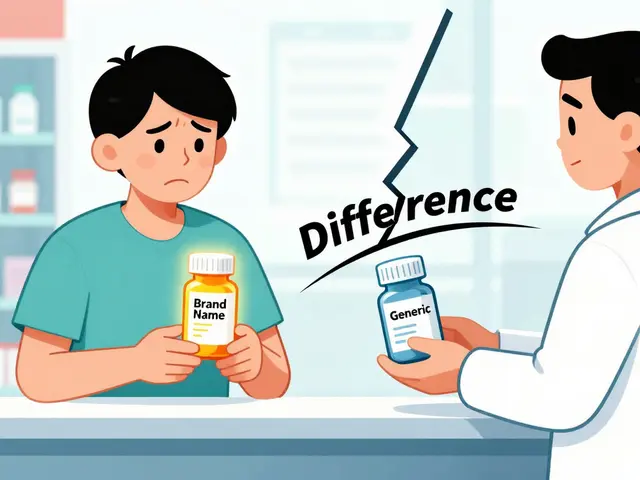
When your prescription switches from the brand-name drug you’ve been taking to a generic version, it’s easy to panic. You see a different color, a different shape, maybe even a different name on the bottle - and suddenly you wonder: Is this the same thing? Will it work? Is it safe? If you’ve been handed an authorized generic, the answer is yes - it’s exactly the same. But most people don’t know that. And that’s where things get messy.
What Exactly Is an Authorized Generic?
An authorized generic isn’t just another generic. It’s the exact same drug, made by the same company that makes the brand-name version, in the same factory, using the same ingredients and process. The only difference? It’s sold without the brand name on the label. Think of it like a car manufacturer selling the same model under a different dealership name - same engine, same paint, same warranty, just no logo. The FDA requires these to be identical in every way: active ingredient, strength, dosage form, route of administration, and even inactive ingredients like fillers and dyes. They’re not bioequivalent - they’re the same. That’s because they’re approved under the original brand’s New Drug Application (NDA), not through the generic approval process (ANDA). That means no extra testing, no guesswork. If the brand works for you, the authorized generic will too.Why Do Authorized Generics Exist?
They came about because of the 1984 Hatch-Waxman Act. The law was meant to speed up generic drug entry and lower prices. But it gave the first generic company 180 days of exclusive rights to sell a generic version after a brand’s patent expired. That created a problem: brand companies could delay competition by waiting until the last minute to launch their own version - an authorized generic - right when that exclusivity period started. That’s exactly what happened. Between 2001 and 2008, 92% of authorized generics were launched by the brand companies themselves. The result? Prices dropped faster. Retail prices fell 4-8%, wholesale prices dropped 7-14%. In some cases, the authorized generic was cheaper than the first generic on the market. The Federal Trade Commission confirmed this: authorized generics bring real savings. Today, about 20-25% of brand-name drugs with generic competition have an authorized generic version. And that number is growing. In 2022, 42% of the top 200 brand drugs that lost patent protection introduced an authorized generic within six months.How to Tell If You’re Getting an Authorized Generic
Don’t assume. Not all generics are authorized. Many look similar, but only some are made by the original manufacturer. The easiest way to check? Go to the FDA’s Orange Book and look up your drug. Then cross-reference it with the FDA’s quarterly list of authorized generics. You can find both on fda.gov. If the manufacturer of your generic matches the brand’s company name, you’ve got an authorized generic. Example: If you take Lexapro (brand), and your pharmacy gives you a pill labeled “escitalopram oxalate” made by Forest Laboratories - that’s an authorized generic. Forest is the original maker. If it’s made by Teva or Mylan, it’s a traditional generic. Pharmacists can also tell you. Ask: “Is this an authorized generic?” Most will know. If they don’t, ask them to check the FDA list. It’s your right to know.Will It Work the Same Way?
Yes. Absolutely. Studies show no difference in effectiveness, side effects, or how long the drug stays in your system. A 2018 study in the National Center for Biotechnology Information looked at over 100,000 patients switching from brand to authorized generic. Results? Identical rates of hospital visits, medication discontinuation, and treatment success. Some people say they “feel different” after switching. That’s usually because they expect to. Our brains are wired to associate brand names with quality. But if the pill is chemically identical, the effect is too. The American Academy of Allergy, Asthma & Immunology confirms: authorized generics are safe for people with sensitivities because they contain the same inactive ingredients as the brand. One exception: if you’re allergic to a dye or filler that’s different in the traditional generic - but that won’t happen with an authorized generic. It’s the same formula. Same dye. Same everything.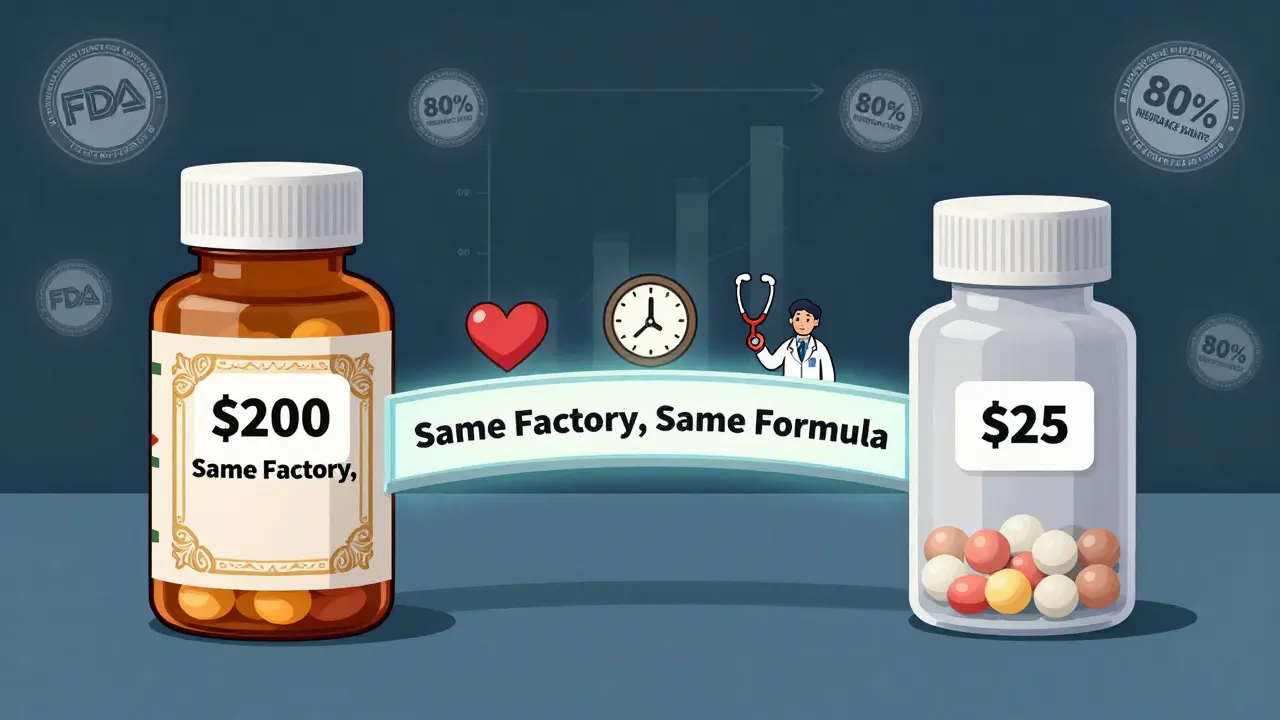
What About the Look? Color, Shape, Size
Here’s where confusion happens. Even authorized generics sometimes change the pill’s appearance. Why? Because the brand company may use a different imprint or color for their generic version - not to trick you, but to distinguish it from their branded product on pharmacy shelves. If your brand pill was a blue oval, and now you’re getting a white round one - it’s still the same drug. The FDA allows this. The key is: the active ingredient, strength, and manufacturer must match. If the pill looks different but the name on the bottle says “manufactured by [brand company]”, you’re fine. Pharmacists say 65% of patient questions are about appearance. They’re not about safety. They’re about trust. The fix? Simple: ask your pharmacist to show you the FDA list. Or take a photo of your old pill and the new one. Compare the markings. If the manufacturer is the same, you’re good.Insurance and Cost: What You’ll Pay
This is where authorized generics shine. Most insurance plans automatically switch you to the lowest-cost option - and that’s often the authorized generic. Medicare Part D data from 2022 shows 80-90% of prescriptions for drugs with an authorized generic are filled with that version. Out-of-pocket savings? On average, $15-$30 per prescription. For chronic meds taken monthly, that’s $180-$360 a year. For expensive drugs like those for high cholesterol, depression, or autoimmune conditions, the savings can be $500+ per year. Some plans require prior authorization for the brand. If you’re on a specialty tier, your insurer may not cover the brand unless you’ve tried the generic first. That’s when the authorized generic becomes your best option - same drug, lower price, no hassle.How to Switch Without Stress
Switching doesn’t have to be a shock. Here’s how to do it smoothly:- Check your next refill. Look at the label. Who’s the manufacturer? If it’s the same as the brand, you’re on an authorized generic.
- Call your pharmacy. Ask: “Is this an authorized generic?” Don’t assume. Confirm.
- Verify with the FDA. Go to fda.gov/orangebook or search “FDA authorized generic list.” Compare the manufacturer and drug name.
- Ask your doctor. If you’re nervous, tell them you’re considering switching. They can write “Dispense as Written” if you want to stay on brand - but most will support the switch.
- Track your response. Keep a simple log: date, pill appearance, how you feel. Most people notice no difference. If you do, contact your provider.
Common Myths - Debunked
- Myth: Generics are weaker. Truth: Authorized generics are the exact same drug. No compromise.
- Myth: Brand drugs are better quality. Truth: All FDA-approved drugs - brand, generic, authorized - follow the same manufacturing standards.
- Myth: Authorized generics are fake or low-quality. Truth: They’re made by the brand company. No one else has access to the original formula.
- Myth: Switching will cause side effects. Truth: Studies show no increase in side effects when switching to authorized generics.
What If You Don’t Want to Switch?
You have the right to refuse. Your doctor can write “Dispense as Written” or “Brand Necessary” on the prescription. But be aware: your insurance may deny coverage, or you’ll pay the full brand price - which can be 3-5 times higher. If you’re on a tight budget, the authorized generic is the smartest choice. It’s not a downgrade. It’s the same medicine, at a fraction of the cost.What’s Next? The Future of Authorized Generics
The trend is clear: more authorized generics are coming. The FDA updated its reporting rules in 2020 to make these drugs easier to track. Pharmacy systems now flag authorized generics automatically during dispensing. By 2025, experts predict 5-7% more brand drugs will launch authorized versions each year. For complex drugs - like biologics for rheumatoid arthritis or multiple sclerosis - authorized generics are expected to become standard. Morgan Stanley forecasts that by 2028, 35% of biologic drugs losing patent protection will have authorized versions. The goal? Lower costs without sacrificing safety. And so far, it’s working.Is an authorized generic the same as a regular generic?
No. A regular generic is made by a different company and must prove it’s bioequivalent to the brand. An authorized generic is made by the original brand company, using the same formula and factory. It’s identical - not just equivalent.
Why does my authorized generic look different from the brand?
The brand company may change the color, shape, or imprint on the pill to distinguish it from their branded version on pharmacy shelves. But the active ingredient, dosage, and manufacturing process are unchanged. That’s why it’s still safe and effective.
Can I trust an authorized generic if it’s cheaper?
Yes. Price doesn’t reflect quality here. The lower cost comes from cutting out brand marketing, packaging, and licensing fees - not from cutting corners on ingredients or manufacturing. The FDA requires the same strict standards for authorized generics as for brand-name drugs.
Will my insurance cover an authorized generic?
Almost always. Most insurance plans automatically prefer authorized generics because they’re the lowest-cost option that’s identical to the brand. You’ll usually pay less out of pocket, and your copay may drop significantly.
How do I know if my drug has an authorized generic?
Check the FDA’s quarterly authorized generic list at fda.gov. Search your drug’s brand name and look for the manufacturer. If it matches the brand company, an authorized generic exists. You can also ask your pharmacist or check the label on your prescription bottle.


10 Comments
i swear i thought generics were just cheap knockoffs until i read this. my doc switched me to an authorized generic for my antidepressant and i was ready to riot. turned out it was made by the same company as the brand. no difference in mood, no weird side effects. just saved me $200 a month. why does no one tell you this???
lol i dont trust this. big pharma is just tricking us again. why would they make a cheaper version if theyre not hiding something? 🤔 maybe the inactive ingredients are laced with microchips to track us. or worse… they’re using chinese fillers. i checked the bottle. the font looked ‘off’. 🚨
the real question isnt whether its the same drug-it’s whether we’ve been conditioned to equate price with worth. we fear the unknown, but the science is clear. the pill in your hand has the same molecular fingerprint as the one you paid 5x for. the branding, the packaging, the marketing… that’s the illusion. the medicine? it’s just medicine.
we treat drugs like luxury goods. they’re not. they’re molecules. and molecules don’t care about logos.
omg this is life-changing!! 🙌 i’ve been paying $400/month for my RA med and just found out my ‘generic’ was actually an authorized one-same maker, half the price!! i cried. like, actual tears. why is this not on every pharmacy flyer?? 🤯 we need to spread this info like wildfire!! 💪❤️
american healthcare is a scam. why should i pay less for the same pill? it makes no sense. if the brand is better, why are we letting them sell it cheaper? this is just the government letting big pharma control prices. i dont trust this. i stick to the blue pill. the one with the logo. that’s the real thing.
as someone who’s worked in pharmacy for 18 years, i’ve seen this play out a thousand times. patients panic over a different color. they think the pill’s broken. but the manufacturer? same factory. same batch code sometimes. authorized generics are the silent heroes of cost containment.
we don’t talk about them enough. the FDA’s Orange Book is gold. pharmacists know. patients don’t. education is the missing link. and honestly? if you’re worried about your meds, ask for the manufacturer name. if it matches the brand? you’re golden.
my dad’s on a $500/month med. switched to authorized generic. same pill. $80/month. he didn’t even notice. now he calls it ‘the budget miracle’. i just told him not to look at the pill. he’s got a thing about shapes.
okay but let’s go deeper. why does the system even allow this? why does the brand company get to make the generic version themselves? it’s like a bakery making their own ‘discount version’ of their croissant and selling it under a fake name-same recipe, same oven, same butter, just no fancy box.
the Hatch-Waxman Act was supposed to break monopolies, but instead it gave pharma a loophole to undercut their own competition while still controlling the supply. it’s brilliant. it’s sinister. it’s capitalism.
and yet… i’m saving $300 a month. so i’m not complaining. i’m just… confused. is this progress or a clever con?
Just wanted to clarify a common misconception: authorized generics are not subject to the ANDA process because they are approved under the original NDA. This means they are not merely bioequivalent-they are identical in composition, including inactive ingredients. This is why they are the only generics that can be considered truly interchangeable without any clinical risk. The FDA’s labeling requirements for authorized generics are identical to the brand, except for the proprietary name. Always verify the manufacturer on the prescription label.
So you're telling me I paid $500 for a pill that's literally the same as the $80 one? And the only difference is a label? That's not capitalism. That's theft. They're not selling medicine. They're selling a brand identity. And we're all just dumb enough to keep buying it. The system is rigged. And now they're just rebranding the scam. I'm done.