
Why a pill’s color can make someone skip their medicine
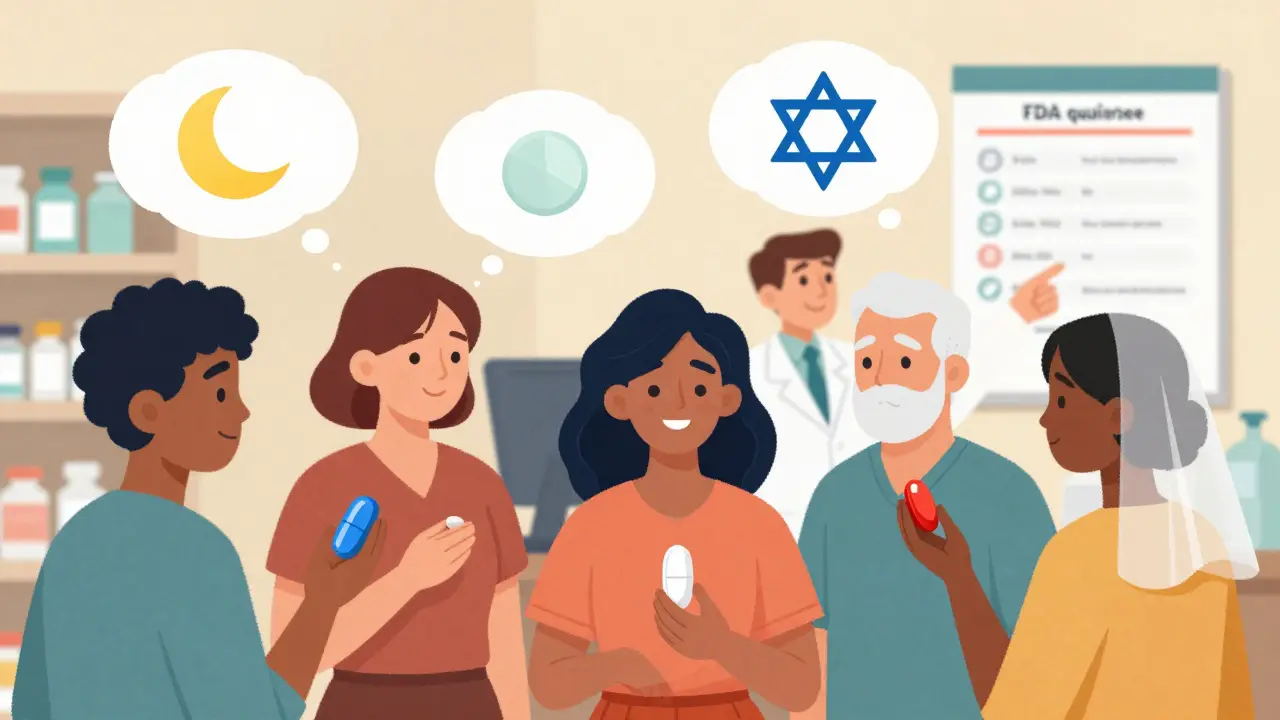
A man in Chicago stops taking his blood pressure pill after switching from the brand-name version to the generic. He doesn’t trust it. The pill used to be blue. Now it’s white and oval. He’s not alone. Across the U.S., patients from Hispanic, African American, Muslim, and Jewish communities report similar doubts - not because the medicine doesn’t work, but because it looks different. And in many cultures, how a pill looks tells you everything about its power, purity, or safety.
Generics make up 70% of all medicines sold in Europe by volume, and nearly 90% in the U.S. They’re cheaper, just as effective, and approved by the FDA. But for millions of patients, the real barrier isn’t cost - it’s culture.
What’s in the pill? It’s not just the active ingredient
When you take a generic version of a drug, the active ingredient is identical to the brand name. But the rest? The fillers, dyes, coatings, and capsules? Those can be completely different.
For most people, that doesn’t matter. But for others, it’s a dealbreaker. A Muslim patient may refuse a capsule made with gelatin from pork. A Jewish patient may avoid medications not certified kosher. Some cultures believe certain colors bring bad luck or illness. In parts of Asia, white pills are associated with mourning. In Latin American communities, bright red pills are seen as strong - while pale ones feel weak.
A 2023 study in the Journal of Community Pharmacy found that 63% of pharmacists in urban areas get at least one question per week about excipients - the inactive ingredients in pills. One pharmacist recalled spending two hours calling manufacturers just to find a liquid form of a medication without gelatin for a Muslim child. Another described a patient who cried after being handed a generic version: “I’ve been taking this blue pill for ten years. This one looks like it’s for someone else.”
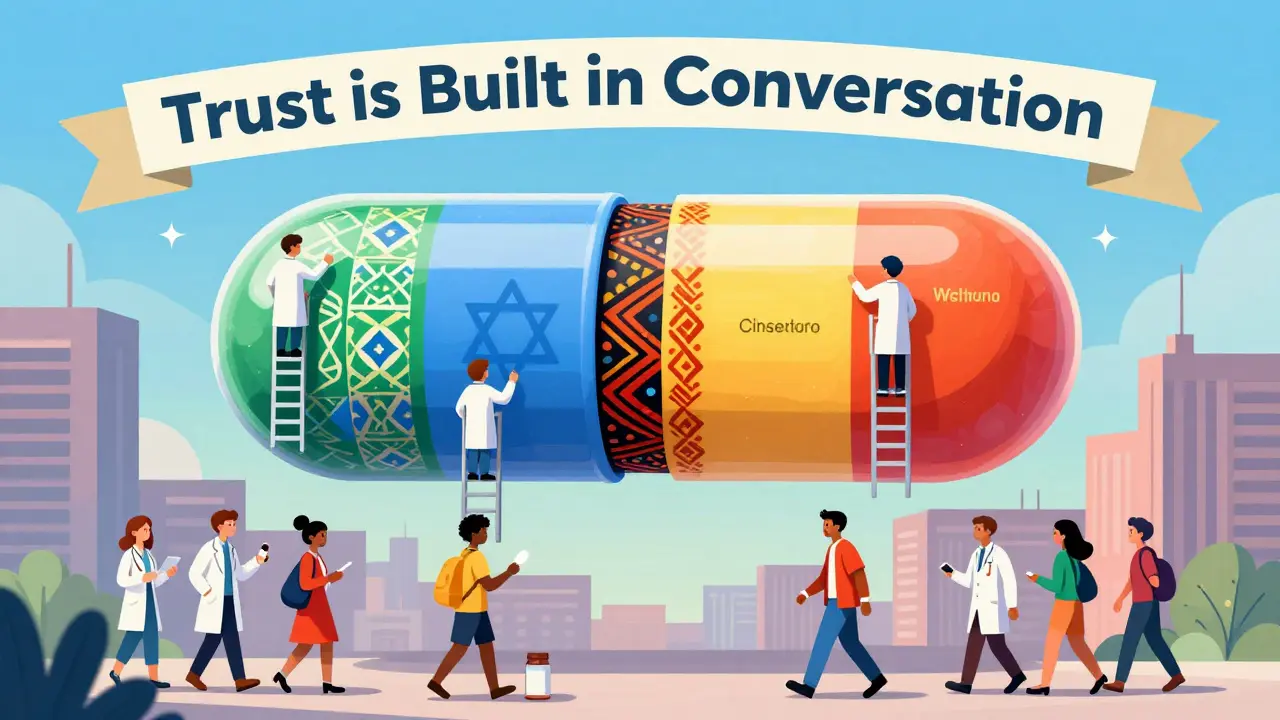
Trust isn’t built in a lab - it’s built in conversation
Patients don’t distrust generics because they’re poorly made. They distrust them because they’ve been let down before.
Historical medical discrimination, language barriers, and lack of culturally tailored education have left deep scars. A 2022 FDA survey found that 28% of African American patients believed generics were less effective than brand-name drugs - nearly double the rate of non-Hispanic White patients. Among Hispanic patients, concerns about generics were tied to mistrust in the healthcare system, not the science.
When a pharmacist just says, “It’s the same medicine,” without explaining why it looks different, the patient hears: “They don’t care what you believe.”
But when a pharmacist takes five minutes to say, “I know this looks different. Let me show you the FDA paperwork. And I’ll check if we have a version without gelatin - I’ve helped others like you,” adherence jumps. One pharmacy chain in Detroit saw patient retention for generics rise by 40% after training staff to ask about cultural or religious needs - not just about allergies.

Religious needs aren’t optional - they’re clinical
Halal and kosher aren’t just dietary labels. They’re medical requirements.
Many capsules use gelatin, often sourced from pigs. Some tablets use animal-based lubricants or coatings. For patients following halal or kosher guidelines, these aren’t minor concerns - they’re violations of faith.
Yet only 37% of generic medication labels in the U.S. list excipients in detail. In the EU, that number is 68%. That gap forces pharmacists to become detectives. They call manufacturers. They check databases. They wait days for answers.
Some companies are starting to change. Teva launched its Cultural Formulation Initiative in 2023, aiming to document all excipients across 15 major drug categories by the end of 2024. Sandoz announced a Global Cultural Competence Framework in early 2024. These aren’t marketing moves - they’re responses to real patient demand.
But progress is slow. Most community pharmacies still don’t have access to reliable, up-to-date databases. One pharmacist in Philadelphia told researchers, “I don’t have time to Google every ingredient. If I had a simple chart, I could answer in seconds.”
Color, shape, size - and the myth of “stronger” pills
In many cultures, the appearance of a pill equals its potency.
Large, brightly colored pills are seen as powerful. Small, plain ones? Weak. This isn’t superstition - it’s learned behavior. In parts of West Africa, patients believe the more “medicinal” a pill looks, the more it works. In the U.S., some older patients still associate the shape of a pill with its purpose - round for heart, oval for blood pressure.
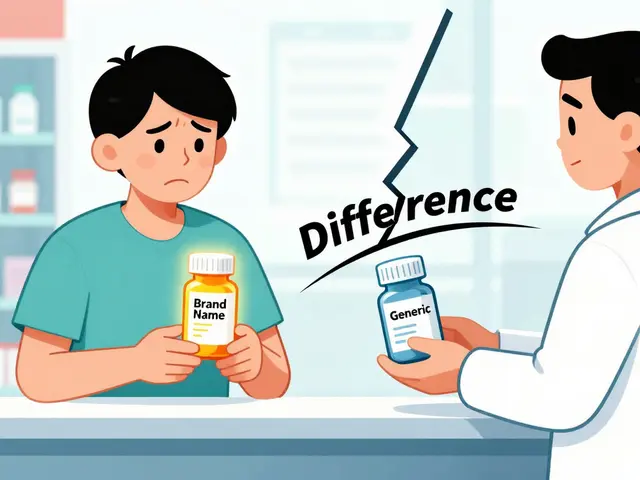
Generics often change shape and color to avoid trademark issues. That’s legal. But it’s confusing. A patient who’s been taking a blue, round pill for years gets a white, oblong one. They think: “Did they downgrade me?”
One study found that 42% of patients who switched to a generic version of their cholesterol drug stopped taking it within three months - not because of side effects, but because they couldn’t recognize it. When pharmacists showed them side-by-side photos of the old and new pills, and explained the FDA equivalence, 78% agreed to restart.
What’s working? Real solutions from real pharmacies
Change isn’t theoretical. It’s happening - quietly, in pockets.
A chain of pharmacies in Houston created a “Cultural Medication Guide” - a laminated card listing common excipients, which ones conflict with halal/kosher rules, and which generics avoid them. Staff carry it in their aprons. Patients ask for it by name.
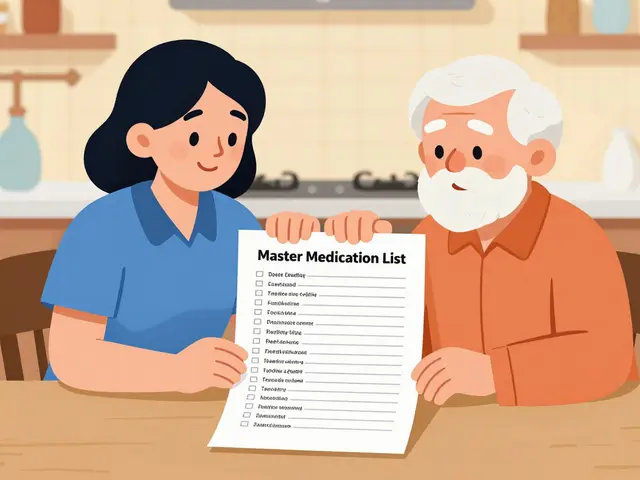
In Minneapolis, a community clinic started offering “medication identity cards” - small cards patients keep in their wallets. On one side: the name of their drug, the brand name, and what it looks like. On the other: “If this pill looks different, ask about excipients.”
Another pharmacy in Chicago partnered with local mosques and synagogues to host monthly Q&A sessions about medications. They brought in pharmacists, imams, and rabbis to co-teach. Attendance doubled every month.
These aren’t fancy programs. They’re simple. But they work because they start with respect - not assumptions.
What’s missing? Training, transparency, and time
Only 22% of U.S. community pharmacies have formal training on cultural considerations for generics. Most pharmacists learn on the job - if they learn at all.
Training needs to go beyond “know your patient’s religion.” It needs to teach:
- How to ask about cultural needs without making patients feel judged
- Which excipients are commonly problematic (gelatin, shellac, stearic acid, etc.)
- Where to find reliable, updated formulation data
- How to explain FDA equivalence in plain language
It also needs time. Finding a halal-certified generic for a blood thinner can take hours. Most pharmacies don’t have the staff to do that. And manufacturers? Many still don’t label excipients clearly.
The FDA’s 2023 review found that only 1 in 3 generic labels in the U.S. fully list inactive ingredients. That’s not just inconvenient - it’s unsafe.
The future is clear: culture isn’t a bonus - it’s core to care
By 2027, IQVIA predicts 65% of top generic manufacturers will include cultural considerations in product development. That’s up from 15% in 2023. Why? Because it saves money. Because it saves lives.
Unmet needs in multicultural communities cost the U.S. healthcare system $12.4 billion a year in avoidable hospital visits, ER trips, and complications from non-adherence. Hypertension and diabetes - conditions that hit Black, Hispanic, and South Asian populations hardest - are the biggest drivers.
When patients trust their meds, they take them. When they take them, they stay healthy. When they stay healthy, the system saves money.
It’s not about political correctness. It’s about clinical effectiveness. Culture shapes how people understand health. If we ignore that, we’re not just missing the mark - we’re leaving people behind.
What you can do today
If you’re a patient:
- Ask your pharmacist: “Does this pill have gelatin, alcohol, or animal products?”
- Keep a photo of your old pill. Show it when you get a new one.
- Don’t assume a cheaper pill is less effective - but do ask questions.
If you’re a provider:
- Don’t say, “It’s the same medicine.” Say, “I know this looks different. Let me explain why.”
- Keep a printed list of common excipients and their cultural implications.
- Connect with local faith leaders. They’re your allies.
If you’re in the industry:
- Label your generics clearly. Full excipient lists. No exceptions.
- Develop halal and kosher-certified versions for high-demand drugs.
- Train your teams. This isn’t optional anymore.
The medicine is the same. But the meaning? That’s different for everyone. And if we want people to take their pills - really take them - we have to meet them where they are.



15 Comments
This is ridiculous. People just need to take their pills and stop being dramatic.
Let me get this straight - we’re now designing pharmaceuticals to accommodate cultural superstitions? Next they’ll want the pills to have the right zodiac symbol. FDA approvals are based on science, not symbolism. This is regulatory creep dressed up as empathy.
I’ve worked in community health for 12 years, and this article hit me right in the chest. It’s not about ‘superstition’ - it’s about embodied trust. When someone’s been gaslit by the medical system for generations, the color of a pill becomes a symbol of whether they’re seen. I’ve had patients cry because their hypertension med changed from blue to white - not because they don’t understand bioequivalence, but because blue meant ‘my doctor still cares.’ We can’t fix adherence with pamphlets. We fix it with presence. With time. With listening. And yes - with gelatin-free capsules. That’s not ‘political correctness.’ That’s pharmacology with dignity.
Also - emoji time: 🫂❤️🩺
I’m a pharmacist in rural Ohio, and I’ve had Muslim patients refuse meds because of gelatin. I’ve spent hours calling manufacturers, checking databases, even emailing Teva’s customer service. No one had a clear answer. We need a centralized, searchable, up-to-date database - not just for gelatin, but for shellac, stearic acid, even alcohol-based dyes. This isn’t niche. It’s basic patient safety. And if we can track allergens in food, why can’t we do it for medicine? It’s not rocket science - it’s just logistics. And logistics are fixable.
OMG YES. My abuela used to say, ‘If it’s not bright red, it’s not medicine.’ She’d stash her pills under the mattress because they looked ‘too weak.’ I showed her a photo of the generic vs brand - side by side - and she finally took it. But only after I told her, ‘Abuela, this one’s got the same magic, just a new outfit.’ 🌟💊
Now I keep a little card in my wallet with pics of my meds. I wish every pharmacy had one. We need pill ID cards like they’re driver’s licenses. #MedicationIdentity
So let me get this straight - we’re going to redesign the entire pharmaceutical supply chain because some people think white pills are ‘dead’? Cool. Next up: vegan insulin and gluten-free antidepressants. Maybe we’ll start printing affirmations on the tablets too. ‘You are worthy of your blood pressure meds.’ 😏
Look, I get it. Trust matters. But this isn’t about culture - it’s about people who don’t understand basic science. And now we’re bribing them with colored pills instead of educating them. That’s not care. That’s appeasement.
As a Nigerian clinician, I’ve seen this firsthand. In Lagos, patients refuse generics because they’re ‘too small.’ They associate size with potency. We started using pill imprint codes and laminated visual guides - and adherence jumped 52% in six months. This isn’t about ‘culture’ as some kind of exotic quirk - it’s about cognitive framing. People don’t trust what they can’t recognize. The solution isn’t to change the drug - it’s to change the communication. Simple. Scalable. Done.
Back home in Jaipur, we use turmeric-coated pills for ‘purification’ - not because we’re superstitious, but because we’ve seen how tradition and healing intertwine. I work with a pharma startup that now offers Ayurvedic-friendly generics: no animal gelatin, no synthetic dyes, plant-based coatings. Patients feel safe. Doctors feel respected. And guess what? Adherence is higher than with branded drugs. Culture isn’t a barrier - it’s a bridge. We just need to build it right.
Let’s reframe this: it’s not that people don’t trust generics - it’s that the system doesn’t trust them. We treat patients like passive recipients of science, not active participants in their care. When you walk into a pharmacy and get handed a pill that looks nothing like the one you’ve taken for 15 years, you don’t feel informed - you feel erased.
What if we started asking: ‘What does this pill mean to you?’ before we even hand it over? That’s not extra work - that’s the foundation of healing. And yes - it takes time. But what’s the cost of skipping that step? Lost lives. Lost dollars. Lost dignity.
Let’s stop calling it ‘cultural sensitivity’ and start calling it ‘basic humanity.’
Excipient transparency is a regulatory gap, not a cultural issue. The FDA’s labeling requirements for inactive ingredients are outdated. Period. We have blockchain for supply chains - why not blockchain for pill ingredients? A QR code on every generic blister pack that links to a live database: gelatin? Check. Pork-derived? Check. Kosher? Check. Halal? Check. Alcohol-based? Check. No more pharmacists playing detective. Just scan. Know. Trust. Simple. Efficient. Necessary.
I once refused a generic because it was oval. My doctor laughed. I cried. Now I’m on a waiting list for the blue version. It’s not irrational. It’s emotional. And emotions aren’t illogical - they’re data.
Wow. So now we’re treating patients like toddlers who need a colorful toy to feel safe? Let’s just make the pills look like cartoon characters and call it a day. Next thing you know, we’ll be prescribing ‘confidence capsules’ with glitter and affirmations. This isn’t healthcare - it’s therapy with a side of placebo. And we’re paying for it with billions. Pathetic.
As a Canadian of South Asian descent, I’ve had to beg for halal metformin. Took 3 weeks. No one had a database. No one cared. Then I found a small pharmacy in Montreal that partnered with a Canadian halal certification org. Now they stock 12+ halal generics. No fanfare. No press. Just good work. We need more of that. Not policy. Just action. 🤝
my mom is 78 and still takes her blue pill every morning like a ritual. when they switched her to white, she thought she was being punished. i had to show her the FDA sheet, print out the side-by-side pics, and even make her a little ‘pill journal’ with photos. she still keeps it in her purse. it’s not about science - it’s about feeling safe. and if that takes 5 extra minutes? worth it. 💙
They changed my cholesterol pill from blue round to white oval. I stopped taking it. Not because I’m dumb - because I’m smart. I know generics are the same. But I also know that if they don’t care enough to keep the shape consistent, why should I trust they care about the dose? Then I found a pharmacist who showed me the bioequivalence report. Took 10 minutes. I’m back on it. No magic. Just respect.