
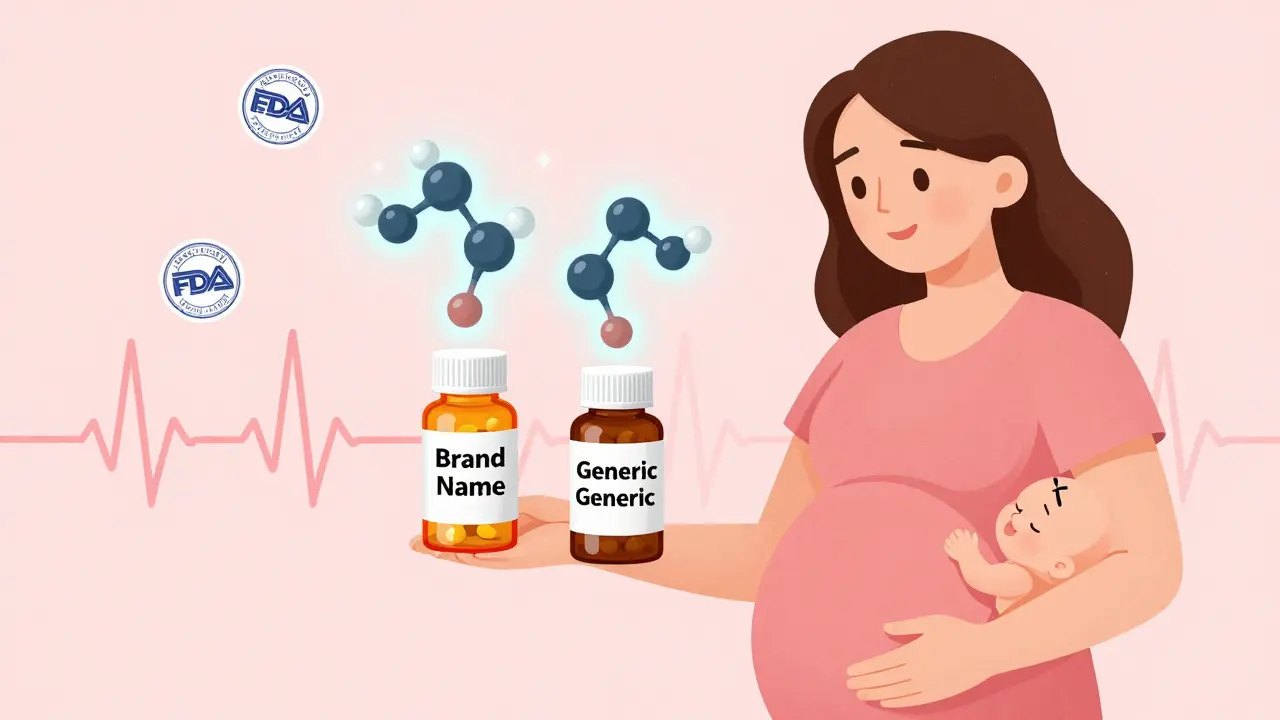
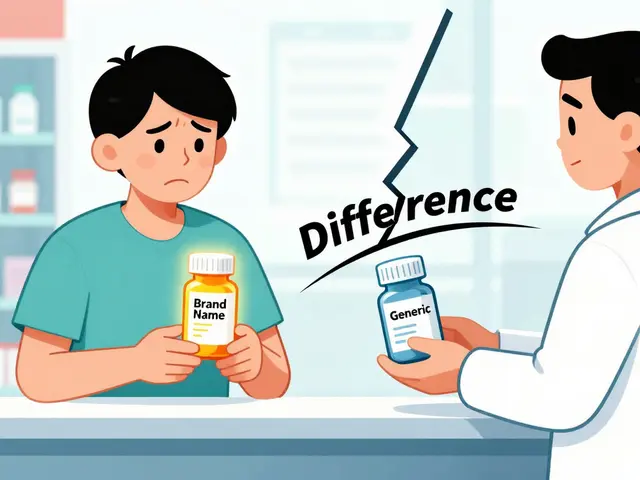
When you're pregnant, every pill you take feels like a decision with two lives on the line. That’s why so many expectant mothers hesitate when their doctor prescribes a generic medication instead of the brand name they recognize. Is it really the same? Could it harm the baby? These aren’t just fears-they’re valid questions, and the data has answers.
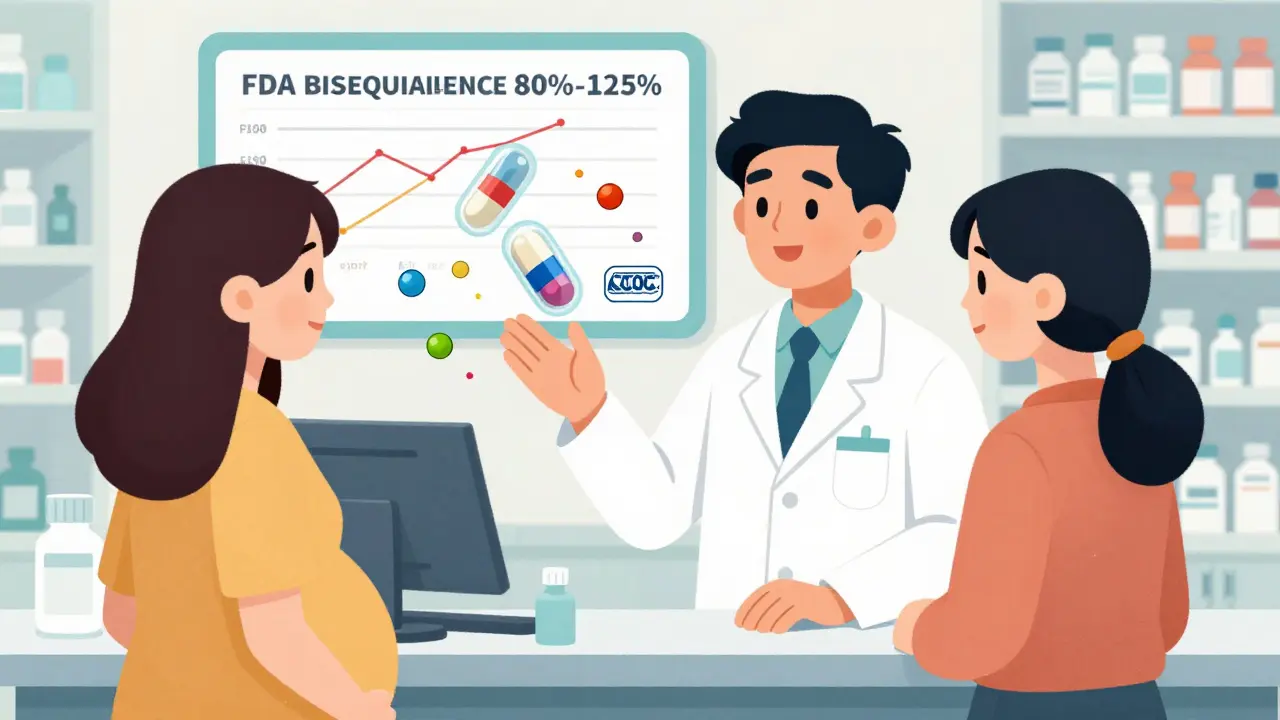
The U.S. Food and Drug Administration (FDA) doesn’t treat generic drugs like second-tier options. By law, a generic must contain the exact same active ingredient, in the same strength, and work the same way in the body as its brand-name counterpart. That’s not marketing speak-it’s a legal requirement backed by strict testing. The FDA requires generics to be bioequivalent within 80% to 125% of the brand-name drug’s absorption rate. For high-risk medications like levothyroxine, which is critical for thyroid function during pregnancy, the standard is even tighter: 90% to 112%. Why? Because untreated hypothyroidism increases miscarriage risk by 61% and preterm birth by 39%. The stakes are too high for guesswork.
Same Active Ingredient, Same Safety Profile
Here’s the key point: if a brand-name drug is safe during pregnancy, its generic version is too. The FDA’s Pregnancy and Lactation Labeling Rule (PLLR), which replaced outdated letter categories (A, B, C, D, X) in 2015, requires that all versions of a drug-brand or generic-carry identical safety information. That means if a medication is labeled with clinical considerations for pregnancy, the generic must reflect that exactly. The American College of Obstetricians and Gynecologists (ACOG) makes it clear: "Generic medications approved by the FDA are considered therapeutically equivalent to their brand-name counterparts and therefore share the same pregnancy safety profile."
Take acetaminophen, for example. It’s one of the most commonly used pain relievers during pregnancy. Whether you pick Tylenol or a store-brand generic, the active ingredient-paracetamol-is identical. The same goes for prenatal vitamins, antihistamines like loratadine, or antacids like calcium carbonate. Their safety data comes from studies on the active ingredient, not the brand name. That’s why the CDC reports that 90% of all prescriptions filled during pregnancy in the U.S. are generics.
What About the Inactive Ingredients?
Yes, generics can differ in color, shape, filler, or coating. These are called excipients. They don’t affect how the drug works, but they can affect how your body reacts to it-especially during pregnancy, when your digestive system slows down and your blood volume increases. A 2020 study in the American Journal of Managed Care found that 32.7% of pharmacists had heard from pregnant patients who felt different side effects between generic versions of the same drug. Ondansetron, used for nausea, was a common example. One woman might tolerate a generic version fine; another might get worse headaches or dizziness.
That doesn’t mean the drug is unsafe. It means individual bodies respond differently. A 2019 study in the Journal of Obstetrics and Gynaecology Canada looked at 127 cases where pregnant women switched to generics. There was no statistically significant change in pregnancy outcomes. But 4.7% of obstetricians reported patients expressing concern. That’s not a failure of science-it’s a reminder that pregnancy changes your body in ways we don’t fully understand yet.
High-Risk Medications: Generics Are Held to the Same Standards
Some medications carry serious risks during pregnancy. Isotretinoin (formerly Accutane) is one. It causes severe birth defects. The iPLEDGE program, which started in 2006, requires monthly pregnancy tests and two forms of birth control for anyone prescribed isotretinoin-no matter if it’s the brand or a generic. The FDA’s adverse event database from 2018 to 2022 showed no difference in pregnancy rates between brand and generic isotretinoin. Both had a 0.2% pregnancy rate among users. The system works because the rules apply equally.
Same goes for methyldopa (used for high blood pressure in pregnancy) and progesterone (used to prevent preterm birth). Both have generic versions approved by the FDA in 2022. Each came with the same safety warnings, dosing guidelines, and monitoring requirements as the brand-name versions. The European Medicines Agency (EMA) and other global regulators follow the same logic: if the active ingredient is identical, the safety profile is identical.
Real Stories: What Patients Are Saying
Online forums tell a mixed story. On Reddit’s r/BabyBumps, a 2023 thread about generic vs. brand prenatal vitamins had 287 responses. Sixty-three percent said they noticed no difference. Twenty-nine percent said the generic made them feel more nauseous. Eight percent actually preferred the generic. On MotherToBaby’s forums, 42% of users initially worried about generics-but after talking to a specialist, 89% continued using them without issue.
There are rare cases where switching caused problems. One patient in a 2022 Journal of Perinatal Education case study reported increased migraines after switching from brand-name sumatriptan to generic during pregnancy. But the study couldn’t prove the generic caused it-other factors like stress, sleep changes, or hormone shifts could have played a role. In contrast, a 2021 study in Obstetrics & Gynecology followed 157 pregnant women using generic metformin for gestational diabetes. Their outcomes matched those of women using the brand-name version exactly.
What Your Doctor and Pharmacist Know That You Might Not
Pharmacists are trained to spot these subtle differences. A 2022 survey by the National Community Pharmacists Association found that 78% of independent pharmacists routinely counsel pregnant patients about generic equivalence. They spend an average of 4.2 minutes per consultation-longer than most insurance plans allow. That’s because they’ve seen the patterns: some women react to certain fillers, like lactose or dyes. If you’ve had a bad reaction to a generic before, tell your pharmacist. They can check which manufacturer made it and suggest an alternative.
Doctors don’t avoid generics because they’re risky. They avoid them because patients are afraid. A 2022 survey in the American Journal of Obstetrics and Gynecology found that 41.3% of obstetric providers still deal with patient hesitancy around generics-even though the science says they’re safe. That’s why clear communication matters. If your doctor prescribes a generic, ask: "Is the active ingredient the same as the brand?" The answer is always yes.
What to Do If You’re Unsure
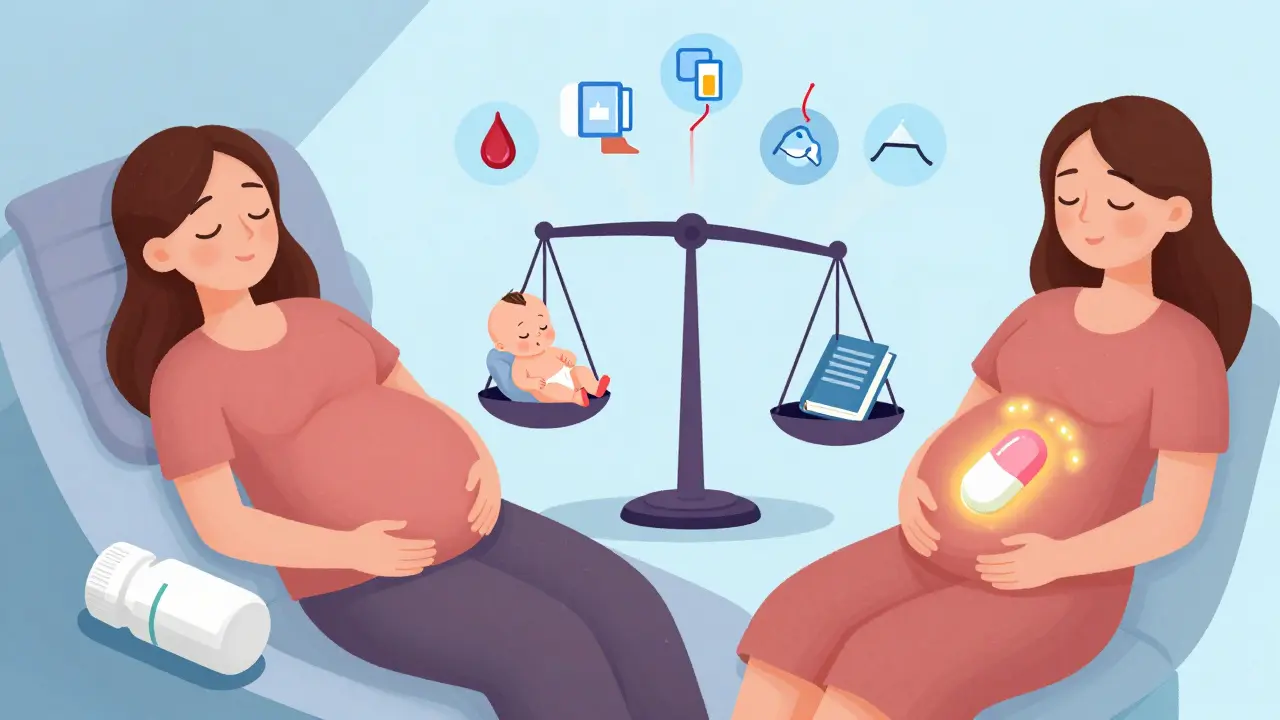
If you’re pregnant and have questions about a medication, here’s what works:
- Check MotherToBaby.org-they track real-world exposure data from thousands of pregnancies and offer free expert consultations.
- Ask your pharmacist to tell you the manufacturer of the generic. If you’ve had a bad reaction before, you can request a different one.
- Don’t switch generics mid-pregnancy unless your doctor recommends it. Stability matters.
- Avoid compounded medications (custom-mixed by pharmacies). They’re not FDA-approved and lack pregnancy safety data.
- If you’re on a medication with a narrow therapeutic index-like levothyroxine, seizure meds, or blood thinners-stick with the same brand or generic. Don’t switch back and forth.
The Bottom Line
Generic drugs during pregnancy aren’t a gamble. They’re a science-backed, cost-effective, and widely used option that saves lives. Over 66% of pregnant women in the U.S. take at least one prescription drug. Nine out of ten of those are generics. And the data doesn’t show higher risks-it shows the same outcomes, the same safety profiles, and the same effectiveness.
Yes, your body changes during pregnancy. Yes, some people notice differences in how they feel. But those differences aren’t caused by the active ingredient-they’re caused by fillers, timing, or coincidence. The FDA, ACOG, CDC, and global health agencies all agree: if a drug is safe in its brand-name form, its generic version is too.
Don’t let fear make you skip a needed medication. Untreated high blood pressure, thyroid disease, depression, or nausea can be far more dangerous to you and your baby than a generic pill. Talk to your provider. Ask questions. But trust the data. Your health-and your baby’s-is too important to second-guess the science.
Are generic medications as safe as brand-name drugs during pregnancy?
Yes. The FDA requires generic drugs to contain the exact same active ingredient, strength, dosage form, and route of administration as the brand-name version. They must also meet strict bioequivalence standards, meaning they work the same way in the body. Pregnancy safety data applies equally to both because the active ingredient is identical. Regulatory agencies like ACOG and the CDC confirm that generics approved by the FDA are therapeutically equivalent and carry the same safety profile.
Can inactive ingredients in generics affect pregnancy?
Inactive ingredients (like dyes, fillers, or preservatives) can vary between brand and generic versions. While they don’t change how the drug works, some pregnant women report differences in side effects-like increased nausea or headaches-when switching generics. These reactions are rare and not linked to fetal risk. If you notice a change after switching, talk to your pharmacist. They can help you find a generic from a different manufacturer or suggest sticking with the same version.
Is it safe to switch from a brand-name drug to a generic during pregnancy?
For most medications, yes. But for drugs with a narrow therapeutic index-like levothyroxine, seizure medications, or blood thinners-switching can cause instability in your body’s response. The FDA requires tighter bioequivalence standards for these drugs, but even then, it’s safest to avoid switching unless directed by your provider. If you’re stable on a brand-name drug, ask your doctor if switching is necessary. Don’t switch based on cost alone if your body is already responding well.
Do generic drugs have the same pregnancy warnings as brand-name drugs?
Yes. Under the FDA’s Pregnancy and Lactation Labeling Rule (PLLR), all versions of a drug-brand or generic-must carry identical safety information. If a drug has warnings about risks during pregnancy, both versions include them. Manufacturers must update generic labels within 30 days if the brand-name version changes. This ensures consistent, accurate information for all users.
What should I do if I’m worried about taking a generic medication while pregnant?
Talk to your healthcare provider or pharmacist. Ask: "What’s the active ingredient?" and "Is this the same as the brand-name version?" You can also contact MotherToBaby.org for free, expert advice based on real pregnancy exposure data. Don’t stop taking a needed medication without consulting your provider-untreated conditions like high blood pressure, thyroid disease, or depression carry greater risks than the medication itself.



11 Comments
Just wanted to say I took generics throughout both pregnancies and zero issues. My OB even praised me for saving money lol. Seriously though, if your body reacts weird, talk to your pharmacist-not panic. 🤗
As someone who’s been through three high-risk pregnancies, I can’t stress this enough: trust the science. The FDA doesn’t cut corners. Generic levothyroxine kept my TSH stable, and my twins are thriving at age 4. Fear doesn’t protect you-knowledge does.
The assertion that generics are bioequivalent within 80–125% is misleading. That’s a 45% window. For drugs with narrow therapeutic indices, such as antiepileptics or anticoagulants, this variability can be clinically significant. The FDA’s standard is inadequate for maternal-fetal pharmacokinetics. The data may show statistical equivalence, but clinical outcomes are not always captured in post-marketing surveillance.
Let me be clear: if you are taking a generic, you are essentially gambling with fetal neurodevelopment. The FDA’s standards are laughably lax. In India, where I practice, generics are manufactured under conditions that would be illegal in the West. The excipients alone-starches, talc, even industrial dyes-can cross the placenta. This isn’t science. It’s corporate negligence dressed up as policy.
You’re all being manipulated by Big Pharma’s marketing machine. The brand-name drugs are overpriced because they’re not better-they’re just more profitable. If you really cared about safety, you’d be demanding clinical trials specific to pregnant women instead of accepting corporate-approved generics. But no, you’d rather take the pill and shut up.
I switched from brand to generic prenatal vitamins mid-pregnancy and had a spike in nausea. My pharmacist checked the manufacturer-it was a different filler. We switched back to the same generic brand I’d used before and it was fine. It’s not about generic vs brand-it’s about consistency. Don’t switch unless you have to.
My wife took generic Zoloft during her pregnancy and our son is now a happy 2-year-old. No issues. I know people get scared, but sometimes the fear is worse than the medicine. Just talk to your doc. 🙏
I HATED the generic version of my nausea med-felt like my brain was melting. I cried for 3 days. My pharmacist said it was the dye. We switched to a different generic and now I’m fine. But seriously, why do they even make these if they mess with pregnant women?? I’m just saying
I’ve been on generic metformin since week 8. No side effects. My OB said it’s identical. I’m not scared. I’m just tired of people acting like every pill is a bomb. You’re not a lab rat. You’re a person with a body that knows what it needs.
Why does this even need a 10-page essay? If your doc says it’s fine, take it. If you’re still freaked out, ask for the brand. But don’t make everyone else feel guilty for saving $30 a month.
It is deeply concerning that regulatory bodies continue to equate bioequivalence with therapeutic equivalence in pregnancy. The pharmacokinetic changes during gestation-altered CYP450 activity, increased volume of distribution, reduced renal clearance-are not adequately modeled in generic approval protocols. To claim safety by proxy is not scientific-it is institutionalized complacency. The data you cite is not from prospective, controlled trials in pregnant populations. It is retrospective, observational, and confounded by selection bias. This is not evidence-it is rhetoric.