
Anticoagulants for Seniors: Safety, Risks, and What You Need to Know
When it comes to anticoagulants, medications that prevent dangerous blood clots by slowing down the clotting process. Also known as blood thinners, they are one of the most commonly prescribed drug classes for older adults, especially those with atrial fibrillation, deep vein thrombosis, or a history of stroke. But for seniors, these drugs aren’t just about preventing clots—they’re a balancing act between life-saving benefits and serious bleeding risks.
Many seniors take warfarin, a long-used anticoagulant that requires regular blood tests to monitor its effect, while others are switched to newer options like DOACs (direct oral anticoagulants), a group of drugs including apixaban, rivaroxaban, and dabigatran that don’t need frequent lab checks. But here’s the catch: seniors often take multiple meds. A simple pain reliever like ibuprofen, or even a common antibiotic, can turn a safe dose into a bleeding emergency. That’s why anticoagulants in older adults aren’t just about the drug itself—they’re about the whole medication picture.
Age changes how the body handles drugs. Kidneys slow down. Liver function dips. Appetite shrinks. All of this means even small changes in dosage can have big effects. Seniors on anticoagulants need more than just a prescription—they need clear instructions, regular check-ins, and awareness of warning signs like unusual bruising, dark stools, or headaches that won’t go away. And because many older adults live alone or have memory issues, medication adherence becomes critical. Missing a dose raises clot risk. Taking an extra pill raises bleeding risk. There’s no middle ground.
The posts below cover exactly these real-world concerns. You’ll find clear guidance on how to avoid dangerous drug interactions, what to do when side effects show up, which anticoagulants work best for seniors with kidney trouble, and how to spot early signs of trouble before it becomes an emergency. Whether you’re managing this for yourself, a parent, or a loved one, this collection gives you the facts—not the fluff—so you can make smarter, safer choices every day.
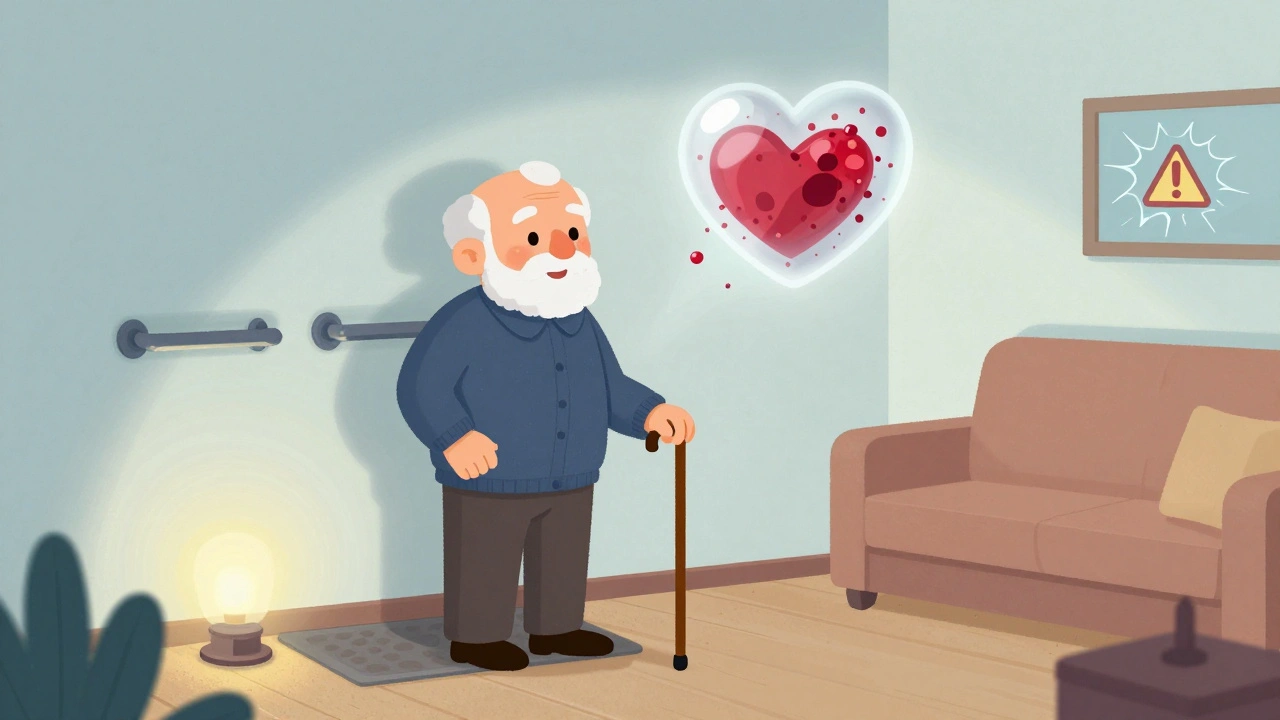
Anticoagulants for Seniors: Why Stroke Prevention Usually Beats Fall Risk
Anticoagulants for seniors with atrial fibrillation prevent far more strokes than they cause bleeds-even with fall risk. Learn why DOACs like apixaban are often the best choice and how to reduce fall danger without stopping treatment.