
Amputation Risk: What Increases It and How to Prevent It
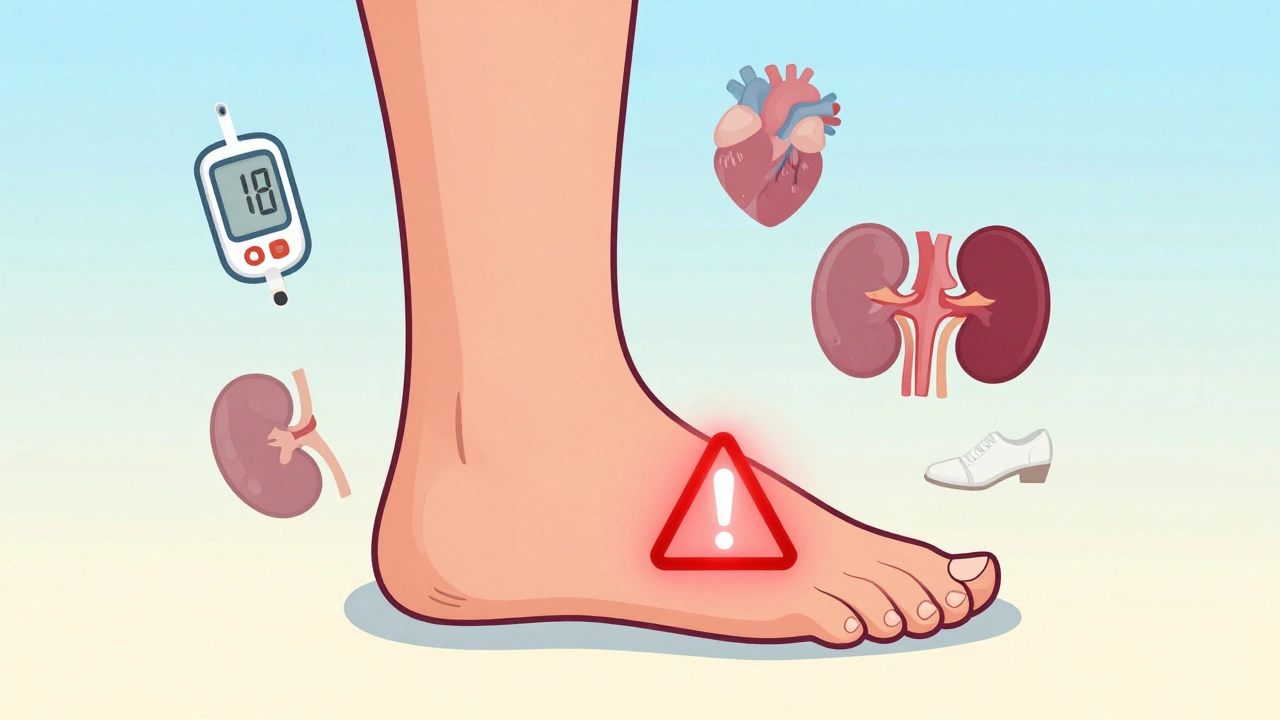
When we talk about amputation risk, the likelihood of losing a limb due to disease or injury. Also known as limb loss risk, it’s not a random event—it’s usually the end result of untreated, progressive conditions that quietly damage tissue, blood flow, and nerve function. Most people don’t realize that over 80% of non-traumatic amputations happen because of complications from diabetes. That means for many, this isn’t about bad luck—it’s about missed warning signs and delayed care.
Diabetic neuropathy, nerve damage from high blood sugar that reduces feeling in the feet is one of the biggest silent drivers. You step on something sharp, develop a blister, or get a small cut—and because you can’t feel it, the wound goes unnoticed. Then comes peripheral artery disease, a condition where arteries narrow and cut off blood flow to the legs and feet. Without enough oxygen and nutrients, even minor injuries won’t heal. Add in foot ulcers, open sores that often form on pressure points in diabetic patients, and you’ve got a perfect storm. These ulcers can turn infected in days, and if infection spreads to bone, amputation becomes the only way to stop it from killing you.
It’s not just diabetes, though. People with severe peripheral artery disease who don’t smoke or have diabetes can still face high amputation risk if their circulation stays poor. Smoking speeds up artery damage. Obesity makes it harder to check your feet and increases pressure on joints. Poorly controlled infections—like cellulitis or osteomyelitis—can spread fast. And if you’re not checking your feet daily, you’re playing Russian roulette with your limbs.
The good news? Amputation risk isn’t a sentence. It’s a signal. Regular foot exams, keeping blood sugar steady, quitting smoking, wearing proper shoes, and treating even small sores immediately can cut your risk by more than half. The posts below cover real cases and proven strategies—from how certain diabetes meds affect healing, to why ignoring a blister can cost you your foot, to what doctors actually look for during foot screenings. You’ll find clear advice on spotting trouble early, avoiding dangerous drug interactions that slow healing, and what to ask your provider if you’ve been told you’re at risk. This isn’t about fear. It’s about control.
Canagliflozin and Amputation Risk: What You Need to Know Now
Canagliflozin increases the risk of foot and leg amputations in certain people with diabetes. Learn who’s at risk, how to prevent complications, and how this drug compares to other SGLT2 inhibitors like Jardiance and Farxiga.