
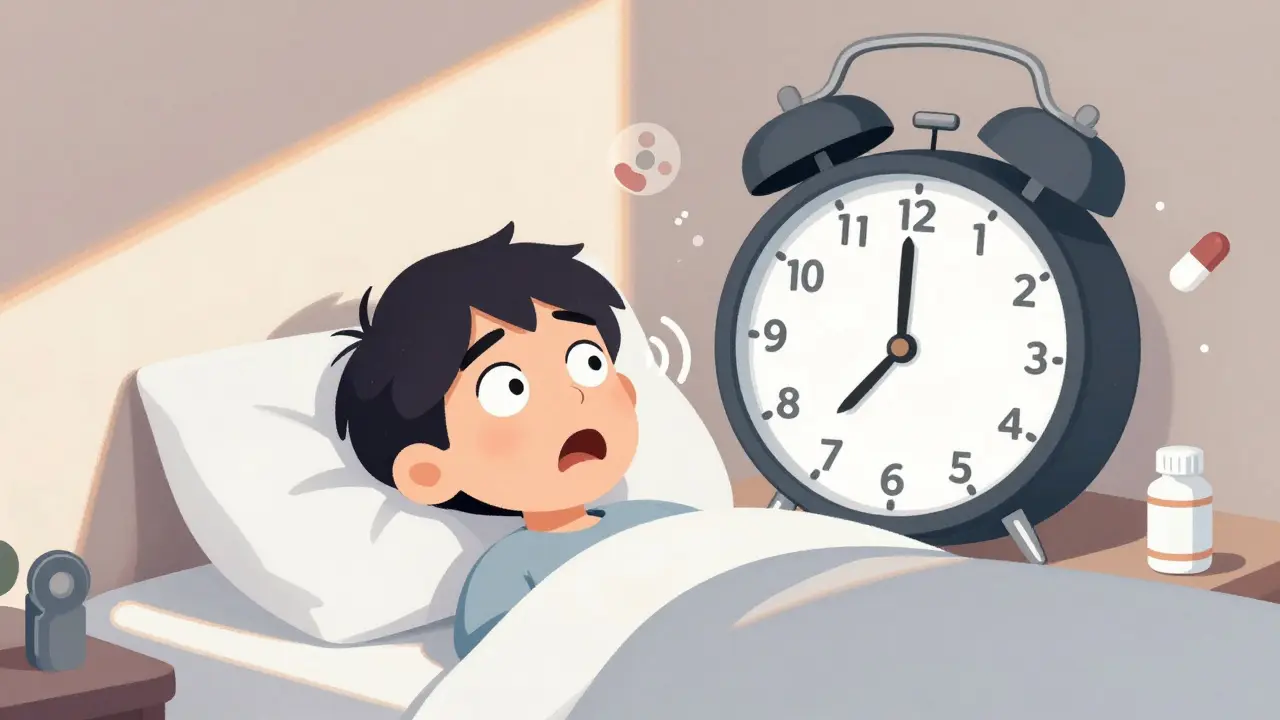
When your hearing drops suddenly-like turning off a switch-it’s not just scary. It’s a medical emergency. Sudden sensorineural hearing loss (SSNHL) isn’t just muffled sounds or earwax. It’s a rapid, unexplained drop in hearing, usually in one ear, happening within 72 hours. You might wake up unable to hear the alarm, or notice your phone volume is maxed out when it wasn’t before. This isn’t something you can wait on. Every hour counts. And the most effective treatment? Steroid therapy.
What Exactly Is Sudden Sensorineural Hearing Loss?
SSNHL is defined as a hearing loss of at least 30 decibels across three consecutive frequencies that happens suddenly, without warning. It’s not like ear infections or earwax blockage. This is damage to the inner ear or nerve pathways that carry sound to the brain. About 5 to 27 people out of every 100,000 experience this each year in the U.S. Most are between 50 and 60, but it can strike anyone-even someone in their 20s. The cause is often unknown. Viruses? Blood flow issues? Autoimmune reactions? We don’t always know. But we do know one thing: if you don’t act fast, you might lose that hearing for good.Why Steroids? The Science Behind the Treatment
Steroids aren’t just for inflamed joints or asthma. They’re powerful anti-inflammatory and immune-modulating drugs. In SSNHL, doctors believe inflammation or immune attacks are damaging the delicate hair cells or nerves in the cochlea. Steroids help calm that down. They may also improve blood flow to the inner ear, which is critical for survival of hearing cells. The 2019 Clinical Practice Guideline from the American Academy of Otolaryngology-Head and Neck Surgery Foundation (AAO-HNSF) made it clear: if you have sudden hearing loss, you need steroids-fast. Studies show that without treatment, only 32% to 65% of people recover hearing on their own. With treatment, that number jumps significantly. The window for the best results? Within two weeks. After four weeks, the chance of recovery drops to 19%. Beyond six weeks? Almost no benefit.Oral Steroids: The First-Line Treatment
The standard first step is oral corticosteroids. The most common is Prednisone a synthetic corticosteroid used to reduce inflammation and suppress immune response in sudden hearing loss. The recommended dose is 1 mg per kilogram of body weight per day-up to a maximum of 60 mg daily. You take it as a single dose, usually in the morning, for 7 to 14 days, then taper slowly over the same period. Tapering is critical. Stopping abruptly can cause serious side effects. An alternative is Dexamethasone a potent corticosteroid with longer half-life and higher potency than prednisone, used in oral and intratympanic forms for sudden hearing loss. It’s 5 to 7 times more potent than Prednisone and lasts longer in the body (36-72 hours vs. 18-36 hours). Some doctors prefer it because you can take it once daily. But clinical outcomes are nearly identical between the two. Recovery rates? Studies show 47% to 62% of patients on oral steroids experience complete or partial hearing recovery. That’s a big jump from the 32% who recover without treatment.What If Oral Steroids Don’t Work?
Not everyone responds. That’s where intratympanic steroid injections a procedure where corticosteroid is injected directly into the middle ear to deliver high concentrations to the inner ear, used as salvage therapy for sudden hearing loss come in. This is a simple office procedure. A doctor injects a small amount of Dexamethasone (usually 24 mg/mL) through the eardrum. It’s not fun-it feels like pressure, sometimes sharp pain-but it’s quick. No general anesthesia. No hospital stay. If you still haven’t recovered after 2 to 6 weeks of oral steroids, this is your next step. Studies show 42% to 65% of patients gain hearing back with this method. And because the steroid is delivered directly to the inner ear, it avoids the systemic side effects of pills. That’s a huge advantage for people with diabetes, high blood pressure, or mood disorders who can’t tolerate oral steroids.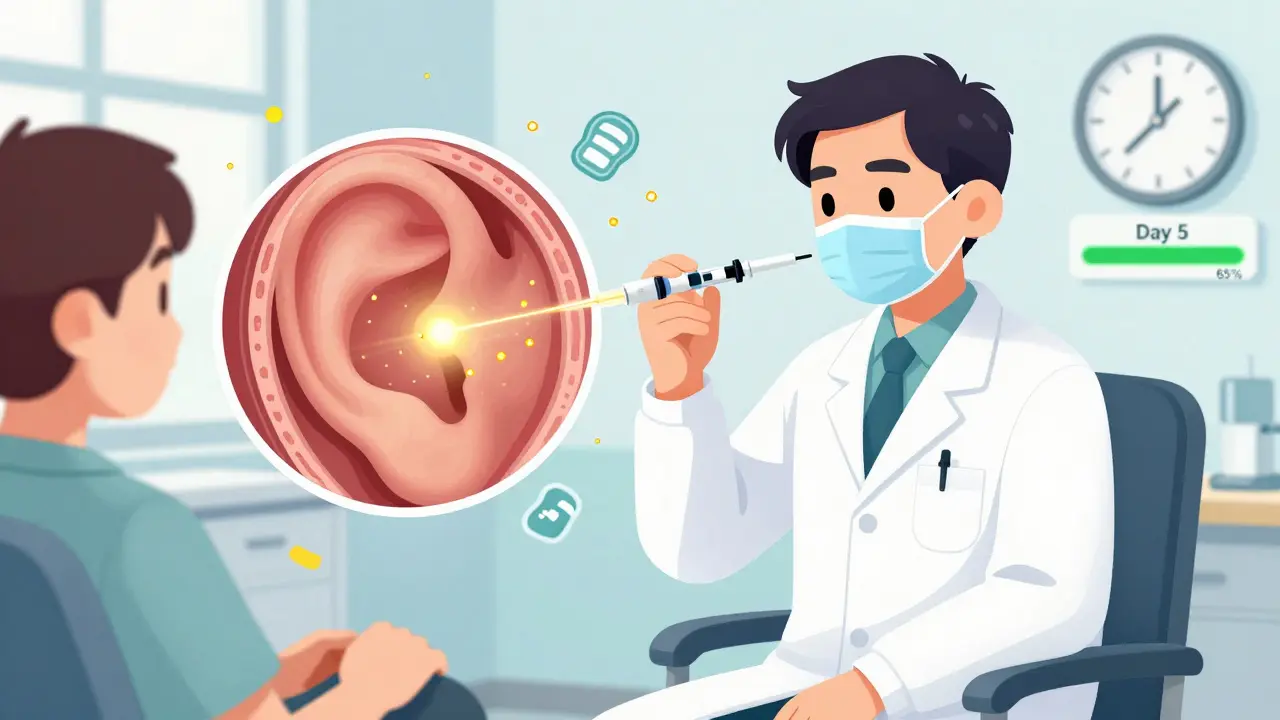
What Doesn’t Work-And Why
You might hear about antivirals, blood thinners, or hyperbaric oxygen therapy being used. Don’t believe the hype. Multiple meta-analyses have proven antivirals (like valacyclovir) and thrombolytics (like tissue plasminogen activator) offer no benefit over placebo. Same with vasoactive drugs meant to improve blood flow. They’re not just ineffective-they waste time and money. Hyperbaric oxygen therapy (HBOT) has a small, possible benefit-studies show it adds 6% to 12% improvement when combined with steroids. But it’s expensive ($200-$1,200 per session), hard to access (only 37% of U.S. hospitals have a chamber), and must be done within 28 days. For most people, it’s not practical. The bottom line? Stick to steroids. Everything else is noise.Side Effects and Risks
Steroids work, but they come with baggage. A 60 mg daily dose of Prednisone for two weeks can cause:- Severe insomnia (reported by 41% of patients)
- Weight gain (average 4.7 kg)
- Increased blood sugar (28% of diabetics see dangerous spikes)
- Mood swings, anxiety, or depression (22%)
- Stomach upset, requiring acid blockers
Time Is Everything
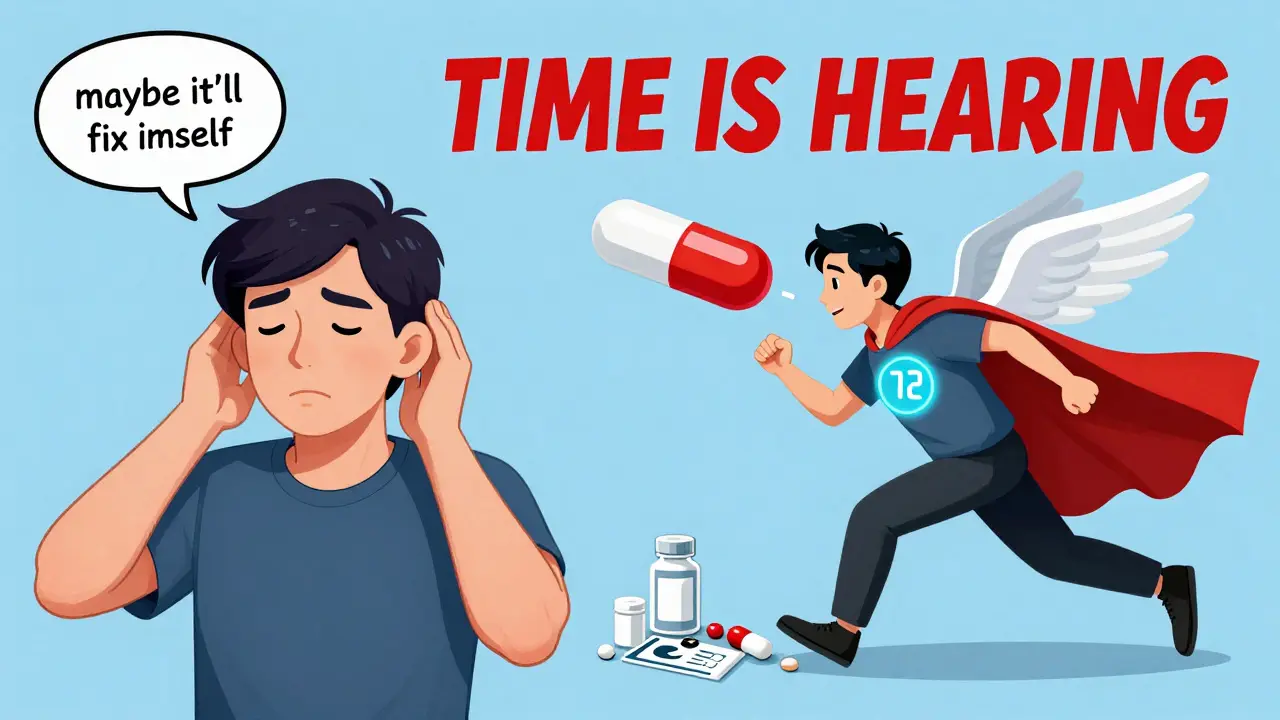
This is the most important thing to remember: SSNHL is a race against time. The 2019 AAO-HNSF guideline says it clearly: “The window for effective intervention is narrow-every hour counts.” Data shows:- 61% of patients treated within 2 weeks recover hearing
- Only 19% recover if treatment starts after 4 weeks
- After 6 weeks, the benefit is negligible
What Happens After Treatment?
Recovery isn’t instant. Hearing can improve over days or weeks. Some people plateau. Others improve slowly. Follow-up is non-negotiable. The AAO-HNSF guideline requires:- Baseline audiogram at diagnosis
- Repeat audiogram after treatment
- 6-month follow-up to document long-term outcome
What’s Next? The Future of SSNHL Treatment
The 2024 Military Health System update standardized Prednisone dosing at 60 mg/day for 14 days, with taper. That’s now the gold standard. But the future is personalization. Researchers are testing blood markers to predict who will respond to steroids. Phase 2 trials (NCT04567821) are looking at inflammatory proteins like IL-6 and TNF-alpha. If a patient’s blood shows high inflammation, they’re more likely to benefit. If not? Maybe they need a different approach. Steroids will remain first-line for at least the next decade. But the way we use them? That’s changing. More direct delivery. Fewer pills. Better targeting. Less trial and error.Final Takeaway
Sudden hearing loss is rare-but devastating. And it’s treatable-if you act fast. Oral steroids are the proven, first-line treatment. Intratympanic injections are a powerful backup. Everything else? Not supported by evidence. Don’t ignore it. Don’t wait. If your hearing drops suddenly, get to an ENT within 72 hours. Start steroids. Get your audiogram. Follow up. Your hearing might depend on it.Can sudden hearing loss fix itself without treatment?
Yes, but only in about one-third to two-thirds of cases. Without treatment, recovery is unpredictable and often incomplete. Steroid therapy increases the chance of full recovery by nearly double. Waiting to see if it gets better is risky-you might lose the window for effective treatment.
How soon should I see a doctor if I lose hearing suddenly?
Within 72 hours. The first three days are the most critical. After that, the chance of recovery drops sharply. Don’t wait for your regular doctor’s appointment. Go to urgent care, the ER, or call an ENT directly. Time is the most important factor in treatment success.
Are steroid injections better than pills for sudden hearing loss?
For initial treatment, oral steroids are standard. But if pills don’t work or you can’t tolerate them (due to diabetes, high blood pressure, or mental health issues), intratympanic injections are a highly effective alternative. They deliver the drug directly to the inner ear, with fewer side effects. Studies show similar recovery rates-around 45% to 60%-but with much lower risk of systemic side effects.
Why don’t doctors use antivirals or blood thinners anymore?
Multiple large studies and meta-analyses have shown no benefit from antivirals (like valacyclovir) or blood thinners (like tissue plasminogen activator) compared to placebo. They don’t improve hearing outcomes. Using them delays real treatment and adds cost and risk without benefit. Current guidelines no longer recommend them.
Can I get hyperbaric oxygen therapy instead of steroids?
No. Hyperbaric oxygen therapy (HBOT) is not a substitute. It may offer a small additional benefit when used alongside steroids, but only if started within 28 days. It’s expensive, hard to access, and not proven as a standalone treatment. Steroids remain the only treatment with strong, consistent evidence. HBOT is an add-on-not an alternative.
What should I do if my insurance denies coverage for intratympanic injections?
Insurance denials are common-42% of initial claims are rejected. Ask your ENT to submit a letter of medical necessity citing the AAO-HNSF guideline and clinical studies. Appeal the decision. Many denials are overturned on appeal. If you can’t afford it, ask about payment plans or clinical trials. Delaying this treatment reduces your chance of recovery.

8 Comments
Just had this happen last year-woke up deaf in one ear. Thought it was earwax. Went to urgent care, they did the audiogram, and BAM-SSNHL. Got prednisone fast, like 12 hours after symptoms. Crazy side effects-couldn’t sleep, felt like a zombie, gained 8 lbs-but I can hear again. Don’t wait. Seriously. My doc said if I waited 48 more hours, I might’ve lost it for good. So yeah-ACT FAST. Also, the injection thing? My ENT offered it after the pills didn’t fully work. Felt like a needle going into my brain. Worth it.
Thank you for this comprehensive and meticulously referenced post. It is both clinically accurate and deeply humane in its delivery. As a healthcare professional in Ireland, I encounter too many patients who delay seeking care due to misinformation or fear. The emphasis on the 72-hour window is not merely a guideline-it is a lifeline. The data you present aligns precisely with the latest European guidelines, and your clarification regarding antivirals and hyperbaric therapy is both necessary and refreshing. May this reach those who need it most.
LMAO so you’re telling me steroids are the only thing that works? Like, no magic herbs, no acupuncture, no essential oils? What a shocker. I’m just sitting here wondering how many people got scammed by that ‘hearing crystal’ TikTok trend. I mean, c’mon. I had my cousin try ‘ear candling’ after she lost hearing-she thought it was ‘energy blockage’. She’s still deaf in one ear. Meanwhile, I’m over here on prednisone like a champ. Side effects? Yeah, I cried during a commercial for dog food. But I can hear my dog barking again. So yeah. Steroids win. Everything else is snake oil with a fancy name.
While the clinical consensus favors corticosteroid intervention, the underlying pathophysiological heterogeneity of SSNHL remains grossly underappreciated. The assumption that inflammation is the primary driver is reductionist. Emerging biomarkers (e.g., IL-6, TNF-α, CRP) suggest a subset of patients may exhibit immune dysregulation rather than inflammation per se. Moreover, the 2019 AAO-HNSF guideline lacks stratification by etiological subgroup. Consequently, blanket steroid protocols may represent a form of therapeutic overreach. Intratympanic delivery mitigates systemic exposure but does not resolve the fundamental issue: we are treating a symptom cluster, not a defined disease entity. Until we validate molecular subtyping, we are engaging in probabilistic medicine-not precision medicine.
Let me tell you about my friend who ignored this. He waited two weeks because he ‘didn’t want to be that guy’ going to the ER. Two weeks. He thought it was ‘just allergies’. Guess what? He lost 80% of his hearing in his left ear. Permanent. Now he’s got a hearing aid and a chip on his shoulder. He blames the doctor. The doctor blames the system. The system blames insurance. But the truth? He blamed himself. And he’s right. This isn’t a ‘maybe I’ll get better’ situation. This is a ‘you have 72 hours to save your life’s soundtrack’ situation. Steroids aren’t magic-they’re your last shot. Don’t be the guy who didn’t listen. Don’t be the guy who Googled ‘natural remedies for sudden deafness’ at 2 a.m. You’re not a podcast listener. You’re a human being with ears that need saving. Do the damn thing.
I had SSNHL. Took the steroids. Didn’t work. Got the injection. Still didn’t work. Now I have a hearing aid. It’s fine. I’m okay. But I wish someone had told me earlier that recovery isn’t guaranteed-even if you do everything right. I spent months feeling guilty, like I failed. I didn’t. It just didn’t work. So if you’re reading this and you’re scared you won’t get better? You’re not alone. And you’re not broken. Some people just don’t recover. That doesn’t mean you didn’t try hard enough.
As a former ENT resident, I’ve seen this too many times. Steroids = gold standard. Full stop. But let’s be real-the real problem is that 70% of patients don’t even know what SSNHL is. They think it’s ‘ear infection’ or ‘tinnitus’. The real hero here? Public awareness. If you’ve read this far, share it. Text your mom. Post it on your group chat. DM your cousin who’s always ‘losing hearing’ during Zoom calls. We need more people who know: if your ear goes quiet overnight, it’s not a glitch. It’s an emergency. And yeah, I use 🚨 in every post about this. Because it deserves it.
My sister had this last year. She’s diabetic, so they skipped the oral steroids and went straight to the injection. She was terrified-said it felt like a bee stung her brain. But she got it done. And now? She can hear her daughter laugh again. I just want to say-thank you for writing this. It’s scary to be the person who says ‘go to the ER’ when everyone else says ‘wait and see’. But you’re right. Waiting is the worst thing you can do. I’ve shared this with my whole family. And if you’re reading this and you’re scared? I get it. But you’re not alone. And your hearing? It’s worth fighting for.