
Statin Muscle Symptom Checker
Check Your Symptoms
This tool helps identify whether your muscle symptoms are more likely related to statin myopathy (muscle issue) or neuropathy (nerve issue). Results are not diagnostic.
Results
Critical Medical Warning
Stopping statins abruptly increases heart attack risk by 25% for every 1 mmol/L rise in LDL. Never discontinue medication without medical supervision.
If you experience severe muscle pain, dark urine, or sudden weakness, seek emergency care immediately.
When you start taking a statin to lower your cholesterol, you expect fewer heart attacks-not new muscle cramps. But for many people, those cramps, aches, or tingling in the legs show up soon after starting the pill. And suddenly, you’re stuck: do you stop the statin and risk your heart, or keep taking it and live with the pain?
The truth is, not all muscle problems from statins are the same. Some come from your muscles breaking down. Others come from your nerves misfiring. Mistake one for the other, and you could make the wrong choice-stopping a life-saving drug, or ignoring a real nerve problem that needs its own treatment.
Statin Myopathy: When Your Muscles Are the Problem
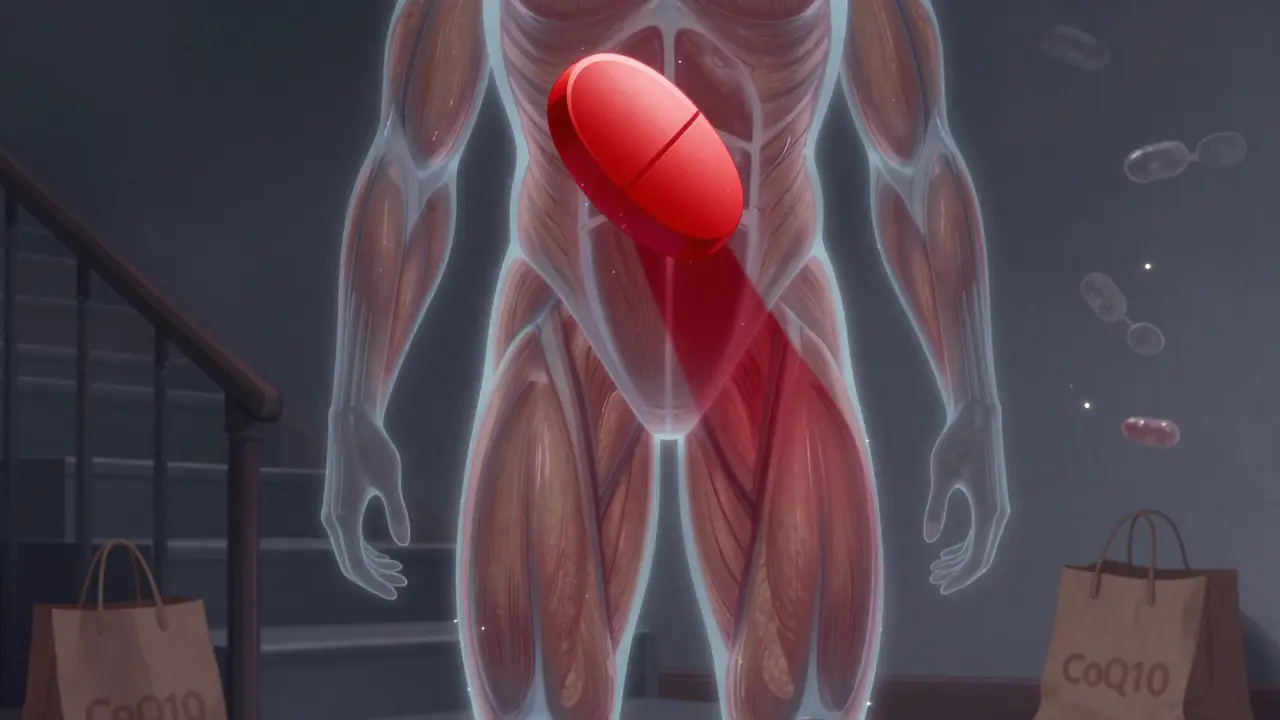
Statin-associated myopathy is the most common muscle-related side effect. It’s not just soreness. It’s a deep, persistent ache in your thighs, hips, or shoulders-usually on both sides. You might notice it when climbing stairs, getting up from a chair, or lifting groceries. It doesn’t feel like a pulled muscle. It feels like your body is heavy, tired, and slow to respond.
Unlike a workout-induced ache, this doesn’t go away in a few days. And it often doesn’t show up in blood tests. Most people with statin myopathy have normal or only slightly elevated creatine kinase (CK) levels. That’s why many doctors miss it. They look for high CK and say, “Your numbers are fine,” but the symptoms are real. Studies show up to 29% of patients on statins report muscle symptoms in real-world settings, even though clinical trials report only 1-5%.
The science behind it is clear: statins block HMG-CoA reductase, an enzyme your liver uses to make cholesterol. But your muscles rely on the same enzyme to make coenzyme Q10 (CoQ10), which helps produce energy. Within 30 days of starting a statin, muscle CoQ10 levels drop by about 40%. That’s like turning down the fuel to your muscles. They start to struggle, leading to cramps, weakness, and even cell damage.
Some people are more at risk. If you’re over 65, female, taking a fibrate like fenofibrate at the same time, or have a specific gene variant called SLCO1B1, your chances go up. The HLA-DRB1*11:01 gene variant is linked to a rare but severe form called immune-mediated necrotizing myopathy, where the body attacks its own muscle tissue.
The big clue? Symptoms get better when you stop the statin. Usually within weeks. And if you restart the same drug, the pain comes back. That’s the gold standard for diagnosis.
Statin Neuropathy: When Your Nerves Are the Culprit
Now, what if your problem isn’t weakness in your thighs-but tingling in your toes? A burning sensation that feels like walking on hot sand? Numbness that creeps up your legs like a slow tide? That’s not myopathy. That’s likely peripheral neuropathy.
Neuropathy affects nerves, not muscles. It follows a “stocking-glove” pattern: starting in the feet and hands, moving upward. You might feel pins and needles, electric shocks, or lose the ability to feel light touches. Unlike myopathy, neuropathy doesn’t make you weak in your hips or shoulders. It makes your feet feel numb or sensitive to the point that even sheets hurt.
Here’s the twist: the link between statins and neuropathy is controversial. Some studies say statins increase the risk. Others say they lower it. A 2019 study of over 600 patients found that those taking statins were actually less likely to have unexplained peripheral neuropathy. Why? Maybe because statins reduce inflammation or improve blood flow to nerves. Or maybe the people who get neuropathy on statins have other underlying issues-like diabetes or vitamin B12 deficiency-that weren’t caught.
Still, there’s a plausible mechanism. Nerves need cholesterol to build and repair their protective sheaths. Statins lower LDL, which carries vitamin E-a powerful antioxidant that protects nerves. Lower vitamin E, more nerve damage. Also, the same CoQ10 drop that hurts muscles might affect nerve energy too.
But here’s the catch: there’s no single blood test for statin-induced neuropathy. The only way to confirm it is through electrodiagnostic testing-nerve conduction studies and electromyography (EMG). These tests measure how fast signals travel through your nerves and whether they’re firing properly. If your sensory nerve action potentials are low, that’s a sign of axonal neuropathy. If the signal is slow, it’s demyelinating. This isn’t something your primary care doctor can diagnose with a quick exam.

How to Tell the Difference: A Simple Checklist
Here’s how to quickly tell whether your muscle problem is from your muscles or your nerves:
- Location: Myopathy = thighs, hips, shoulders. Neuropathy = feet, hands, toes.
- Feeling: Myopathy = dull ache, heaviness, weakness. Neuropathy = tingling, burning, numbness, electric shocks.
- Strength: Myopathy = you struggle to stand up or climb stairs. Neuropathy = you can stand fine, but you can’t feel your feet.
- Lab test: Myopathy = CK may be elevated (but often isn’t). Neuropathy = CK is normal.
- Testing: Myopathy = response to stopping statin. Neuropathy = needs nerve conduction study.
If you’re unsure, don’t guess. See a neurologist. Many patients are misdiagnosed because their doctors assume all muscle pain on statins is myopathy. But if you have numbness in your feet and your CK is normal, it’s probably not statin myopathy. It could be diabetes, spinal stenosis, or even a vitamin deficiency.
What to Do Next: Practical Steps
Step 1: Don’t stop your statin on your own. Stopping without a plan can raise your risk of heart attack or stroke by 25% for every 1 mmol/L rise in LDL.
Step 2: Track your symptoms. Write down when they started, where they hurt, how bad they are (1-10 scale), and whether they change with activity or rest. Bring this to your doctor.
Step 3: Get basic blood tests. Check your CK, thyroid function (hypothyroidism mimics myopathy), vitamin B12, and vitamin D. These are cheap, fast, and rule out common mimics.
Step 4: If symptoms persist after 2-3 months off statins, see a neurologist. You might have an unrelated nerve condition that was masked by your statin symptoms. Studies show many patients develop symptoms of underlying neuropathy only after statins are stopped-because the statin was hiding it.
Step 5: If it’s myopathy, don’t give up on statins. Try a different one. Hydrophilic statins like pravastatin or rosuvastatin are less likely to cause muscle issues. Studies show about 60% of people who had myopathy on one statin can tolerate another.
Step 6: If you can’t tolerate any statin, use non-statin options. Ezetimibe, PCSK9 inhibitors (like evolocumab or alirocumab), or bempedoic acid can lower LDL just as well-with far less muscle risk. The American College of Cardiology says these should be used routinely for statin-intolerant patients.
What Doesn’t Work
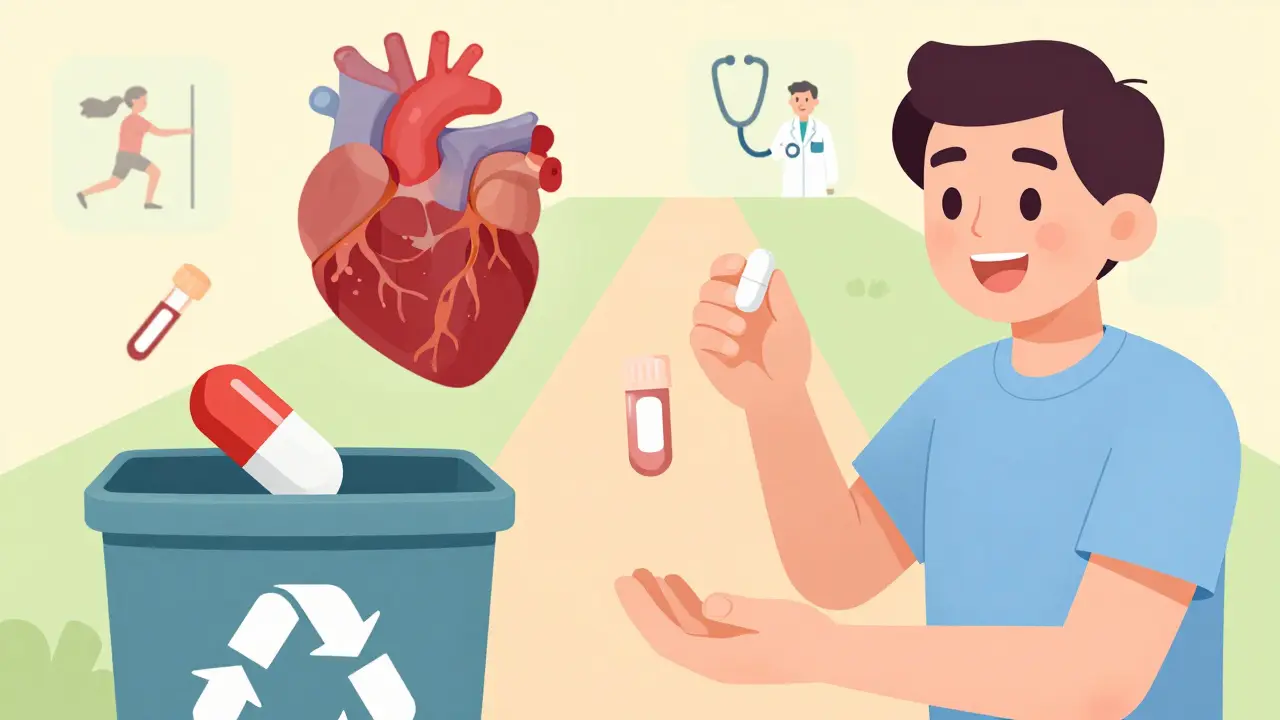
CoQ10 supplements? A 2015 JAMA study gave 44 people with statin myopathy 100 mg of CoQ10 daily for 30 days. No improvement compared to placebo. So don’t waste your money.
Stretching, massage, or heat? These help general soreness, but won’t fix the root cause of statin myopathy or neuropathy. They might make you feel better temporarily, but the problem will return.
Switching to “natural” cholesterol remedies? Red yeast rice contains a natural statin (monacolin K) and can cause the same muscle problems. Same risk, no regulation.
Bottom Line: Your Heart Still Matters
Muscle cramps on statins are real. But they’re not always what they seem. Most are myopathy-your muscles reacting to reduced energy production. A smaller number may be neuropathy-your nerves signaling trouble. But the biggest danger isn’t the side effect. It’s stopping your statin because you think you know what’s wrong.
Work with your doctor. Get the right tests. Don’t assume. And remember: lowering your LDL by 1 mmol/L reduces your heart attack risk by 25%. That’s not a small trade-off. Find the right solution-not the easiest one.

8 Comments
I’ve been on rosuvastatin for six years now, and honestly, the muscle cramps started around month three. I thought it was just aging-until I read this. The CoQ10 drop explanation makes total sense. My CK was always normal, too. Doctors kept saying, ‘It’s not the statin,’ but I knew it was. I switched to pravastatin after reading a paper from the Mayo Clinic on hydrophilic statins, and within three weeks, the heaviness in my legs was gone. No more struggling up stairs. Funny thing-I didn’t even know statins affected CoQ10 until I dug into the pharmacology myself. Most GPs don’t talk about it. They just hand you the script and call it a day.
Also, if you’re over 65 and female? You’re basically in the high-risk zone. My mom had the same issue on atorvastatin. She thought it was arthritis. Took her two years to figure out it was the pill. Don’t wait that long. Track your symptoms like the post says. Write them down. Bring it to your doctor like a damn report. They’ll take you more seriously.
And please, stop taking red yeast rice. It’s just a sneaky statin with no FDA oversight. I tried it after quitting my first statin. Same cramps, plus a stomachache and a bill from a sketchy supplement store. Not worth it.
Oh wow. Another ‘statin is evil’ sob story. 😒
Let me guess-you also think vaccines cause autism and gluten gives you existential dread? 🙄
Statins save lives. Your ‘muscle cramps’ are probably just laziness wrapped in a wellness TikTok. You’re not ‘suffering,’ you’re just uncomfortable. Get off the couch. Do some squats. Maybe your body’s just mad you eat 3 bags of chips a day and think that’s ‘normal.’
And CoQ10? Please. That’s snake oil for people who think supplements are medicine. I’ve been on Lipitor since 2012. No cramps. No drama. Just a clean artery and a lower chance of dying before my kids graduate college. Stop making everything a conspiracy. You’re not a patient. You’re a liability.
Thank you for this meticulously researched, compassionate, and profoundly important breakdown. As a retired clinical pharmacologist and someone who has counseled hundreds of patients navigating statin-related concerns, I cannot emphasize enough how critical this distinction between myopathy and neuropathy truly is.
Too often, primary care providers, under immense time pressure and lacking specialized neurology training, default to the most common diagnosis-myopathy-without considering the subtler, yet equally debilitating, manifestations of peripheral neuropathy. This misattribution leads not only to unnecessary discontinuation of life-saving therapy but also to the dangerous delay in diagnosing underlying conditions such as diabetic neuropathy, vitamin B12 deficiency, or even early-stage spinal stenosis.
The checklist you provided is not merely helpful-it is essential. I have distributed it to every resident in my department. The fact that CK levels are often normal in statin myopathy cannot be overstated. Many clinicians still equate muscle symptoms with elevated CK, which is a dangerous misconception rooted in outdated clinical trial data. Real-world evidence shows symptom prevalence far exceeds what was reported in controlled environments.
Furthermore, your point about non-statin alternatives is vital. Ezetimibe, PCSK9 inhibitors, and bempedoic acid are not ‘second-tier’ options-they are legitimate, evidence-based, and often superior alternatives for statin-intolerant patients. Insurance barriers and physician inertia continue to limit their use, but the data is clear: cardiovascular risk reduction is achievable without muscle toxicity.
Lastly, I implore all readers: if you experience sensory changes-numbness, tingling, burning-do not assume it’s ‘just the statin.’ Seek a neurologist. Get the nerve conduction study. Your quality of life, and your longevity, depend on it.
Man, I wish I’d read this two years ago. I stopped my statin cold turkey because my legs felt like lead pipes. Turns out, I had undiagnosed type 2 diabetes. The numbness in my toes? That was the real problem. The cramps? Probably the statin. But I didn’t know how to tell the difference.
After I went back on pravastatin (with my doc’s blessing), the cramps eased up. But the foot tingling? Still there. Got my HbA1c checked-7.8. Whoops. Now I’m on metformin, walking 5K steps a day, and my A1c’s down to 5.9. Statin didn’t cause the neuropathy. It just masked it. Funny how that works.
Don’t panic. Don’t quit. But don’t ignore it either. Keep a journal. Track the where, the when, the how bad. It’s not magic. It’s just data. And data beats guesswork every time.
Western medicine is so obsessed with pills that it forgets the body has its own wisdom. In my country, we treat muscle pain with turmeric, massage, and rest-not chemical interference. You take a drug that blocks a natural enzyme, then wonder why your muscles rebel? Of course they do. Nature does not make mistakes. Only arrogant doctors do.
And now you tell us to take more expensive drugs like PCSK9 inhibitors? These are corporate inventions, designed to profit from the very problems they create. Why not return to traditional diets? Eat less saturated fat. Walk more. Meditate. Your heart will thank you without poisoning your muscles.
Even the WHO recommends lifestyle first. Why are we still prescribing statins like candy? This is not healing. This is chemical dependency dressed as prevention.
OMG I had this exact thing. I thought I was just getting old. My feet felt like they were wrapped in sandpaper. I stopped the statin, panicked, then started panicking about my heart. Went to a neurologist, got the EMG, turns out I had mild diabetic neuropathy. My A1c was 6.4-just over the line. Changed my diet, started walking, now I’m back on a low-dose rosuvastatin and my feet don’t feel like they’re on fire anymore.
TL;DR: don’t panic, but don’t ignore it. Get the nerve test. It’s not scary. I did it in 30 mins. Worth it.
So let me get this straight-you’re telling me the same drug that lowers cholesterol might also make your muscles feel like they’re full of wet cement… but the solution is to take a *different* chemical that costs $14,000 a year?
And you’re not even sure if it’s the statin or your diabetes or your shoes or the moon phase?
Wow. Just… wow.
At this point, I’m just waiting for the article: ‘How to Tell If Your Headache Is Caused by Statins, Wi-Fi, or the Ghost of Your Ex.’
Meanwhile, I’ll be over here eating avocado toast and pretending I didn’t just read a 2,000-word essay on why my body is a malfunctioning IKEA shelf.
Y’all are overcomplicating this. If your legs feel heavy and weak? Try a different statin. If your feet feel numb or tingly? Get your blood sugar checked. Simple. No drama. No supplements. No guilt.
I was on atorvastatin. Cramps every night. Switched to pravastatin. Gone in two weeks. No neurologist. No EMG. Just a smart switch.
And if you’re worried about your heart? Don’t quit. Just swap. You’ve got options. Don’t let fear make you choose between pain and death. There’s a middle path. Find it.