
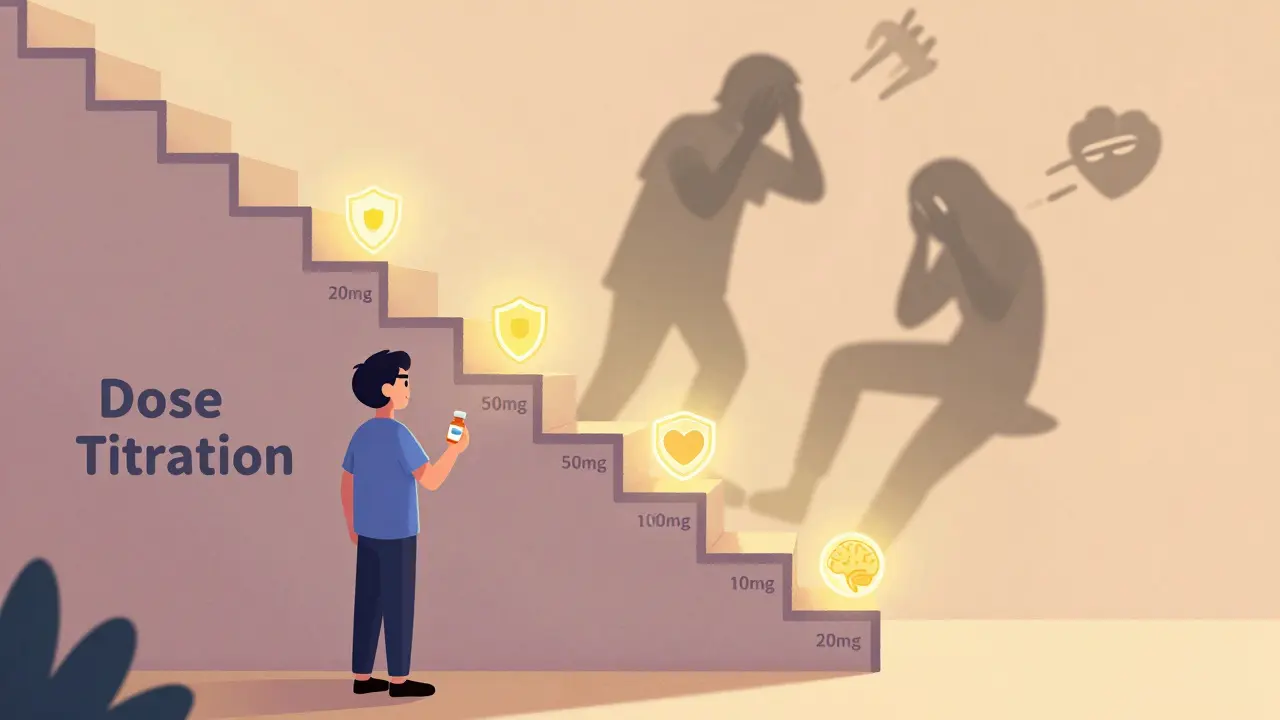
Dose Titration Calculator
Safe Dose Adjustment Calculator
Determine your personalized titration schedule based on medication type and your specific treatment needs.
Titration Schedule
Select a medication type and enter current/target doses to see your personalized schedule.
Why Dose Titration Matters for Your Medication Safety
Imagine starting a new medication and feeling awful within days-headaches, nausea, dizziness, or worse. You stop taking it, convinced it’s not for you. But what if the problem wasn’t the drug itself, but how fast it was introduced? That’s where dose titration comes in. It’s not just a medical buzzword; it’s a proven way to help your body adjust to medication without crashing. For drugs with narrow therapeutic windows-where the difference between helping and harming is small-titration isn’t optional. It’s essential.
According to the American Medical Association, 87% of prescription medications that need precise dosing now come with official titration guidelines. This includes everything from antidepressants and ADHD meds to heart drugs and cancer treatments. The goal? Get you to the lowest effective dose that controls your symptoms while keeping side effects manageable. Skipping this step isn’t just risky-it’s common. And that’s why so many people quit their meds too soon.
How Dose Titration Actually Works
Dose titration isn’t guesswork. It’s a structured, step-by-step process. You start low-often at 25% to 50% of the target dose-and slowly increase it over time. The pace depends on the drug. Stimulants like Adderall or Vyvanse might be adjusted every 3 to 7 days. Slower-acting drugs like atomoxetine or lamotrigine need weeks between each bump. Why? Because some side effects take time to show up, and your body needs time to adapt.
For example, venetoclax, a leukemia drug, follows a strict 5-week ramp-up: 20mg in week one, then 50mg, 100mg, 200mg, and finally 400mg. This prevents tumor lysis syndrome-a dangerous drop in electrolytes that can happen if cancer cells die too fast. Lamotrigine, used for epilepsy and bipolar disorder, takes 5 weeks to reach full dose to avoid life-threatening skin reactions like Stevens-Johnson syndrome. These aren’t arbitrary schedules. They’re based on clinical trials that watched what happened when people jumped straight to full doses.
Down-titration matters too. If you’ve been on a high dose for months and want to reduce it-maybe because side effects are lingering-you don’t just stop. You lower it slowly. Going too fast can trigger withdrawal symptoms, rebound effects, or even seizures. Titration works both ways.
Medications That Need Titration the Most
Not all drugs need careful titration. But the ones that do tend to have serious side effects if dosed wrong. Here are the big ones:
- Antidepressants (SSRIs, SNRIs): Starting at full dose can cause nausea, insomnia, or increased anxiety-especially in the first two weeks. Starting low cuts these side effects by up to 60%.
- ADHD stimulants (Adderall, Ritalin, Vyvanse): High doses can cause jitteriness, appetite loss, or heart palpitations. Many patients report feeling better after starting at 5mg instead of 10mg.
- Anticonvulsants (lamotrigine, perampanel): Skin rashes and neurological side effects spike if titration is rushed.
- Heart failure drugs (beta-blockers like carvedilol): Rapid increases can drop blood pressure too far. Gradual titration reduces discontinuation rates from 45% to 18%.
- Thyroid meds (levothyroxine): Too much can cause heart rhythm issues. Starting at 25-50mcg and adjusting every 4-6 weeks keeps things stable.
- Anticoagulants (warfarin): Requires weekly blood tests (INR) to fine-tune the dose. Newer drugs like apixaban are more forgiving, but warfarin still needs careful titration in 67% of patients during the first month.
These aren’t just guidelines-they’re safety nets. Skipping them isn’t bravery. It’s a gamble with your health.
Real Stories: What Happens When Titration Is Done Right (or Wrong)
On Reddit’s r/ADHD community, over 2,400 people shared their titration experiences. One user wrote: “Started at 5mg Adderall instead of 10mg. My anxiety vanished. I’ve been on it for 3 years.” Another said: “Doctor gave me 20mg Vyvanse on day one. I couldn’t sleep for a week. Quit meds for two years.”
A 2022 survey of 1,200 ADHD patients found that 74% who followed proper titration reported manageable side effects. Only 41% of those who didn’t did. That’s not a small difference-it’s life-changing.
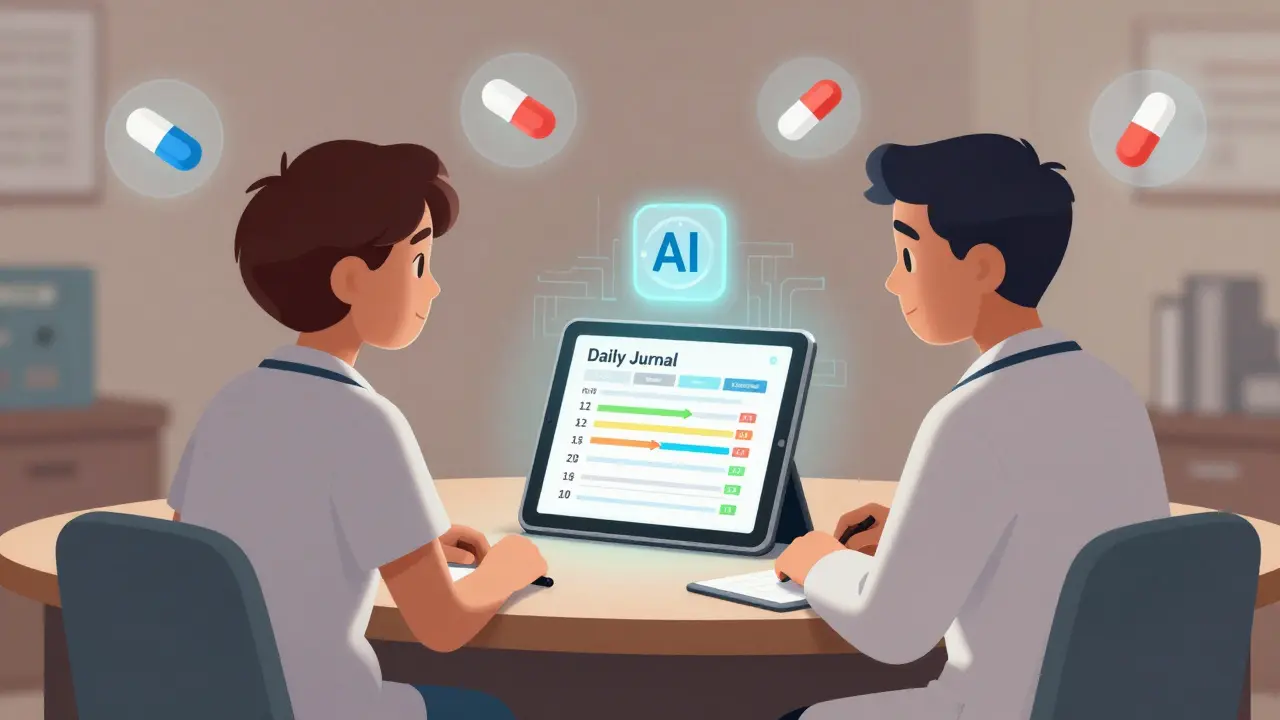
People who kept a daily side effect journal-rating nausea, sleep, focus, or mood on a scale of 1 to 10-were 78% more likely to stick with their treatment. Why? Because they could show their doctor clear patterns: “The dizziness started every time I jumped from 10mg to 15mg.” That kind of data turns guesswork into precision.
Another simple trick? Taking meds with food. For many, stomach upset drops by 65% just by eating before or right after swallowing the pill. It’s not magic. It’s basic pharmacology.
What You Need to Do to Titrate Successfully
If you’re starting a new medication that requires titration, here’s how to make it work:
- Ask for the official titration schedule. Don’t assume your doctor knows it. Print it out from the manufacturer’s website or ask for a copy. Some drugs, like Vyvanse, have 12-page titration guides. Others? Barely any info. Push for clarity.
- Track everything. Use a notebook, app, or even a notes app on your phone. Record: dose taken, time taken, side effects (name and severity), sleep, mood, appetite. Do this daily. Don’t wait until your appointment.
- Wait at least 1-2 weeks between dose changes. Side effects can lag. A headache on day 3 might be from the last bump, not the current one. Give your body time to adjust.
- Communicate clearly at appointments. Don’t say “I feel weird.” Say: “After the last dose increase, I had trouble sleeping for 4 days and lost 3 pounds. I think we need to pause.”
- Don’t skip check-ins. Weekly visits during titration aren’t optional. They’re how your doctor catches problems before they become emergencies.
The whole process takes 4 to 12 weeks. That’s not fast. But it’s safer than jumping straight to the highest dose and hoping for the best.
What’s Changing in Titration Today
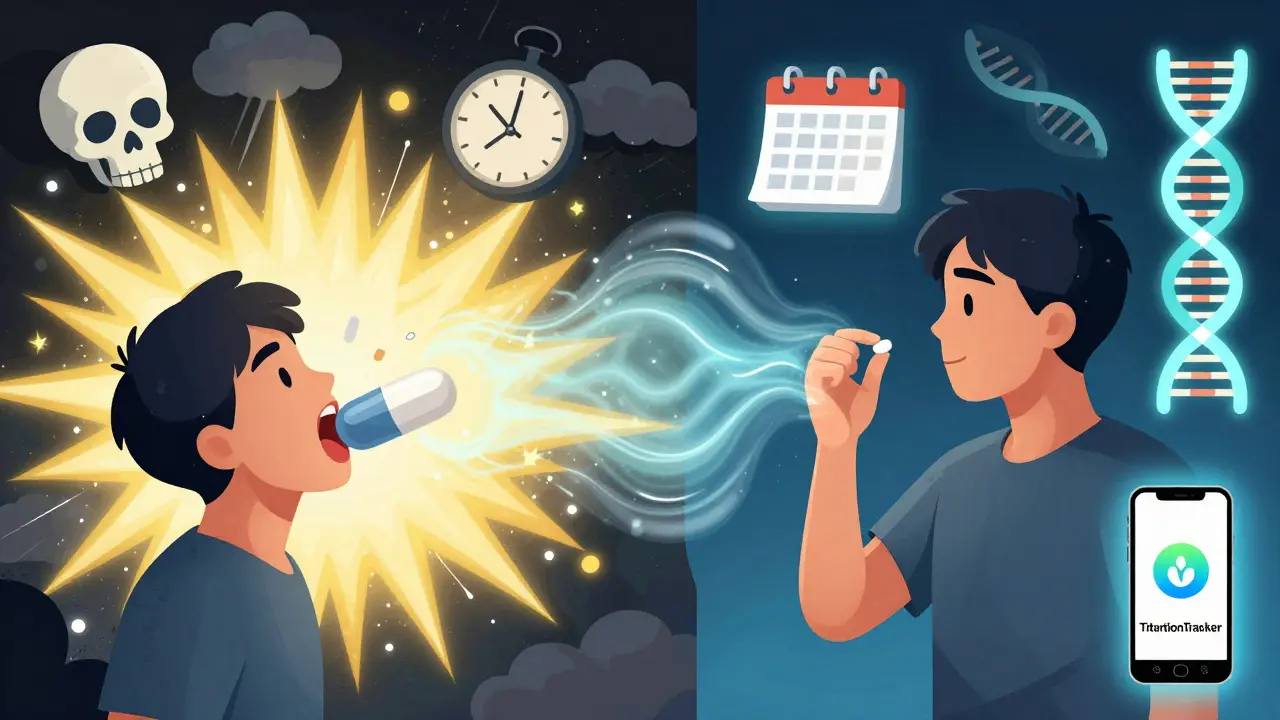
The field is moving fast. In January 2023, the FDA cleared the first AI-powered titration app called TitrationTracker. It uses your symptom logs to predict the next best dose. In a 1,200-patient trial, it cut side effects by 32% compared to standard care.
Even more exciting? Pharmacogenetic testing. Some labs can now test your genes to see how fast you metabolize certain drugs. For 28 medications-including SSRIs, warfarin, and some painkillers-you can get a personalized starting dose based on your DNA. By 2025, 12 more will join that list. By 2030, experts predict 75% of high-risk meds will use genetic-guided titration as standard.
But here’s the catch: these tools aren’t available everywhere. In low-income countries, only 22% have any formal titration protocols for essential meds, according to the WHO. Access still lags behind science.
When Titration Doesn’t Work-or Isn’t Possible
Titration isn’t magic. It doesn’t help in emergencies. If you’re having a heart attack, a seizure, or anaphylaxis, you need the full dose now. No waiting. No slow ramps.
It also doesn’t work if you can’t stick to the plan. Studies show 32% of patients miss doses or skip steps during titration. That’s often because the process feels too slow. You want to feel better yesterday. But rushing it can backfire.
And sometimes, even with perfect titration, side effects stick around. That’s when you and your doctor need to consider alternatives-not just higher doses. Maybe another drug in the same class. Maybe a non-drug therapy. Titration isn’t the end goal. It’s a tool to get you to the right treatment.
Final Thought: Slow Is Safe, Safe Is Effective
Dose titration isn’t about being cautious for the sake of caution. It’s about respecting how your body works. Medications aren’t light switches. They’re dimmers. Turning them up too fast doesn’t just blind you-it can burn you out.
Every time you start a new drug, ask: “Is there a titration plan?” If the answer is no, push for one. If your doctor says, “Just start at the full dose,” ask why. If they can’t explain the risks, get a second opinion.
The science is clear: slow titration reduces side effects by 40-60%. It improves adherence. It keeps people on their meds longer. And it saves lives.
Don’t rush the process. Your body isn’t a machine that needs to be cranked up. It’s a system that needs to be guided.
What is dose titration?
Dose titration is the gradual adjustment of a medication’s dosage to find the lowest effective amount that controls symptoms while minimizing side effects. It’s commonly used for drugs with narrow therapeutic windows, where the difference between a helpful dose and a harmful one is small.
How long does dose titration usually take?
It typically takes 4 to 12 weeks, depending on the medication. Stimulants like Adderall may be adjusted every 3-7 days, while slower-acting drugs like lamotrigine or atomoxetine need 1-2 weeks between changes. Full titration can take up to 3 months for some medications.
Why do some doctors skip titration?
Some doctors skip titration due to time pressure, lack of familiarity with guidelines, or assuming patients will tolerate full doses. But research shows this increases side effects and dropout rates. Titration protocols are now required by the FDA for most high-risk medications, so skipping them goes against standard care.
Can I adjust my dose on my own during titration?
No. Never change your dose without talking to your doctor. Even small changes can cause serious side effects or withdrawal. Titration is a medical process that requires monitoring. Self-adjusting can lead to hospitalization or long-term health damage.
What if I still have side effects after full titration?
If side effects persist at the target dose, talk to your doctor about alternatives. You may need a different medication, a lower dose with added support (like therapy or lifestyle changes), or a non-drug treatment. Titration helps find the right dose-but not every drug is right for every person.
Are there apps or tools to help with titration?
Yes. The FDA-cleared TitrationTracker app uses AI to analyze your symptom logs and suggest optimal dose changes. Other apps like Medisafe and MyTherapy let you track doses and side effects. These tools improve adherence and reduce side effects by up to 32% in clinical trials.
Is titration only for psychiatric meds?
No. Titration is used for many types of medications, including heart failure drugs (beta-blockers), epilepsy meds (lamotrigine), thyroid hormones (levothyroxine), anticoagulants (warfarin), and cancer treatments (venetoclax). Any drug with a narrow therapeutic index requires careful titration.



13 Comments
This is all corporate propaganda. The FDA doesn't care about you. They just want you dependent on drugs so Big Pharma keeps making billions. Titration? That's just a way to stretch out your prescription refills. I've been off all meds for 7 years and I'm healthier than ever.
This is so important!! 🙌 I started my SSRI at 1/4 dose and it made ALL the difference. No more nausea, no panic attacks - just gradual relief. Thank you for sharing the real science behind it. So many people give up too soon because they're not told how to do this right.
Oh wow, so you're telling me we're not supposed to just chug a whole bottle of pills and hope for the best? Groundbreaking. 🤡 Next you'll tell me not to drive 100mph on a dirt road and call it 'efficiency'.
Start low, go slow. That’s the golden rule. Even if you're desperate to feel better, rushing it backfires. I’ve seen it too many times - patients quit because they thought the side effects were the drug, not the dosage jump.
This is the kind of info every new patient needs to hear BEFORE they start. 🤗 I wish my doctor had given me this exact list. Took me 6 months to find the right dose because no one explained titration. You’re doing great work sharing this.
You’re lucky if your doctor even knows what titration means. Mine just handed me a 20mg Adderall script and said 'take one, feel better'. I ended up in the ER. Don’t trust doctors. Trust data. Track your symptoms. Don’t let them rush you.
In India, access to proper titration protocols remains a challenge. Many rural clinics lack guidelines, and patients are often prescribed full doses due to resource constraints. This is not negligence - it's systemic failure. We must advocate for standardized protocols across all healthcare systems, not just in the West.
The pharmacokinetic variability across CYP450 polymorphisms renders population-based titration protocols statistically inadequate. Individual metabolic clearance rates, particularly in UMs and PMs, necessitate pharmacogenomic stratification prior to initiation. Without genotyping, you're engaging in probabilistic dosing with a 37% risk of suboptimal exposure.
Let me guess - the pharmaceutical industry funded this whole article. Titration is just a tactic to keep you on the drug longer. They don’t want you cured. They want you addicted. The FDA? A puppet. Your doctor? Complicit. Wake up. The real cure is lifestyle, fasting, and detox. Not more chemicals.
Honestly, I find it mildly pathetic that people still need to be told not to overdose on SSRIs like they’re energy drinks. If you can’t follow a 4-week dosing schedule, maybe you shouldn’t be on psychotropics at all. It’s not rocket science. It’s basic biology.
i was given 10mg vyvanse on day 1 and i thought i was gonna die. heart racing, hands shaking, couldnt eat for 3 days. my doc said 'its normal'. no it aint. i quit. now im on no meds and feel better. dont trust the system.
Funny how people act like titration is some newfangled idea. My grandma took levothyroxine in the 70s and they told her to start at 25mcg and wait 6 weeks. We used to call it 'being smart'. Now it's 'evidence-based practice'. Same thing, different buzzwords.
i read this and i'm like... why is this even a thing? like why do we need a whole essay on not taking too much pill at once? also i typoed like 3 times but i'm too tired to fix it. my brain is fried from my new med. help.