
Sulfonylureas: What They Are, How They Work, and What to Watch For
When you hear sulfonylureas, a class of oral diabetes drugs that stimulate the pancreas to release more insulin. Also known as sulfa-type diabetes pills, they’ve been around since the 1950s and are still prescribed today — especially when cost matters more than cutting-edge tech. Drugs like glipizide, a common sulfonylurea sold as Glucotrol or Glucotrol XL and glyburide work by forcing your beta cells to pump out insulin, no matter what your blood sugar is doing. That’s powerful — but it’s also risky.
Here’s the catch: sulfonylureas don’t care if you skip a meal or go for a walk. They keep pushing insulin out, which can drop your blood sugar too low — a dangerous condition called hypoglycemia. It’s not just dizziness or sweating. Severe lows can lead to seizures, confusion, or even coma. That’s why they’re less common now in older adults or people with irregular eating habits. Newer drugs like GLP-1 RAs, a newer class of diabetes medications that work with your body’s natural signals and SGLT2 inhibitors don’t cause low blood sugar on their own, making them safer for many. But sulfonylureas still have a place — especially in places where newer drugs are too expensive or hard to get.
You’ll find posts here that dig into real-world problems with these drugs: how they interact with other meds, why some people have bad reactions, and how to spot warning signs before it’s too late. One article breaks down exactly how Glucotrol XL compares to other pills, while another warns about dangerous combinations with blood thinners or antibiotics. There’s even a deep dive into how diabetes meds affect kidney function — something every long-term user needs to know. These aren’t theoretical discussions. They’re based on what patients and doctors actually see in clinics and ERs. If you’re taking a sulfonylurea, or someone you care about is, this collection gives you the facts you won’t get from a pill bottle label — and the red flags that could save your life.
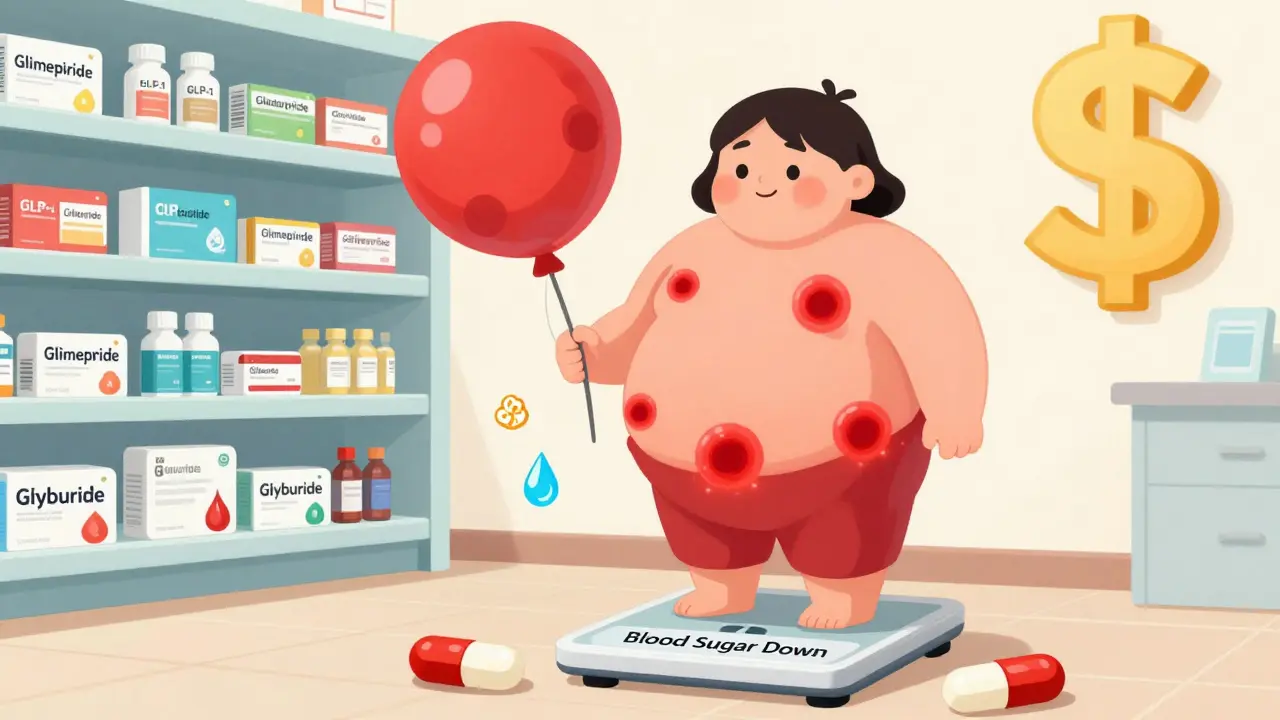
Sulfonylureas and Weight Gain: Long-Term Concerns Explained
Sulfonylureas effectively lower blood sugar but often cause weight gain, making them problematic for long-term diabetes management. Learn how different drugs in this class compare, why weight gain happens, and what alternatives work better.

Sulfonylureas and Hypoglycemia: Understanding Low Blood Sugar Risks and How to Prevent Them
Sulfonylureas are effective for type 2 diabetes but carry a high risk of dangerous low blood sugar. Learn which drugs are safest, how to prevent hypoglycemia, and what to ask your doctor if you're on one.