
DOACs for Elderly: Safe Use, Risks, and What You Need to Know
When it comes to preventing strokes in older adults with atrial fibrillation, DOACs, direct oral anticoagulants that include drugs like apixaban, rivaroxaban, and dabigatran. Also known as non-vitamin K antagonist oral anticoagulants, these medications have become the go-to choice for many doctors because they don’t require regular blood tests like warfarin does. But for seniors, especially those over 75, using DOACs isn’t as simple as just filling a prescription. Their bodies process these drugs differently, and small changes in kidney function or other medications can turn a safe treatment into a dangerous one.
The biggest concern with DOACs, direct oral anticoagulants that include drugs like apixaban, rivaroxaban, and dabigatran. Also known as non-vitamin K antagonist oral anticoagulants, these medications have become the go-to choice for many doctors because they don’t require regular blood tests like warfarin does. for elderly patients is bleeding. Older adults are more likely to fall, have thinner blood vessel walls, and take multiple other drugs—like NSAIDs or antiplatelets—that increase bleeding risk. A study in the Journal of the American Geriatrics Society found that seniors on DOACs had a 30% higher chance of major bleeding than younger patients, even when doses were adjusted. That’s why kidney function matters so much. Most DOACs are cleared by the kidneys, and as people age, kidney filtration slows down. A simple blood test for creatinine and estimated glomerular filtration rate (eGFR) can tell your doctor if a lower dose is needed—or if a different drug is safer.
Another key factor is drug interactions, how DOACs react with other medications commonly taken by seniors, such as certain antibiotics, antifungals, or heart rhythm drugs. For example, taking the antifungal fluconazole with rivaroxaban can spike blood levels of the anticoagulant, raising bleeding risk. Or combining DOACs with aspirin or ibuprofen—common for arthritis pain—can be a recipe for internal bleeding. And don’t forget medication adherence, how consistently patients take their pills as prescribed. Seniors juggling five or more medications may miss doses or double up accidentally. That’s why pill organizers, family reminders, and clear instructions from pharmacists aren’t just helpful—they’re lifesaving.
There’s no one-size-fits-all answer when it comes to DOACs for elderly patients. What works for a healthy 70-year-old might be risky for an 85-year-old with mild kidney decline and a history of falls. The best approach is personalized: check kidney function, review all medications, assess fall risk, and talk openly about the real-world challenges of daily pill-taking. You’re not just choosing a drug—you’re choosing a safety plan.
Below, you’ll find real-world posts that break down exactly how DOACs interact with other common senior medications, what doses are safest, how kidney health changes things, and what to do if bleeding happens. These aren’t theoretical guides—they’re based on what doctors and patients are dealing with right now.
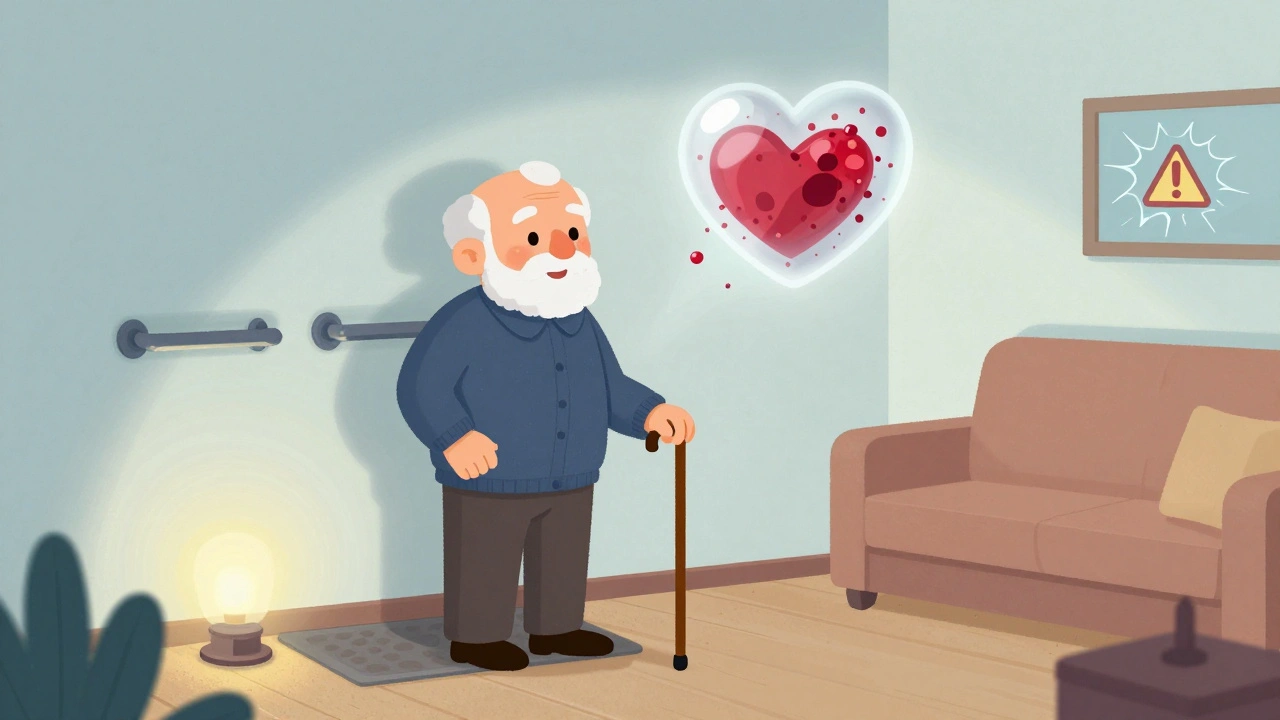
Anticoagulants for Seniors: Why Stroke Prevention Usually Beats Fall Risk
Anticoagulants for seniors with atrial fibrillation prevent far more strokes than they cause bleeds-even with fall risk. Learn why DOACs like apixaban are often the best choice and how to reduce fall danger without stopping treatment.