
Cimetidine: What It Is, How It Works, and What You Need to Know
When you’re dealing with heartburn, stomach ulcers, or excess acid, cimetidine, a type of H2 blocker that reduces stomach acid production. Also known as Tagamet, it was one of the first drugs developed to calm acid-related conditions without surgery or harsh lifestyle changes. Unlike antacids that just neutralize acid temporarily, cimetidine works at the source—blocking histamine receptors in your stomach lining so your body makes less acid in the first place.
It’s not just about heartburn. Doctors used cimetidine to treat peptic ulcers, Zollinger-Ellison syndrome, and even GERD before newer drugs like omeprazole became popular. But here’s the thing: cimetidine doesn’t play nice with other medications. It slows down how your liver breaks down drugs like warfarin, theophylline, and certain antidepressants. That’s why people on multiple prescriptions need to be careful—what helps one problem might make another worse. If you’re taking cimetidine, your body is processing everything differently, and that’s not always obvious until something goes wrong.
Side effects are usually mild—headache, dizziness, or diarrhea—but they can pile up if you’re older or have kidney issues. Cimetidine sticks around longer in your system when your kidneys aren’t working at full speed, so dosing matters. And while it’s mostly been replaced by safer, longer-lasting drugs, it’s still around because it’s cheap, effective, and works fast. If you’ve been on it for years, you might not realize how much your other meds have changed in dosage because of it.
What you’ll find below are real, practical posts about how cimetidine fits into the bigger picture of medicine. From how it interacts with blood thinners to why it’s still used in some clinics despite newer options, these articles don’t just repeat what the label says. They show you what actually happens when cimetidine meets real patients, real drugs, and real life.
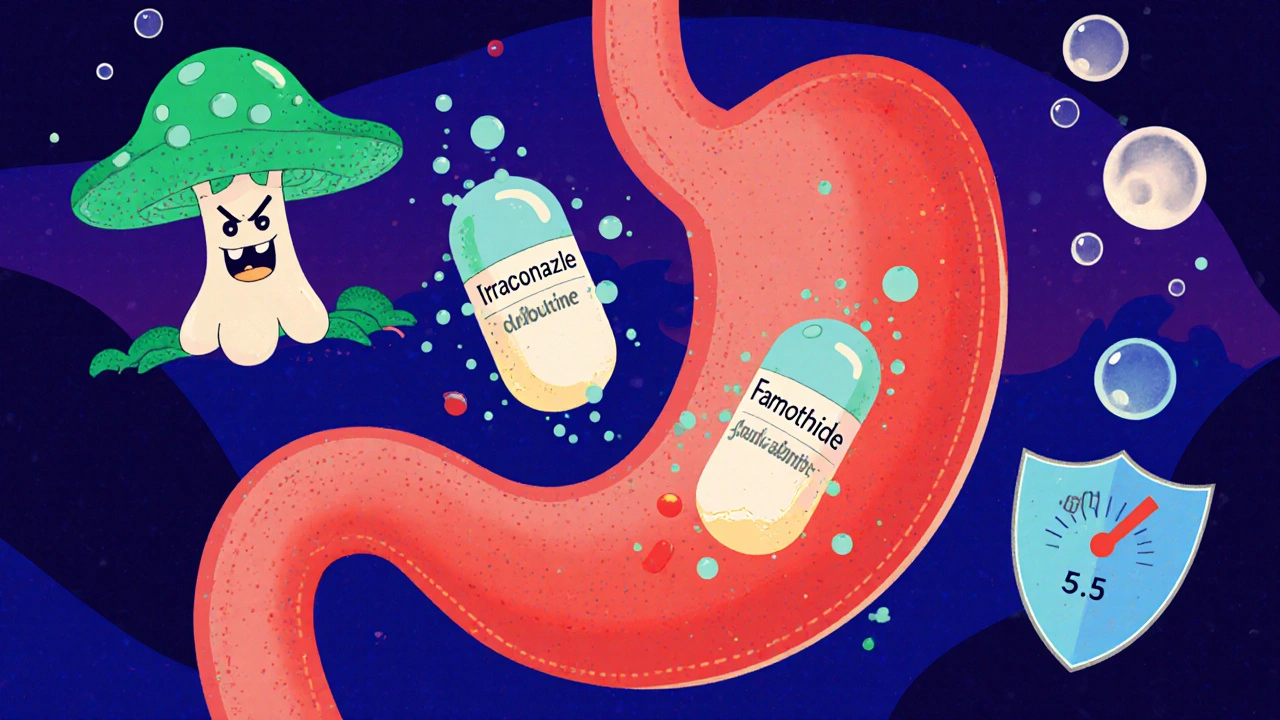
H2 Blockers and Their Interactions with Antivirals and Antifungals
H2 blockers like famotidine and cimetidine can reduce the effectiveness of antivirals and antifungals by changing stomach acidity or interfering with liver enzymes. Know which drugs are affected and how to time doses safely.