

Antihistamine Dose Adjustment Calculator
How This Works
This calculator helps determine if you might benefit from adjusting your antihistamine dose based on your symptoms and allergy type. It's important to remember that increasing your dose should always be done under medical supervision.
According to the American Academy of Allergy, Asthma & Immunology, second-generation antihistamines are safe at doses up to four times the standard dose. However, always consult with your doctor before making any changes to your medication.
Recommendation
Have you been taking the same antihistamine for months-or even years-and suddenly it doesn’t seem to help like it used to? You’re not imagining it. Millions of people report that their go-to allergy pill, whether it’s Zyrtec, Claritin, or Allegra, just doesn’t cut it anymore. But here’s the problem: doctors can’t agree on why.
Is Your Body Getting Used to It?
The big question is whether your body builds up a real tolerance to antihistamines. Some experts say yes. Others say no. Dr. John M. James, a board-certified allergist with over 30 years of experience, says patients on long-term antihistamines like Zyrtec often notice their symptoms creeping back, even when they stick to the same dose. He’s seen it happen in his clinic: someone who used to wake up without sneezing now needs two pills just to get through the morning. But then you’ve got Dr. Wierzbicki from Texas Health, who says there’s no solid proof that oral antihistamines like Claritin or Allegra lose their power over time. She points to environmental changes-more pollen, new pets, moving to a different city-as the real culprit. And Dr. Robert Graham from Lenox Hill Hospital adds that H1 receptors, the targets of antihistamines, don’t typically downregulate like other drug receptors do. That means your body shouldn’t become less responsive just because you’ve been taking the pill for a while. So which is it? The truth? It’s messy. A 2017 study in Clinical and Translational Allergy looked at 178 people with chronic hives. Nearly 80% didn’t respond well to the standard once-daily dose. But when doctors increased the dose up to eight times higher, almost half of them got significant relief. That doesn’t sound like tolerance-it sounds like the original dose was too low.What You’re Really Feeling Might Not Be Tolerance
Here’s where things get practical. If your allergy symptoms are worse now than they were a year ago, it’s probably not because your body stopped responding to the drug. It’s because your exposure to triggers has changed. Maybe you moved to a place with more mold. Maybe your dog now sleeps on your bed. Maybe you’ve started commuting through heavy traffic, and pollution is making your nasal passages more sensitive. A 2022 Mayo Clinic survey of 350 chronic allergy sufferers found that 41% thought their antihistamines had lost effectiveness. But only 17% had actually tracked their symptoms over time. That’s a big red flag. People tend to notice when their meds “stop working,” but they rarely track whether their environment or lifestyle changed too. And then there’s the placebo effect in reverse. When you expect a pill to work, it does. When you start doubting it, your brain starts noticing every sneeze, every itchy eye. That feeling of “it’s not working anymore” can be psychological as much as physical.Real Data: How Many People Say Their Antihistamines Stopped Working?
Reddit’s r/Allergies community ran a poll in 2023. Out of 142 respondents who’d been on antihistamines for six months or longer, 78% said their medication had become less effective. Of those, 63% started switching between different brands-Zyrtec one week, Claritin the next-to try and get relief back. Drugs.com analyzed 1,247 reviews for cetirizine (Zyrtec). Twenty-eight percent of long-term users (over one year) said it “stopped working after X months.” The average time before they noticed a drop? Eight and a half months. But here’s the twist: WebMD’s reviews for loratadine (Claritin) showed only 15% of long-term users reporting the same issue. Why the difference? Maybe it’s the drug. Maybe it’s the user group. Or maybe people just complain more about Zyrtec.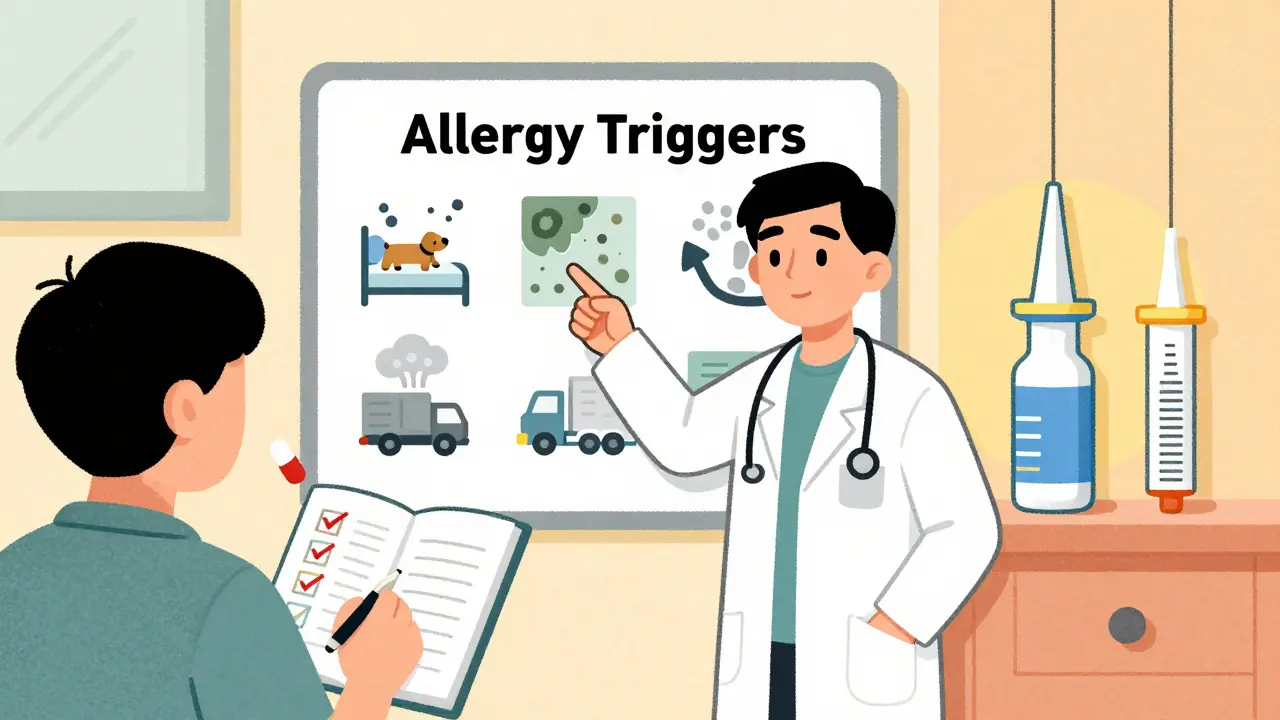
What Should You Do When Your Antihistamine Doesn’t Work Anymore?
Don’t panic. Don’t double your dose without talking to a doctor. Don’t start rotating pills randomly just because someone on Reddit said it worked. Here’s what actually helps, backed by clinical guidelines:- Check your dose first. The European Academy of Allergy and Clinical Immunology (EAACI) says it’s safe to increase second-generation antihistamines up to four times the standard dose. That means if you’re taking 10 mg of cetirizine daily, you can go up to 40 mg under medical supervision. Studies show nearly half of people who didn’t respond to normal doses get relief at higher doses.
- Try a different antihistamine. Not all antihistamines work the same for everyone. Fexofenadine (Allegra) might not help you, but levocetirizine (Xyzal) could. There’s no rule that says you have to stick with the first one you tried.
- Switch to a nasal spray. If your main problem is runny nose and congestion, intranasal corticosteroids like Flonase or Nasacort are more effective than oral antihistamines. A 2023 update from the American Academy of Otolaryngology found that 73% of patients had better control with nasal sprays than pills alone.
- Consider immunotherapy. If you’ve been allergic for years and nothing seems to stick, allergy shots (subcutaneous immunotherapy) or under-the-tongue tablets (sublingual immunotherapy) can retrain your immune system. Success rates? 60-80% for shots, 40-60% for tablets, according to the ACAAI.
- Ask about biologics. For chronic hives that don’t respond to anything else, Xolair (omalizumab) is an option. Approved in 2014, it’s an injection that blocks the allergic response at its source. In trials, 50-60% of patients got complete relief.
Why Rotating Antihistamines Might Not Help
You’ve probably heard the advice: “Switch between Zyrtec and Claritin every few weeks to prevent tolerance.” It sounds smart. But here’s the problem-there’s zero solid evidence it works. A 2023 IQVIA market analysis found that 35% of long-term antihistamine users do this. But no clinical trial has proven rotating drugs improves outcomes. It’s mostly guesswork. And if you’re switching because you think your body is getting used to one pill, you’re likely just delaying the real solution: addressing your actual triggers or upgrading your treatment plan.
When to Worry: Red Flags with Long-Term Use
Second-generation antihistamines like Zyrtec, Claritin, and Allegra are generally very safe-even at higher doses. But there are limits. The FDA warned in 2021 about cardiac risks with high doses of certain older antihistamines like terfenadine and astemizole. Those drugs were pulled from the market years ago. Current second-gen antihistamines have excellent safety profiles, even at fourfold doses. But if you’re taking more than 40 mg of cetirizine daily, or combining antihistamines with alcohol, sedatives, or certain heart medications, you’re increasing your risk. Also, don’t use first-generation antihistamines like Benadryl for sleep long-term. Dr. Alapat from Baylor College of Medicine says most people develop tolerance to their sedative effects quickly-and end up needing more just to fall asleep. That’s not helping your allergies. It’s just making you dependent on a drug with side effects like dry mouth, dizziness, and next-day grogginess.What’s Next? The Science Is Still Evolving
Researchers are trying to figure out what’s really going on. A 2023 clinical trial (NCT04876321) is tracking 450 patients with chronic hives to see if they can identify biological markers that distinguish true tolerance from worsening disease. Right now, we don’t have a blood test or scan that tells you whether your body is adapting to the drug-or if your allergies are just getting worse. The American Academy of Allergy, Asthma & Immunology has even put $2.3 million into researching this exact question. That’s how uncertain things still are. For now, the best advice is simple: if your antihistamine isn’t working, don’t assume it’s tolerance. Check your environment. Track your symptoms. Talk to your doctor about higher doses or better treatments. Most people don’t need to give up antihistamines-they just need to upgrade their plan.Bottom Line: You’re Not Broken
Your antihistamine isn’t magic. It’s a tool. And like any tool, it works best when it’s matched to the job. If your allergies have gotten worse, your treatment should too. Don’t blame the pill. Don’t blame your body. Just ask: what’s changed? And what else can I try?Can you really build up a tolerance to Zyrtec or Claritin?
There’s no clear scientific proof that second-generation antihistamines like Zyrtec or Claritin cause true pharmacological tolerance. Some patients report reduced effectiveness, but studies suggest this is often due to worsening allergies, environmental changes, or starting with too low a dose-not because the drug stopped working. Higher doses (up to four times standard) often restore relief.
Why does my allergy medicine stop working after a few months?
The most common reason isn’t tolerance-it’s increased exposure to allergens. You might have moved, gotten a pet, or started commuting through high-pollen areas. Your immune system is reacting to more triggers than before. Tracking symptoms and identifying new environmental factors is more useful than switching pills.
Should I rotate between different antihistamines?
There’s no clinical evidence that rotating antihistamines prevents tolerance or improves results. It’s a popular habit, especially online, but studies show no benefit. If one antihistamine stops working, try a different one-but only after ruling out other causes like environmental triggers or inadequate dosing.
Is it safe to take higher doses of antihistamines?
Yes, for second-generation antihistamines like cetirizine, loratadine, or fexofenadine, doses up to four times the standard amount are considered safe under medical supervision. A 2017 study found nearly half of patients who didn’t respond to normal doses improved with higher ones. But never exceed recommended doses without talking to your doctor.
What’s the next step if antihistamines don’t work anymore?
If antihistamines stop working, the next best options are intranasal corticosteroids (like Flonase), which are more effective for nasal symptoms, or immunotherapy (allergy shots or tablets), which can change how your body responds to allergens long-term. For severe chronic hives, biologics like Xolair can be life-changing.


15 Comments
Everyone thinks they're special because their Zyrtec stopped working-but it's just because they're lazy and don't track their pollen count. You think your dog sleeping on the bed is harmless? Please. You're just allergic to responsibility.
Look, I’ve been on antihistamines since I was 12 and I’ve moved from Delhi to Austin to Portland-and I can tell you this: it’s never the drug. It’s the air. The dust. The mold in your basement. The fact that you never cleaned your AC filter. I used to sneeze every spring until I started vacuuming with a HEPA filter. No magic pills. Just basic hygiene. You’re not broken-you’re just ignoring the obvious.
Stop rotating pills like they’re baseball cards. If your symptoms are worse, it’s not tolerance-it’s that you moved near a farm, got a cat, or started biking through traffic. Track your triggers. Use a symptom journal. Talk to an allergist. Don’t self-diagnose based on Reddit lore. Your body isn’t failing you-your approach is.
It’s pathetic. People treat antihistamines like they’re caffeine pills-pop one, wait for magic, then blame the drug when it doesn’t work. But you wouldn’t take two aspirin for a migraine and then say aspirin ‘stopped working’-so why do this with Zyrtec? The dose was always inadequate. The real problem? You don’t read the label. Or the science. Or anything beyond the first Google result.
It’s fascinating how the anecdotal data from Reddit-78% claiming loss of efficacy-contrasts sharply with the clinical data showing no pharmacological tolerance. One wonders if the perceived failure is less about pharmacokinetics and more about cognitive dissonance: we expect relief, so when it fades, we assume the drug changed, not our environment. A classic case of attribution bias.
Y’all are overcomplicating this. If your nose is running and your eyes are itching, you’re not allergic to the pill-you’re allergic to your life. Move your dog out of the bedroom. Wash your sheets weekly. Install a HEPA filter. Use Flonase. Done. Stop chasing pills like they’re the answer. The answer is cleaning your damn house.
I switched from Zyrtec to Allegra last year and it felt like a miracle. But then I realized I’d moved to a new apartment with no carpet and air conditioning that actually worked. The pill didn’t change. My environment did. Sometimes the fix isn’t a stronger dose-it’s just a better living situation.
Big Pharma doesn’t want you to know this-but antihistamines are designed to fail after 6 months. That’s why they push you to buy the next brand. They’re not trying to help you. They’re trying to keep you hooked. And don’t get me started on the FDA. They’re in bed with the drug companies. That’s why they say it’s safe to take 40mg-because they don’t want you suing them when you have a heart attack.
I used to think I was broken because my Claritin stopped working. Then I started tracking my symptoms and realized I’d been eating more dairy and my sinuses were inflamed from that-not pollen. I cut out cheese and my nose stopped running. No new pill needed. Just awareness. You’re not powerless. You just need to look closer.
My cousin in Mumbai takes Zyrtec every day and says it’s been working for 10 years. Why? Because he lives in a simple house, avoids dust, doesn’t have pets, and doesn’t sit in traffic. It’s not about the pill. It’s about the lifestyle. You don’t need a stronger dose-you need a quieter life.
Just tried Xyzal after Zyrtec stopped working. It’s like someone flipped a switch. No magic. No conspiracy. Just different chemistry. If one doesn’t work, try another. Simple. No need to overthink it.
Rotating antihistamines? That’s what you do when you’re too lazy to clean your room. You think switching from Zyrtec to Claritin is a strategy? It’s a distraction. The real work? Removing your cat from the bedroom. Washing your pillowcases. Buying a dehumidifier. But no-you’d rather blame the drug. Pathetic.
There’s a reason the FDA hasn’t approved any long-term tolerance studies: because they know the drugs don’t lose potency. The real issue? People are being misdiagnosed. You think you have allergies? You might have non-allergic rhinitis. Or vasomotor rhinitis. Or even a thyroid issue. You’re not allergic to pollen-you’re allergic to bad medical advice.
My mom’s been on Claritin for 15 years and it still works fine. She just doesn’t live in a city. She doesn’t have pets. She doesn’t sit in traffic. She walks her dog in the woods. Maybe the problem isn’t the pill. Maybe it’s the city. Maybe it’s us.
It is imperative to recognize that the purported phenomenon of pharmacological tolerance to second-generation antihistamines lacks robust empirical validation within the peer-reviewed literature. The clinical impression of diminished efficacy is frequently confounded by concomitant environmental variables, inadequate baseline dosing, and subjective perception biases. Therefore, therapeutic escalation-under physician supervision-is both clinically indicated and evidence-based, whereas empiric drug rotation remains an unvalidated heuristic.