
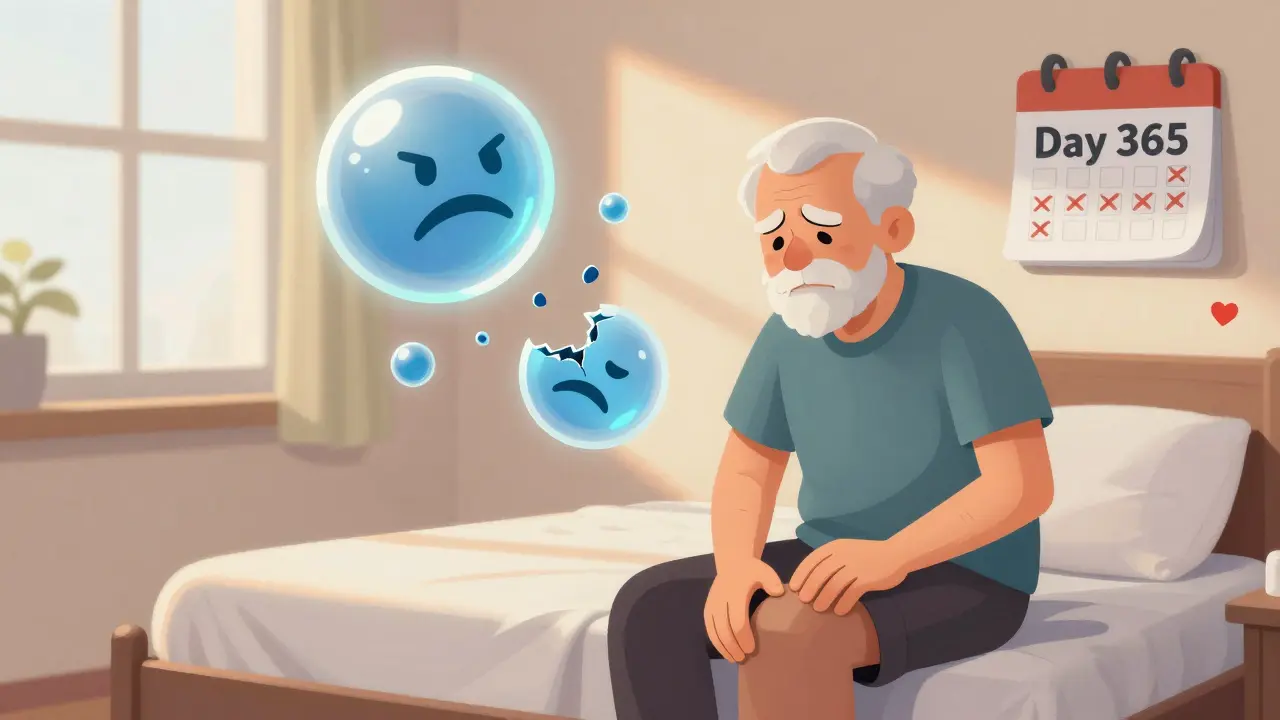
Stopping statins isn’t as simple as just skipping a pill. For millions of people, statins are a daily part of life - prescribed to lower cholesterol and prevent heart attacks and strokes. But what happens when the benefits no longer outweigh the downsides? When should you consider stopping? And how do you do it without putting your health at risk?
Why Do People Stop Statins?
One in five people who take statins stop them for at least a year. That’s not a small number - it’s nearly 8 million Americans alone. And most of them aren’t stopping because they feel fine. They’re stopping because they feel bad.
Muscle pain is the #1 reason. It’s not just soreness. It’s deep, persistent aches, weakness, or cramps that make walking, climbing stairs, or even getting out of bed hard. Many patients describe it as feeling like they’ve been hit by a truck every morning. When this happens, the instinct is to stop the drug. And often, the pain goes away. But then comes the fear: Did I just make myself more likely to have a heart attack?
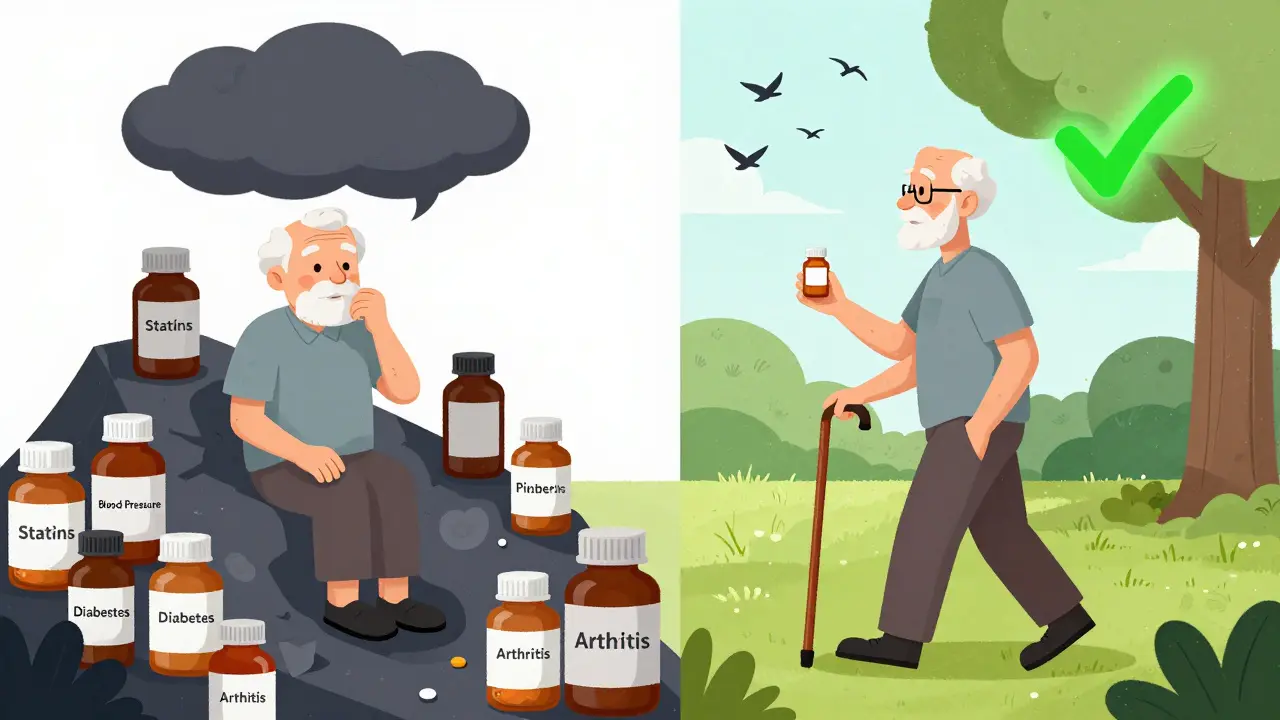
Other reasons include concerns about developing type 2 diabetes, liver issues, or just being tired of taking a pill every day. Older adults, especially those with multiple chronic conditions, often feel like they’re drowning in medications. Statins, taken for decades, can feel like one more burden with no clear end in sight.
Who Should Consider Stopping?
Not everyone should stop. But some people should.
For those with established heart disease - like a past heart attack, stent, or bypass - stopping statins is risky. A 2021 study in JAMA Network Open found that for every 77 people who stopped statins after having heart disease, one more had a major event like a heart attack or stroke within a year. That’s a real, measurable danger.
But here’s where things change: if you’re over 75 and have never had heart disease, the math flips. For primary prevention - meaning you’re taking statins to avoid a first heart attack - the benefit is much smaller. Especially if you have diabetes, dementia, kidney disease, or are in a nursing home. Your body is changing. Your risks are changing. And the statin you started at 65 might not be the right choice at 85.
The clearest signal to stop? Life expectancy under two years. If you have advanced cancer, severe heart failure, or are in hospice, continuing statins doesn’t add life. It adds side effects, pill burden, and stress. Studies show no increase in death when statins are stopped in these cases. In fact, many patients feel better. Less nausea. Fewer aches. More energy.
What Happens When You Stop?
Cholesterol levels rise again - usually within weeks. That’s normal. Statins don’t cure high cholesterol; they suppress it. But rising cholesterol doesn’t automatically mean danger. What matters is your overall risk profile.
For younger, healthy people with high LDL, stopping statins means going back to high risk. But for an 80-year-old with frailty, falls, and multiple medications? The risk from stopping is low. The risk from continuing - muscle damage, confusion, drug interactions - might be higher.
Here’s the truth: statins don’t work the same way for everyone. Some people get huge protection. Others get almost none. And some get side effects without any benefit. That’s why blanket lifelong prescriptions don’t make sense.
How to Stop Safely
You don’t just quit cold turkey. Even if you feel fine, stopping suddenly can cause confusion, especially if you’ve been on statins for 10+ years. Here’s how to do it right:
- Talk to your doctor - not just your pharmacist. This isn’t a decision to make alone. Your doctor needs to know why you want to stop. Was it muscle pain? Fear? Cost? Side effects? Your reason changes the plan.
- Check your actual risk. Are you in secondary prevention (already had heart disease)? Or primary (no history)? Your risk level determines if stopping is safe.
- Try alternatives first. If muscle pain is the issue, switching to a different statin (like pravastatin or fluvastatin) at a lower dose often helps. Some people tolerate rosuvastatin 5 mg better than atorvastatin 40 mg. Intermittent dosing (every other day or twice a week) can also reduce side effects while keeping some benefit.
- Don’t rush. If you’re stopping for good, taper slowly. Go from daily to every other day for a month, then every three days. Monitor how you feel. If muscle pain returns, you might need to stay on.
- Track your health. Keep a simple log: energy levels, muscle aches, sleep, mood. If you feel worse after stopping, that’s data. If you feel better? That’s data too.
What About Alternatives?
Some people turn to PCSK9 inhibitors, ezetimibe, or omega-3s after stopping statins. But here’s the reality: none of these are magic bullets.
PCSK9 inhibitors (like evolocumab) are injectable and cost $10,000+ a year. Ezetimibe lowers LDL a bit, but doesn’t reduce heart events nearly as much as statins. Omega-3s help triglycerides, not LDL. And none have the same track record of preventing heart attacks over decades.
For most people who stop statins, the best alternative is lifestyle. Not supplements. Not trendy diets. Real changes: walking 30 minutes a day, eating more vegetables, cutting processed carbs, managing stress. These don’t lower LDL by 50%, but they lower your overall risk - and they don’t cause muscle pain.
What Doctors Miss
Most electronic records just say “Discontinued: No longer necessary.” That’s useless. Why? Because it hides the real story. Was it side effects? Fear? Cost? Poor quality of life? If you don’t document the reason, no one can learn from it.
And many doctors never ask. They assume statins are lifelong. But the science is shifting. A 2020 review in the Journal of the American Geriatrics Society found that three major guidelines now recommend considering statin discontinuation in older adults with poor health. The American Geriatrics Society says: “Deprescribing is not failure - it’s good care.”
There’s even a major ongoing trial - called Discontinuing Statins in Multimorbid Older Adults - tracking 1,800 people over 65 with multiple health problems. They’re comparing those who stop statins versus those who keep taking them. The goal? To see if stopping improves quality of life without increasing heart attacks or death. Results are due in 2025.
When to Reconsider Statins
Some people stop statins, feel great, and never go back. That’s fine. But if your health changes - say, you develop new chest pain, your cholesterol skyrockets, or you get diagnosed with diabetes - it’s time to revisit the conversation.
Statins aren’t permanent. They’re tools. And tools should be reevaluated when your life changes.
Final Thoughts
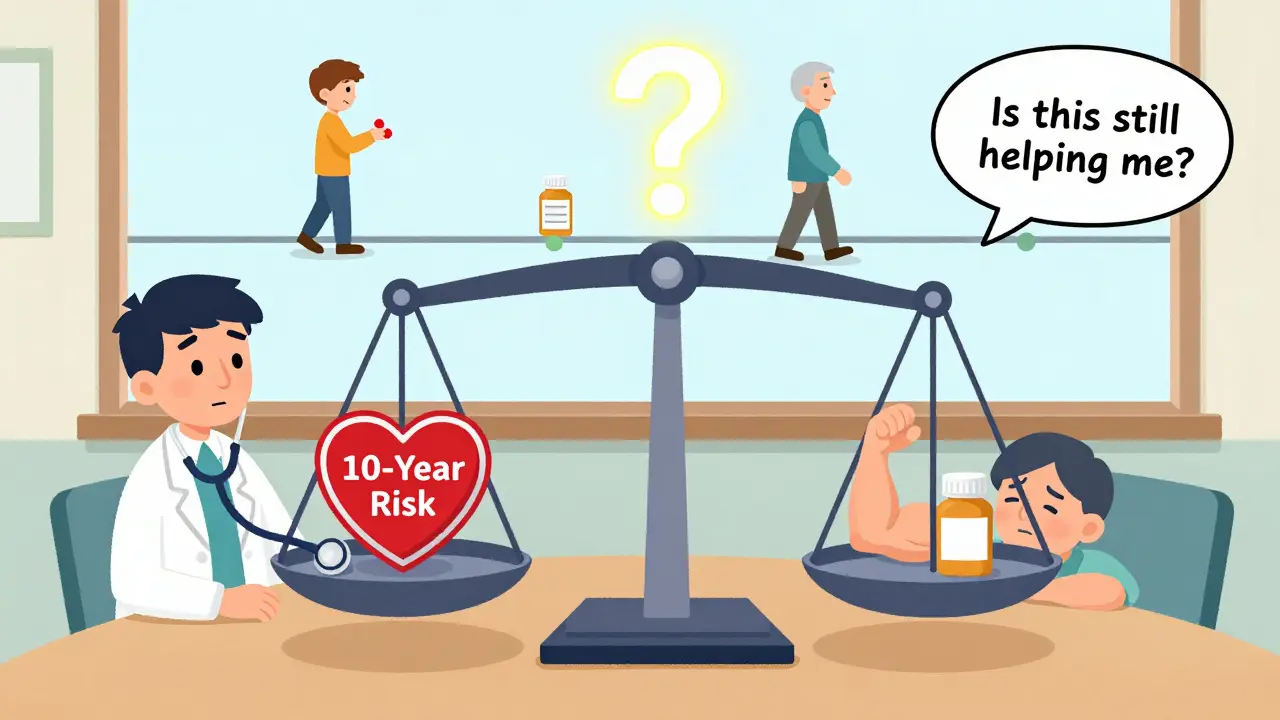
Stopping statins isn’t about giving up. It’s about making smarter choices. For some, it’s a relief. For others, it’s dangerous. The key is not to assume. Don’t stop because you’re scared. Don’t keep taking because you’re told to. Ask: Is this still helping me? And if the answer is no - with your doctor’s support - it’s okay to stop.
Can I stop statins if I have high cholesterol but no heart disease?
Yes - but only after a careful risk assessment. If you’re over 75, have multiple health problems, or have a life expectancy under two years, stopping statins is often safe. For younger people without heart disease, the benefit is smaller, but stopping still increases risk. Talk to your doctor about your 10-year risk score. If it’s under 7.5%, the statin may not be giving you enough benefit to justify side effects.
Will my cholesterol go back up if I stop statins?
Yes, usually within 2-6 weeks. Statins don’t cure high cholesterol - they suppress it. But rising LDL doesn’t always mean danger. What matters is your overall cardiovascular risk. For someone with no heart disease, no diabetes, and healthy habits, a moderate rise in LDL isn’t a crisis. For someone with multiple risk factors, it may be. Monitor your numbers, but don’t panic.
Is muscle pain from statins real, or just in my head?
It’s real - and common. Studies show up to 87% of statin discontinuations are linked to muscle symptoms. But here’s the twist: in placebo-controlled trials, about 15% of people on sugar pills report muscle pain too. That means some pain is coincidental. The key is whether the pain started after beginning the statin, improved after stopping, and returned when restarting. If yes, it’s likely related. If not, it might be something else - like aging, arthritis, or vitamin D deficiency.
Can I restart statins later if I change my mind?
Yes - but do it carefully. If you stopped due to muscle pain, try a different statin at a lower dose. Pravastatin or fluvastatin are often better tolerated. Start with 1/4 of your old dose and increase slowly. Monitor for pain. If it returns, stop again. Many people can tolerate statins after a break, especially if they switch types or doses.
What should I do if my doctor won’t let me stop statins?
Ask for a second opinion. Not because your doctor is wrong, but because guidelines are evolving. The American Geriatrics Society and European Society of Cardiology now support deprescribing in older adults with limited life expectancy. Bring up the 2021 JAMA study and the ongoing trial in Europe. Request a shared decision-making conversation. If your doctor refuses to discuss it, consider seeing a geriatrician or pharmacist specializing in deprescribing.

8 Comments
Statins are a joke. I’ve been on them for 8 years, and my legs feel like they’re full of wet cement. I stopped last year. No heart attack. No stroke. Just more energy and the ability to climb stairs without groaning. Doctors act like we’re all gonna drop dead if we miss a pill. Reality? My cholesterol went up 10 points. I’m still alive. And I’m not taking a pill for a number that doesn’t even matter anymore.
OMG YES 😭 I stopped my atorvastatin after 6 years and my muscle pain vanished like magic ✨ I thought I was gonna die but guess what? My 10-year risk score was 6.8% 🤷♀️ Also my doc never asked me how I felt-just kept refilling. Now I walk 5 miles a day, eat kale, and laugh at my old LDL numbers. Who needs pharma when you’ve got sneakers and a fridge full of veggies? 🥬👟
This is such an important conversation-and I’m so glad someone’s finally talking about deprescribing like it’s not a dirty word. 💛 You’re not weak for wanting to feel better. You’re smart. Statins aren’t a one-size-fits-all magic bullet-they’re a tool, and tools get put down when they don’t fit your hands anymore. If you’re over 75, have diabetes, or just feel like you’re drowning in pills? You’re not failing. You’re reclaiming your life. And if muscle pain is real for you? That’s not ‘in your head.’ It’s your body saying, ‘Hey, I’m trying to tell you something.’ Listen. Talk to your doc. Try a different statin. Taper slow. Track how you feel. You’ve got this.
i stopped my statin last year after my doc said 'it's probably fine' and i didn't even get a follow up. my cholestrol went up but honestly i feel 10x better. no more muscle cramps at 3am. i walk my dog every day and eat less junk. maybe it's not perfect but i'm alive and not taking a pill for a number that doesn't even make me feel good. also i think the 'statins save lives' thing is overstated for older people. my grandpa died at 89 and he never took one. just saying.
I’ve been a nurse for 15 years and I’ve seen this over and over. People on statins for decades with no history of heart disease, feeling terrible, and no one ever asks if it’s still helping. It’s not about being anti-medication. It’s about being pro-quality-of-life. If you’re 80, have COPD, arthritis, and take 12 pills a day, continuing a statin because of a 20-year-old guideline is not care. It’s inertia. Let’s start asking: Is this making your life better? Or just extending it with more pain?
This article is dangerously naive. Statins reduce LDL by 50%. LDL is causal in atherosclerosis. Period. You don’t get to opt out of biology because you don’t like side effects. If you’re over 75 and have no heart disease? Your risk is still elevated. Stopping statins isn’t empowerment-it’s pseudoscience dressed as autonomy. You’re not 'reclaiming your life.' You’re gambling with your arteries.
They’re lying to you. Statins don’t save lives-they make money. Big Pharma knows people will take pills forever. That’s why they push them on everyone over 50. My cousin took simvastatin for 12 years. Got diabetes. Liver damage. Then he stopped. His cholesterol went up. He lived another 7 years. No heart attack. No stroke. Just… life. Meanwhile, the doctors? They’re on commission from the labs. They don’t care if you’re tired, achy, or confused. They just want you to refill. Wake up. The system is rigged.
America's going soft. People think they can just quit statins because they don't like feeling sore? That's not freedom that's stupidity. We used to take our medicine and deal with it. Now we want to live forever without any effort. Statins prevent heart attacks. Period. If you can't handle a little muscle ache then maybe you shouldn't be running marathons or lifting weights. Just take the damn pill and stop whining.