
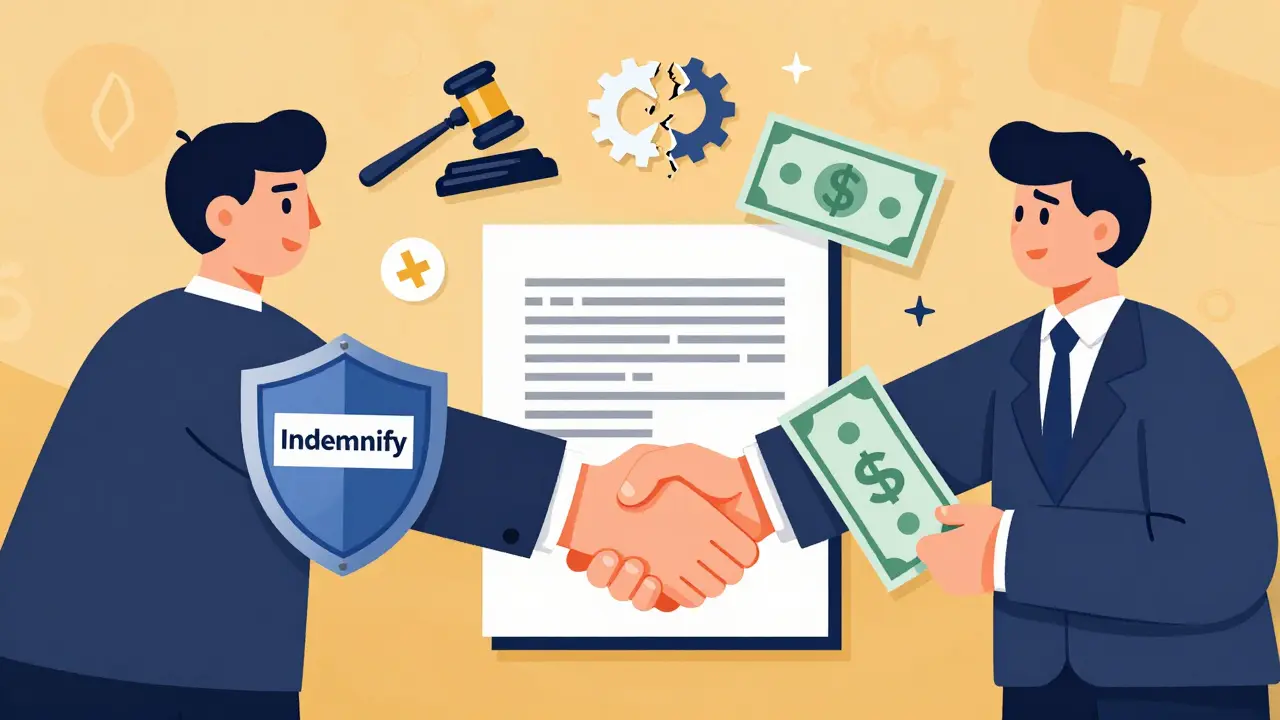
When two parties sign a contract-whether it’s for software, equipment, services, or even a simple supply deal-they’re not just agreeing on price and delivery. They’re also deciding who pays if things go wrong. That’s where liability and indemnification come in. These aren’t fancy legal buzzwords. They’re practical tools that determine who gets stuck with the bill when a breach, mistake, or lawsuit happens after the deal is done.
What Indemnification Actually Means
Indemnification is a promise in a contract: one party agrees to cover the other’s losses. Simple. If Party A breaks a promise, and Party B gets sued because of it, Party A pays for the legal fees, damages, and any other costs. It’s not about blame-it’s about pre-agreed responsibility.
Think of it like car insurance. You don’t hope for an accident, but you pay for coverage anyway. Indemnification works the same way. It’s not about suspicion. It’s about planning for what could happen. The indemnifier (the one paying) takes on the financial risk so the indemnitee (the one protected) doesn’t have to.
According to legal sources, this isn’t optional in most business deals. Nearly every commercial contract includes some form of indemnification. Why? Because without it, every mistake becomes a potential lawsuit with no clear path to recovery.
The Seven Core Parts of an Indemnity Clause
A good indemnification clause doesn’t just say “we’ll cover you.” It spells out exactly what, when, how, and for how long. Here’s what you need to see in any solid agreement:
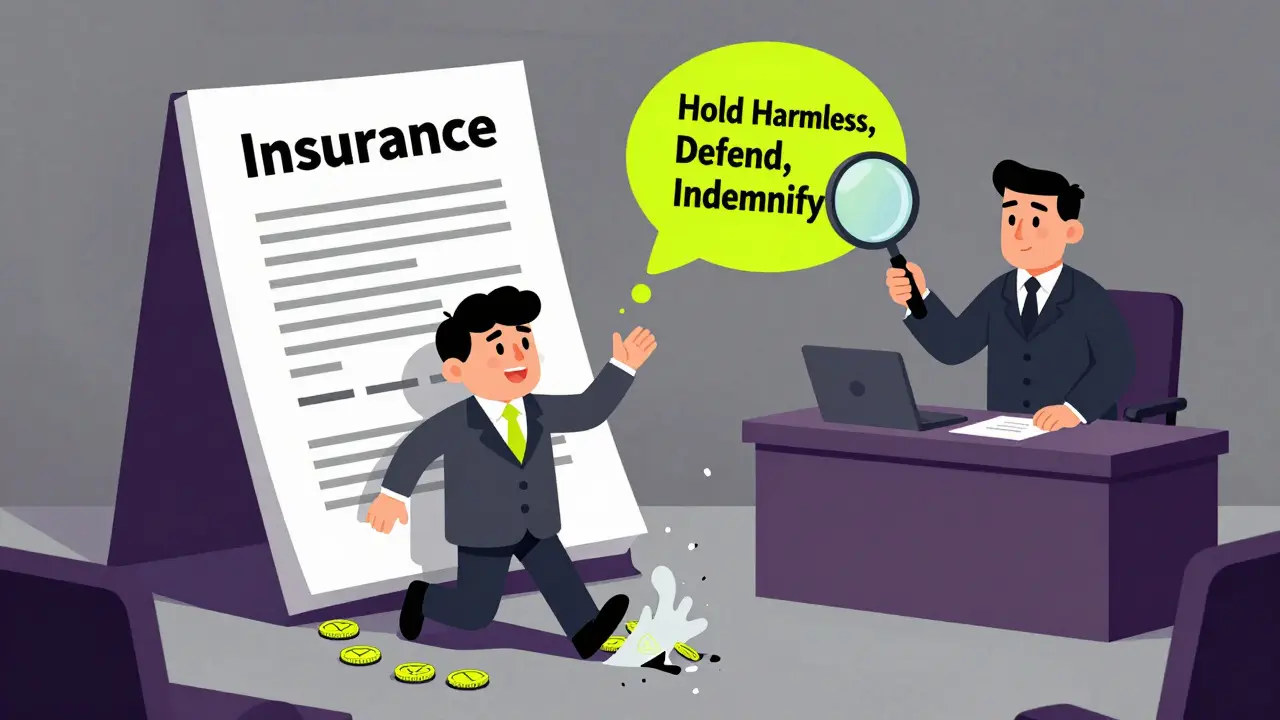
- Scope of Indemnification - What losses are covered? Legal fees? Third-party claims? Regulatory fines? The clause must list them. Vague language like “any damages” is a red flag.
- Triggering Events - What makes the obligation kick in? Breach of contract? Negligence? IP infringement? A data breach caused by the vendor’s weak security? These must be clearly defined.
- Duration - How long does the protection last? Some clauses expire when the contract ends. Others survive for years-especially for things like tax liabilities or ownership disputes.
- Limitations and Exclusions - Not all losses are covered. Most contracts exclude indirect damages (like lost profits) or punitive damages. There’s often a cap, too-say, no more than the total contract value.
- Claim Procedures - You can’t just send a bill. There’s usually a process: written notice within 30 days, access to records, right to review claims before payment.
- Insurance Requirements - Does the indemnifier have to carry insurance? If so, what kind? General liability? Cyber liability? The policy limits must match the potential exposure.
- Governing Law and Jurisdiction - If a dispute arises, where does it get settled? Which state’s laws apply? This avoids costly fights over venue later.
Missing any of these? The clause is incomplete. And incomplete clauses mean messy disputes.
Mutual vs. Unilateral: Who Pays Whom?
Not all indemnity clauses are the same. There are two main types:
- Unilateral - One party protects the other. Common in vendor-customer deals. For example, a software company agrees to defend a client if their product infringes someone else’s patent. The vendor takes the risk because they created the product.
- Mutual - Both parties protect each other. Typical in joint ventures, construction contracts, or partnerships where both sides could cause harm. If a subcontractor gets injured on site, both parties might be on the hook.
Unilateral is far more common. Why? Power imbalance. The buyer usually demands protection because they’re the one with more to lose. Sellers rarely get equal protection unless they’re large or have leverage.
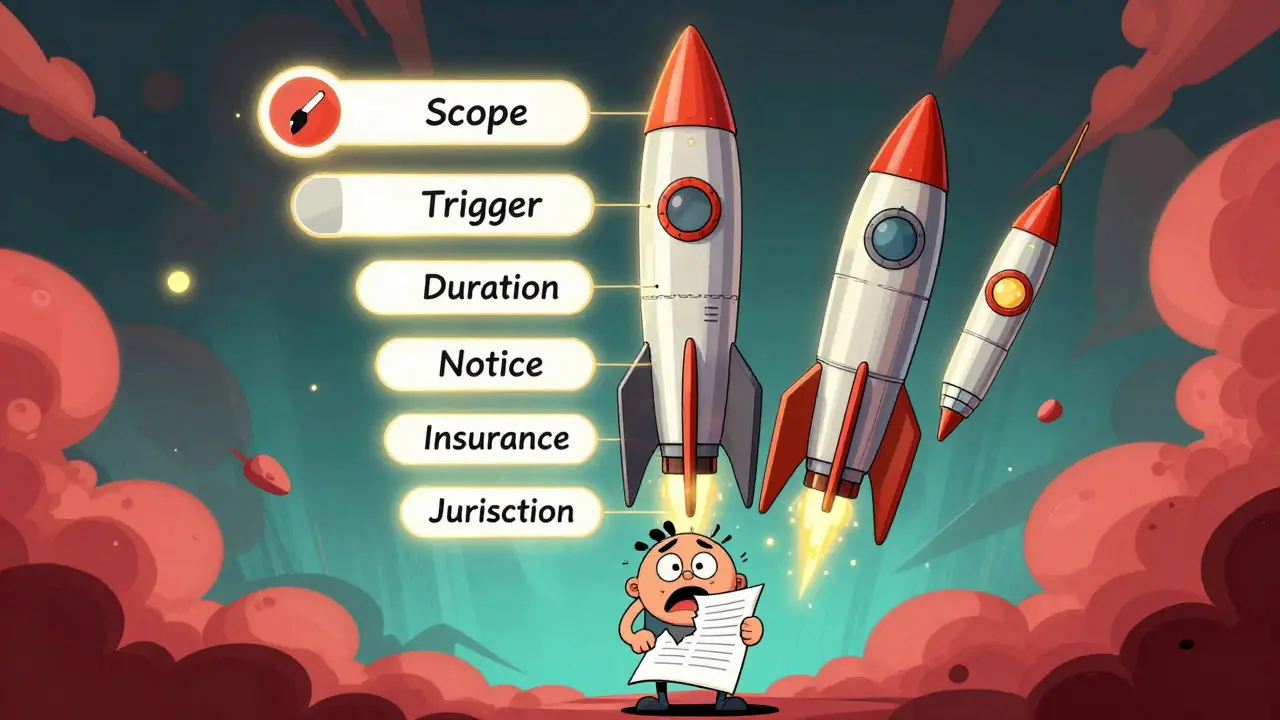
Indemnify, Defend, Hold Harmless - What’s the Difference?
These three terms often appear together, but they mean different things:
- Indemnify = Pay for losses after they happen. You get a bill for $50,000 in legal fees? The indemnifier reimburses you.
- Defend = Pay for the legal battle as it happens. The indemnifier hires lawyers, pays court fees, and runs the defense. This is critical-it gives them control over how the case is handled.
- Hold Harmless = You can’t sue them back. If you cause the problem, they won’t be liable. This stops the indemnified party from shifting blame unfairly.
Some lawyers use all three to be safe. But legally, “indemnify” and “defend” are the core. “Hold harmless” often adds nothing new-unless you’re dealing with a jurisdiction that treats them as separate doctrines.
Fundamental vs. Non-Fundamental Representations
In M&A deals, indemnification ties directly to what’s called “representations and warranties.” These are promises about the business being sold:
- Fundamental reps - Core truths: Do you own the company? Are you legally allowed to sell it? Do you have clean title to assets? Are there hidden tax liabilities? These usually survive for 3-5 years-or even longer.
- Non-fundamental reps - Operational stuff: Employee benefits, software licenses, customer contracts. These often expire after 12-18 months.
Why the difference? Fundamental reps go to the heart of the deal. If the seller lied about owning the company, the whole deal collapses. Non-fundamental reps are about day-to-day operations. The buyer gets less time to find problems.
Buyers push for longer survival periods on fundamental reps. Sellers fight to limit them. It’s one of the most heated negotiation points.
Practical Traps and How to Avoid Them
Even experienced parties mess this up. Here are the most common mistakes:
- Not defining “losses” - Does it include attorney fees? Regulatory fines? Lost revenue? If it doesn’t say, courts may not enforce it.
- Forgetting insurance - What if the indemnifier goes bankrupt? A clause saying “we’ll pay” means nothing if they have no money. Always require proof of coverage.
- Ignoring notice deadlines - If you don’t notify the indemnifier within 15 days of a claim, you might lose your right to reimbursement. Treat deadlines like court dates.
- Letting the other side control defense - If the indemnifier runs the legal team, they might settle cheaply-even if it’s not in your best interest. Push for approval rights on settlements.
- Using boilerplate language - Copy-pasting a clause from another deal is dangerous. Every transaction has unique risks. Tailor it.
One real-world example: A tech startup sold its platform to a large retailer. The contract had a standard indemnity clause covering IP infringement. Later, a patent troll sued the retailer, claiming the software copied code. The startup had to pay $2.1 million in legal fees and a settlement-because their clause didn’t exclude “unintentional infringement.” They hadn’t negotiated that out.
Why This Matters More Than You Think
Indemnification isn’t just for big corporations. It matters if you’re hiring a freelancer, buying a SaaS tool, or signing a lease. If your vendor’s software crashes and you lose sales, who pays? If your contractor damages a client’s property, are you on the hook?
Without clear indemnity terms, you’re gambling. You’re trusting the other party to do the right thing after something goes wrong. That’s not risk management-that’s wishful thinking.
Good contracts don’t assume the worst. They plan for it. And indemnification is the most reliable tool we have to turn uncertainty into structure.
Final Tip: Negotiate Like a Pro
If you’re the buyer: Demand broad indemnity, long survival periods, and control over defense. Push for uncapped liability on fundamental reps.
If you’re the seller: Limit scope. Exclude indirect damages. Cap total liability at the contract value. Shorten survival periods. Require notice within 30 days. Push for insurance.
Neither side should expect perfection. But both sides should expect clarity. The best indemnity clauses don’t just protect-they prevent disputes by making expectations obvious from day one.
What happens if the indemnifying party can’t pay?
If the party responsible for paying losses doesn’t have the funds, the indemnified party may be left with unreimbursed expenses. That’s why contracts often require the indemnifier to maintain insurance coverage sufficient to meet potential claims. Always verify the policy limits and ensure they match the indemnity obligations.
Can indemnification cover criminal fines?
No. Most indemnity clauses explicitly exclude criminal penalties, fines, or penalties imposed by government regulators. Courts generally won’t enforce agreements that attempt to shift responsibility for illegal conduct. Indemnification is for civil liabilities only.
Do I need a lawyer to draft an indemnification clause?
Yes. While templates exist, indemnity clauses are high-stakes. Poorly worded language can leave you unprotected-or overly exposed. A lawyer can help tailor the scope, limits, and procedures to your specific transaction and jurisdiction.
Is indemnification the same as insurance?
No. Insurance is a third-party contract where an insurer pays claims based on policy terms. Indemnification is a direct contractual promise between two parties. Insurance can fund indemnification, but it doesn’t replace it. Many contracts require both.
Can indemnification be waived?
Yes, but only if both parties agree in writing. In some cases, such as consumer contracts, courts may refuse to enforce waivers if they’re seen as unfair. Always review local laws before agreeing to waive indemnification rights.

8 Comments
Finally, someone gets it. Indemnification isn’t just legalese-it’s your safety net when someone else’s mess costs you everything. I’ve seen startups go belly-up because they didn’t demand proper indemnity. Don’t be that guy. Read the fine print. Or don’t. But then don’t cry when you’re paying $2M for someone else’s sloppy code. 😑
Lmao yeah right. Indemnification clauses are just big companies bullying small ones into signing away their souls. ‘Oh we’ll cover your losses’-until they go bankrupt, then suddenly ‘sorry, clause doesn’t cover *that* kind of loss.’ It’s all theater. The real power move? Don’t sign anything unless you’re the one writing the clause.
i just read this whole thing and wow. i never realized how much goes into these clauses. like, i signed a contract last year for a freelance designer and i thought ‘eh, they’ll fix it if something breaks’… turns out i was basically handing them a blank check. yikes. thanks for the clarity!! 😅
The structural clarity of this exposition is commendable. The delineation between indemnify, defend, and hold harmless constitutes a necessary refinement in contractual literacy, particularly for non-legal professionals engaged in commercial transactions. One would be remiss to proceed without such precision, as ambiguity in these clauses has historically precipitated protracted litigation and financial erosion. A model of expository rigor.
they dont want you to know this but indemnity clauses are how the west steals your money under the guise of ‘legal protection’. in nigeria we dont need this nonsense-we fix things with community and respect. but here? they turn every handshake into a lawsuit waiting to happen. who benefits? lawyers. who pays? you. and the system loves it. 🇳🇬✊
This is such an important topic, especially for freelancers and small business owners. I’ve mentored so many people who think ‘it’ll be fine’-and then they get blindsided. You don’t need to be a lawyer to ask for clear language. Just say: ‘Can we define exactly what’s covered?’ It’s not being difficult-it’s being smart. You’ve got this. 💪
Ugh. Another ‘educational’ post that pretends indemnification is some noble, neutral tool. It’s not. It’s a weapon. The buyer demands it, the seller capitulates, and the real losers? The junior devs, the gig workers, the small vendors who get buried under ‘cap liability to contract value’ while the corporation walks away with their $500M valuation. And don’t even get me started on ‘insurance requirements’-that’s just a tax on the little guy. 😤
This was so helpful!! 🙌 I’m actually drafting a contract for my side hustle right now and I was terrified I’d miss something. The part about notice deadlines? Mind blown. I’m going to print this out and highlight everything. Also-thank you for explaining the difference between indemnify and defend. I always thought they were the same. You just saved me from a future disaster. 🤗❤️