
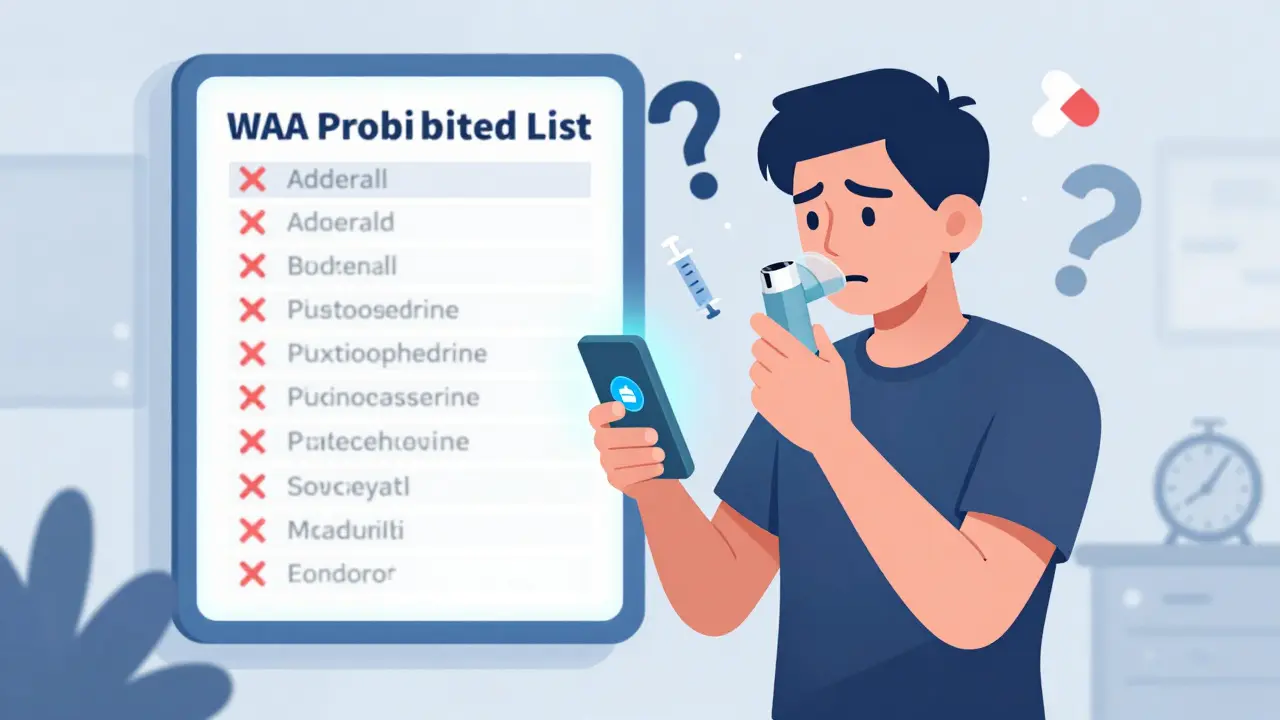
WADA Medication Checker
Check Your Medication
Enter a medication name and click "Check Status" to see if it's allowed under WADA rules
Every year, thousands of athletes take prescription meds for asthma, ADHD, diabetes, or chronic pain - and many don’t realize they could be breaking anti-doping rules just by following their doctor’s orders. It’s not about cheating. It’s about medication safety in sport. If you’re an athlete, coach, or parent of one, you need to know this: just because a drug is legal and prescribed doesn’t mean it’s allowed in competition. The World Anti-Doping Agency (WADA) keeps a list of banned substances - and it changes every year. Ignorance isn’t an excuse. The system operates on strict liability: if it’s in your system, you’re responsible.
What’s Actually Banned? The WADA Prohibited List Explained
The WADA Prohibited List isn’t just a list of street drugs. It’s a detailed catalog of 256+ substances and methods banned in sport, updated every January. Some are obvious - anabolic steroids, human growth hormone. Others are sneaky. Common asthma inhalers like salbutamol are allowed, but only up to 1,600 micrograms in 24 hours. Take more? That’s a violation. Intravenous infusions? Always banned unless you’re getting a blood transfusion for a documented medical emergency. Even some over-the-counter cold medicines contain stimulants like pseudoephedrine, which is prohibited in-competition above a certain threshold. The list breaks substances into categories: anabolic agents, peptide hormones, stimulants, diuretics, and more. Some are banned all the time - even during off-season. Others are only banned during competition. This matters because your body clears drugs at different rates. A corticosteroid injection might be fine on Monday, but if you compete on Friday, you could still test positive. The clock doesn’t stop just because you’re not training.Therapeutic Use Exemptions (TUEs): The Legal Way to Take Banned Meds
If you need a banned medication for a real medical condition, there’s a path: the Therapeutic Use Exemption, or TUE. This isn’t a loophole - it’s a formal process. To qualify, you must prove four things:- You have a diagnosed medical condition that requires the banned substance.
- The medication won’t give you an unfair advantage - it just brings you back to normal health.
- No legal alternative works as well.
- You applied for the TUE before taking the drug - unless it was a true emergency.
Who Needs a TUE? It Depends on Your Level
Not every athlete needs to apply the same way. If you’re an International-Level Athlete (competing in World Championships, Olympics, etc.), you apply through your International Federation. National-level athletes apply through their country’s Anti-Doping Organization - like USADA in the U.S. or UKAD in Britain. Recreational athletes competing in local events might still be subject to testing, depending on their sport’s rules. The key is this: if you’re registered in a testing pool, you’re on the radar. Even if you’re not a pro, your school or club might be under WADA’s umbrella. And here’s the catch: TUEs aren’t retroactive. You can’t take your ADHD meds on Friday, then apply for a TUE on Monday. That’s a violation. Many athletes find out too late. A 2023 British Journal of Sports Medicine study found that 42% of athletes who tested positive didn’t know their prescription contained a banned ingredient.Global DRO: Your First Line of Defense
Before you take any medication - even if you’ve used it for years - check it. Use Global DRO, the free tool maintained by USADA, UKAD, and other agencies. It covers over 1,200 medications across 10 countries. You pick your sport, your country, and the product name. It tells you if it’s banned, and if so, under what conditions. For example, it’ll say: “Salbutamol inhaler: allowed up to 1,600 mcg/24 hours in-competition.” Or: “Pseudoephedrine: prohibited above 150 mcg/mL in urine.” Don’t trust the label. Don’t trust your pharmacist’s word. Don’t assume “it’s fine because my coach said so.” Global DRO is the only official source. And it’s updated daily. If you’re traveling, check the version for the country you’re in - formulations vary. A pill sold in Canada might be fine, but the same brand in Germany could have a different inactive ingredient that’s banned.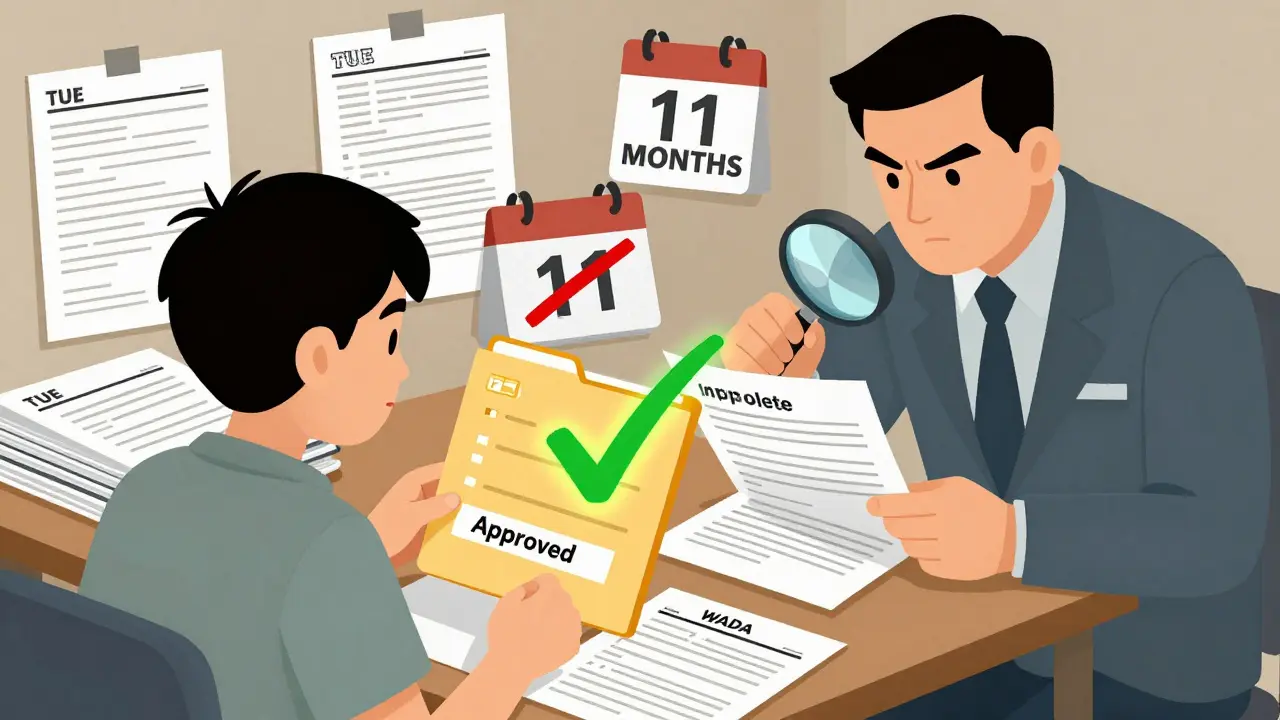
Side Effects You Can’t Ignore
Even with a TUE, taking banned substances comes with risks. Glucocorticoids (like prednisone) are the most common TUE request - 28.7% of all applications. But long-term use can lead to adrenal suppression, bone loss, and mood swings. Beta-2 agonists (like albuterol) help asthma, but too much can cause heart palpitations, tremors, or even dangerous arrhythmias. Stimulants like Adderall can raise blood pressure and cause insomnia or anxiety. These aren’t theoretical. Dr. Richard Budgett, WADA’s Medical Director, says improper use of these drugs has led to hospitalizations in athletes. And here’s the hidden danger: athletes sometimes push doses beyond approved limits because they think “more is better.” That’s how you end up with a positive test - and worse, a health crisis. One swimmer increased his insulin dose to “boost recovery” and ended up in the ER with hypoglycemia. He didn’t get banned - he got lucky.What Doctors Need to Know (And Often Don’t)
Your doctor might not know the rules. A 2022 study found that 68% of physicians treating athletes had no idea about the WADA Prohibited List. That’s not their fault - it’s a system failure. But it’s your problem. Before your doctor writes a prescription, tell them you’re an athlete. Ask: “Is this on WADA’s banned list?” Show them Global DRO. Bring a printed copy of the Prohibited List. Some clinics now have anti-doping resources on file - but most don’t. The College of Physicians and Surgeons of British Columbia says doctors have a duty to know this stuff. If your doctor refuses to check, find another one. Your health - and your eligibility to compete - depends on it.Clearance Times: When to Stop Taking Your Meds
Some drugs leave your body in hours. Others hang around for days. Corticosteroids? Give yourself 48-72 hours before competition. Stimulants? Maybe 12-24 hours. But you can’t guess. Use Global DRO to find the clearance window for your specific drug. If you’re unsure, stop taking it 5-7 days before your event. Better safe than suspended. Don’t rely on how you feel. You might feel fine, but the test doesn’t care. It detects molecules, not symptoms.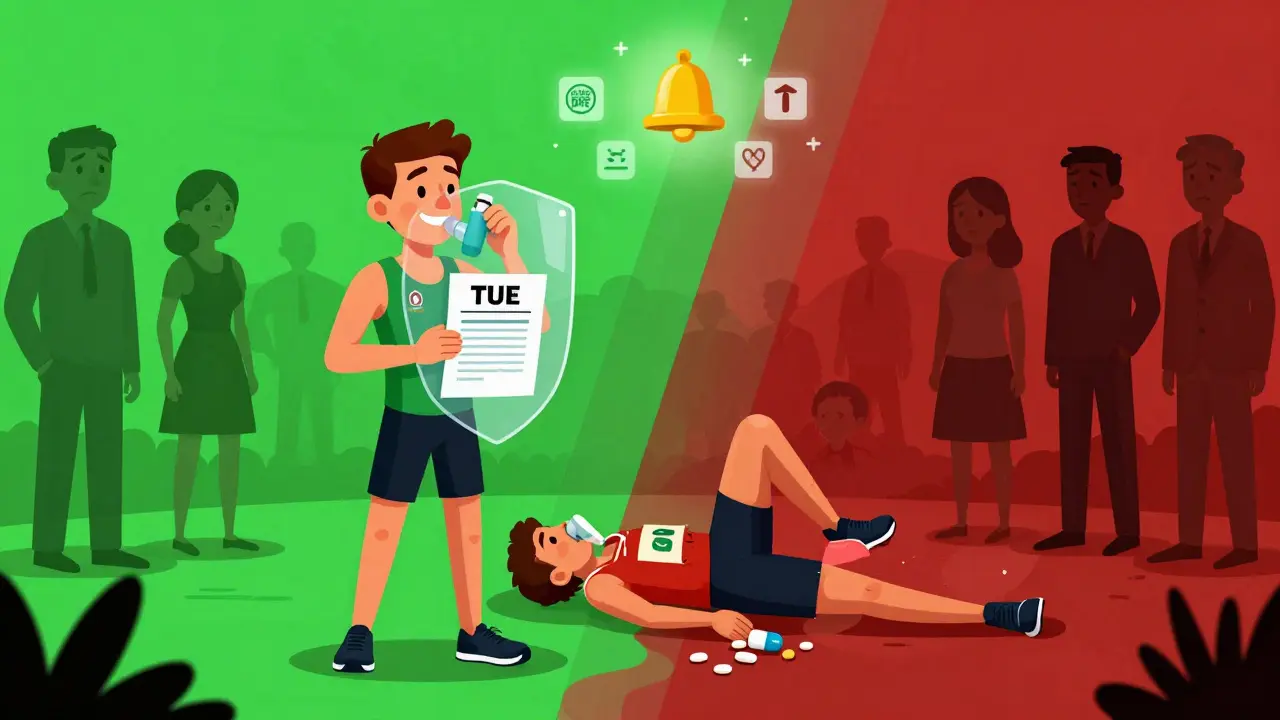
What Happens If You Get Caught?
A positive test for a banned substance without a TUE is an Anti-Doping Rule Violation (ADRV). Penalties range from a warning to a four-year ban - depending on intent, history, and substance. First-time offenders with no intent to cheat sometimes get reduced sanctions - but only if they cooperate and prove they tried to follow the rules. If you didn’t check Global DRO, didn’t apply for a TUE, and didn’t tell your doctor you’re an athlete? You’re on your own. And it’s not just your career. Your school, sponsor, and reputation take a hit. Many athletes lose scholarships, endorsements, and trust from teammates. One high school runner in Ohio lost her state title and scholarship offer after testing positive for a banned ingredient in a cough syrup she bought online.Real Stories: The Human Side of the Rules
Some athletes delay treatment because they’re scared. A 2022 U.S. Center for SafeSport survey found 37% of athletes skipped needed meds due to anti-doping fears. One teen with type 1 diabetes stopped using insulin for weeks because she thought it was banned. She ended up in the hospital. Another athlete with severe asthma didn’t use his inhaler before a race because he didn’t have a TUE - and collapsed mid-event. But there are success stories, too. A 17-year-old elite swimmer got approved for insulin after working with his endocrinologist and submitting full medical records. He competed clean, won a national title, and now helps other athletes navigate the system.What You Can Do Right Now
If you’re an athlete, here’s your action plan:- Go to Global DRO and check every medication you take - even vitamins and supplements.
- Tell your doctor you’re an athlete and ask them to verify your prescriptions.
- If a drug is banned, apply for a TUE immediately - don’t wait.
- Know your clearance times. Stop banned substances early.
- Keep copies of all TUE approvals and medical records.
What’s Changing in 2024 and Beyond
WADA’s 2024 Prohibited List added three new substances to monitoring and clarified thresholds for asthma drugs. A new TUE reform package requires standardized paperwork across all countries - making applications faster and fairer. The European Medicines Agency is now working with WADA to put anti-doping labels directly on drug packaging. That’s a big step forward. But the biggest challenge remains: youth athletes. A 2023 USADA survey found 28% of teens stopped taking necessary medications because they feared a positive test. That’s not clean sport - that’s harm. The goal isn’t to ban medicine. It’s to make sure athletes get the care they need - safely and legally.Can I use my ADHD medication if I’m an athlete?
Maybe - but only with a Therapeutic Use Exemption (TUE). Medications like Adderall and Ritalin are banned in-competition. You must prove you have a diagnosed condition, that the drug doesn’t enhance performance beyond normal health, and that no legal alternative works. Apply for a TUE before using it. Don’t assume your doctor’s prescription is enough.
Are inhalers allowed for asthma?
Yes - but with limits. Inhaled salbutamol (albuterol) is allowed up to 1,600 micrograms over 24 hours. Any more, or if you use it intravenously, it’s banned. Always check Global DRO for the exact product you’re using. Some inhalers contain other banned substances, so don’t assume all asthma inhalers are safe.
Do I need a TUE if I’m not a professional?
It depends. If you’re registered in a testing pool - even at the college, high school, or club level - you’re subject to testing. Most Olympic sports federations require all members to follow WADA rules. If you’re unsure, ask your coach or governing body. Better to get a TUE than risk a violation.
Can I use over-the-counter cold medicine?
Some contain banned stimulants like pseudoephedrine or phenylephrine. A common cold tablet might have 60 mg of pseudoephedrine - the limit is 150 mcg/mL in urine. That means even one pill could push you over. Always check Global DRO before taking any OTC product. Don’t trust the label - it doesn’t mention anti-doping rules.
How long does it take to get a TUE approved?
For international athletes, most applications are processed within 21 days. National-level athletes often get faster responses - USADA approved 94.3% of initial applications in 2023. Emergency TUEs can be approved in 72 hours. But if your paperwork is incomplete, it’ll be delayed. Start early. Don’t wait until the week before your event.
What if my medication isn’t on Global DRO?
If it’s not listed, treat it as banned until proven otherwise. Contact your national anti-doping organization directly. They can check the ingredient list manually. Never assume a drug is safe just because it’s not on the website. Global DRO doesn’t cover every single product - especially new or regional brands.

9 Comments
It’s unbelievable how many athletes just assume their doctor’s prescription is enough. I’ve seen too many cases where someone takes a common cold med, tests positive, and then acts like it’s a conspiracy. It’s not. It’s basic responsibility. If you’re competing, you owe it to yourself and others to check Global DRO before swallowing anything. No excuses.
Why do we even have this system? It’s just another way to punish people who are sick. My cousin has asthma and gets banned every time she uses her inhaler because she forgot to file paperwork. This isn’t about fairness-it’s about bureaucracy crushing real people.
As someone who coaches youth track, I’ve had to become a de facto anti-doping educator. It’s not just about the pros-high schoolers are getting tested now, and most don’t know the difference between a salbutamol inhaler and a banned stimulant. I print out Global DRO guides for every athlete and their parents. It’s not glamorous, but it prevents disasters. One teen stopped taking her insulin because she thought it was banned. She ended up in the ER. We can do better.
Doctors need training too. Most don’t know the list. I’ve had pediatricians write prescriptions for pseudoephedrine without realizing it’s flagged. We need mandatory WADA modules in med school. It’s not the athlete’s fault if the system fails them.
Let’s be honest: the entire TUE system is a farce. If you’re wealthy enough to afford specialists, lawyers, and months of paperwork, you get your exemption. If you’re not, you’re either sidelined or forced to risk your career. This isn’t about clean sport-it’s about access. The same rules that apply to a Division III swimmer apply to an Olympian, but only one has the resources to navigate the red tape. That’s not justice. That’s privilege dressed up as policy.
Just checked my ADHD med on Global DRO-yep, banned without TUE 😳 I’ve been taking it for years and never knew. Thanks for the wake-up call. Going to my doctor tomorrow to start the paperwork. So grateful this exists-even if it’s a pain. 🙏
Look-I get it. Rules are rules. But here’s the thing: if you’re an athlete with asthma, and your inhaler is the only thing keeping you alive on the track, you shouldn’t have to beg for permission to breathe. TUEs should be automatic for documented conditions. No forms. No delays. Just let people compete. This isn’t about doping-it’s about survival.
And for the love of God, stop using OTC cold meds. I once had a sprinter take NyQuil before a meet. He didn’t even know it had pseudoephedrine. He tested positive. Lost his scholarship. Got suspended. All because he thought ‘it’s just a cold remedy.’ Wake up. Read the label. Or better yet-don’t take it at all.
Global DRO is your friend. Bookmark it. Print it. Tape it to your mirror. Your future self will thank you.
Okay, so... let me get this straight. I can’t take my Adderall for ADHD because it’s a ‘performance enhancer’... but I can take a corticosteroid injection that makes me feel like a god and then win a race? Wait-so the real cheat is the guy who’s actually sick and needs meds to function normally? That’s not clean sport. That’s hypocrisy with a badge.
And why does WADA even care if I’m taking Ritalin? Do they think I’m going to suddenly run faster because I’m less distracted? Or are they just scared of neurodivergent athletes outperforming them? I’m not cheating-I’m managing a disability. But apparently, in sport, disability is just another banned substance.
My daughter’s a high school swimmer and just got her TUE approved for insulin! 🎉 Took 3 months, 4 specialist letters, and a ton of stress-but she’s competing clean now. So proud of her for pushing through. If you’re in this boat: don’t give up. It’s worth it. 💪❤️
Thanks for putting this out there. I’m a coach and I didn’t realize how many of my athletes were flying blind with their meds. I’m sharing this with the whole team tomorrow. We’re going to make a Global DRO checklist for every prescription they’re on. Better late than never.