

Mycophenolate GI Symptom & Dose Calculator
Personal Assessment
Enter your current mycophenolate dose and MPA levels to get personalized recommendations for symptom management.
Your Personalized Recommendations
Dose Adjustment Suggested
Expected Improvement:
(Based on 78% of patients who reduced dose by 33%)
Practical Next Steps
Important Warning
When you're taking mycophenolate after a transplant or for an autoimmune condition, the goal is simple: keep your body from attacking your new organ or your own tissues. But for nearly half of patients, that benefit comes with a heavy cost - nausea and diarrhea that can make daily life unbearable. These aren't just mild inconveniences. For many, they're the reason they stop taking the drug entirely, putting their health at risk. The good news? There are proven, practical ways to manage these side effects without giving up the medication.
Why Mycophenolate Causes Nausea and Diarrhea
Mycophenolate - sold under brand names like CellCept and Myfortic - works by blocking a key enzyme called IMPDH that immune cells need to multiply. That’s how it prevents organ rejection. But that same enzyme is also important in the lining of your gut. When it’s shut down, the cells that keep your digestive tract healthy start to die off. This leads to inflammation, reduced absorption, and faster movement of food through your intestines - which means nausea, cramping, and loose stools.
It’s not random. Studies show that 31% of people on mycophenolate get nausea, and nearly 30% get diarrhea. In some cases, it’s so severe it looks like colitis - bloody stools, intense cramps, and inflammation seen on colonoscopy. This isn’t infection. It’s direct drug toxicity. And it usually starts within the first few weeks of starting the medication.
Dose Matters - Lowering It Can Help
One of the most overlooked truths about mycophenolate side effects is that they’re often dose-dependent. Many patients are started on the full 3 grams per day - 1 gram twice a day for CellCept, or 1.8 grams for Myfortic. But that’s not always necessary.
A 2021 study from Johns Hopkins followed 89 transplant patients with moderate to severe diarrhea. When their dose was reduced by 33% - for example, from 1,000 mg twice daily down to 667 mg twice daily - 78% saw their symptoms disappear within 72 hours. Their drug levels stayed in the therapeutic range (1-3.5 μg/mL), meaning they still got full protection against rejection.
Don’t assume that more is better. Your doctor can check your mycophenolic acid (MPA) levels with a simple blood test. If your trough level is above 3.5 μg/mL, you’re likely at higher risk for GI problems. Lowering the dose isn’t giving up - it’s smart management.
Switching Formulations Can Make a Big Difference
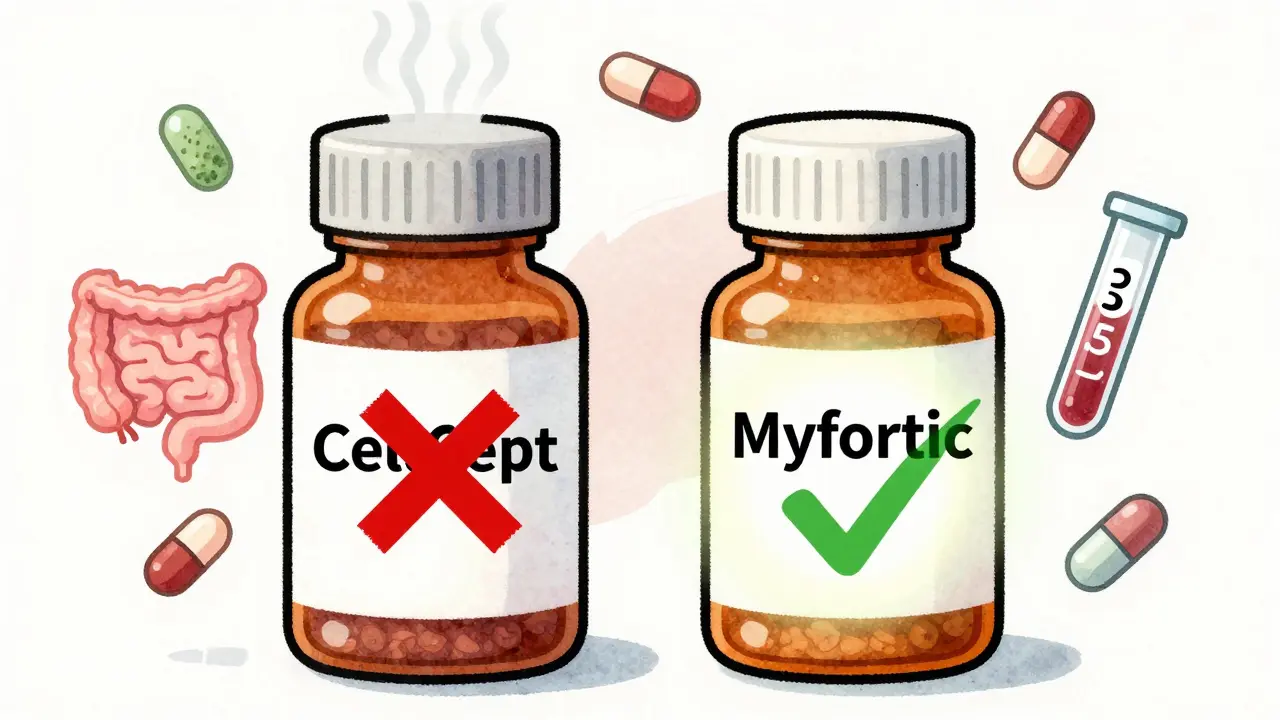
Not all mycophenolate is the same. Mycophenolate mofetil (CellCept) is absorbed in the stomach, which is why it often causes nausea. Mycophenolate sodium (Myfortic) is enteric-coated, meaning it doesn’t dissolve until it reaches the small intestine. That small change cuts upper GI irritation by about 40%.
A 2022 trial of 120 kidney transplant patients found that those who switched from CellCept to Myfortic had a 65% improvement in nausea and diarrhea. For people who can’t tolerate the original version, this switch is often the turning point. It’s not a cure, but it’s enough for many to keep going.
And here’s something practical: Myfortic is now available as a generic. The cost difference is minimal, but the comfort difference can be huge.
Timing and Food - Small Changes, Big Results
Most prescribing guides say to take mycophenolate on an empty stomach - at least one hour before or two hours after eating. That’s because food can interfere with absorption. But for people with nausea, that rule backfires.
Patients on Reddit’s r/kidneytransplant forum reported that taking the pill with a small amount of applesauce or yogurt reduced nausea by 62%. A University of Michigan survey found similar results - 58% of patients who ate a light snack with their dose had fewer symptoms.
The trick is balance. Take it with a small, low-fat snack - not a full meal. Avoid spicy, greasy, or acidic foods. Stick to bland options like toast, rice, or bananas. And if you’re still having trouble, try splitting your dose. Instead of two big pills, take one in the morning and one in the afternoon. That keeps your stomach from being overwhelmed.
Probiotics and Gut Support
Your gut microbiome takes a hit when you’re on mycophenolate. Studies show reduced levels of good bacteria like Lactobacillus and Bifidobacterium in patients with diarrhea.
One small but solid study found that patients who took a daily probiotic with Lactobacillus GG (found in products like Culturelle) had a 49% reduction in diarrhea frequency. It doesn’t eliminate the problem, but it softens the blow. You don’t need fancy brands - just look for a product with at least 10 billion CFUs and Lactobacillus GG listed on the label.
Also, stay hydrated. Diarrhea depletes electrolytes. Keep a bottle of oral rehydration solution (like Pedialyte) on hand. Avoid sugary drinks - they make diarrhea worse. And if you’re losing weight or feeling dizzy, talk to your doctor. You might need a simple blood test to check for low sodium or potassium.
When to Worry - Signs of True Colitis
Not all diarrhea is the same. If you’re having more than 5 loose stools a day for over a week, especially with blood, mucus, or fever, it could be mycophenolate-induced colitis. This isn’t just upset stomach - it’s inflammation of the colon lining.
Doctors confirm this with a colonoscopy. The telltale sign? Apoptosis - dying cells in the gut lining. If this is found, you’ll need to stop mycophenolate for at least 2-4 weeks. Then, under close supervision, your doctor might try restarting at half the original dose. But be warned: 42% of patients who rechallenge have symptoms come back.
And here’s the critical part: Rule out infection first. Transplant patients are at high risk for CMV and C. diff. If you have fever, recent antibiotic use, or hospital exposure, your doctor should test for these before assuming it’s the drug.
What If Nothing Works?
For 14% of patients, mycophenolate simply isn’t tolerable. That’s not failure - it’s biology. If nausea and diarrhea persist despite dose changes, formulation switches, probiotics, and timing adjustments, it’s time to consider alternatives.
One option is azathioprine - an older immunosuppressant with fewer GI side effects. But it’s less effective and requires more frequent blood monitoring. Another is leflunomide, a newer drug that’s been used off-label with promising results in patients who can’t take mycophenolate. A 2023 study in Transplant International showed 71% of patients switched to leflunomide stayed on it for over a year without major GI issues.
Switching isn’t easy. It means relearning your treatment plan. But for many, it’s the difference between being sick and being able to live.
What You Can Do Today
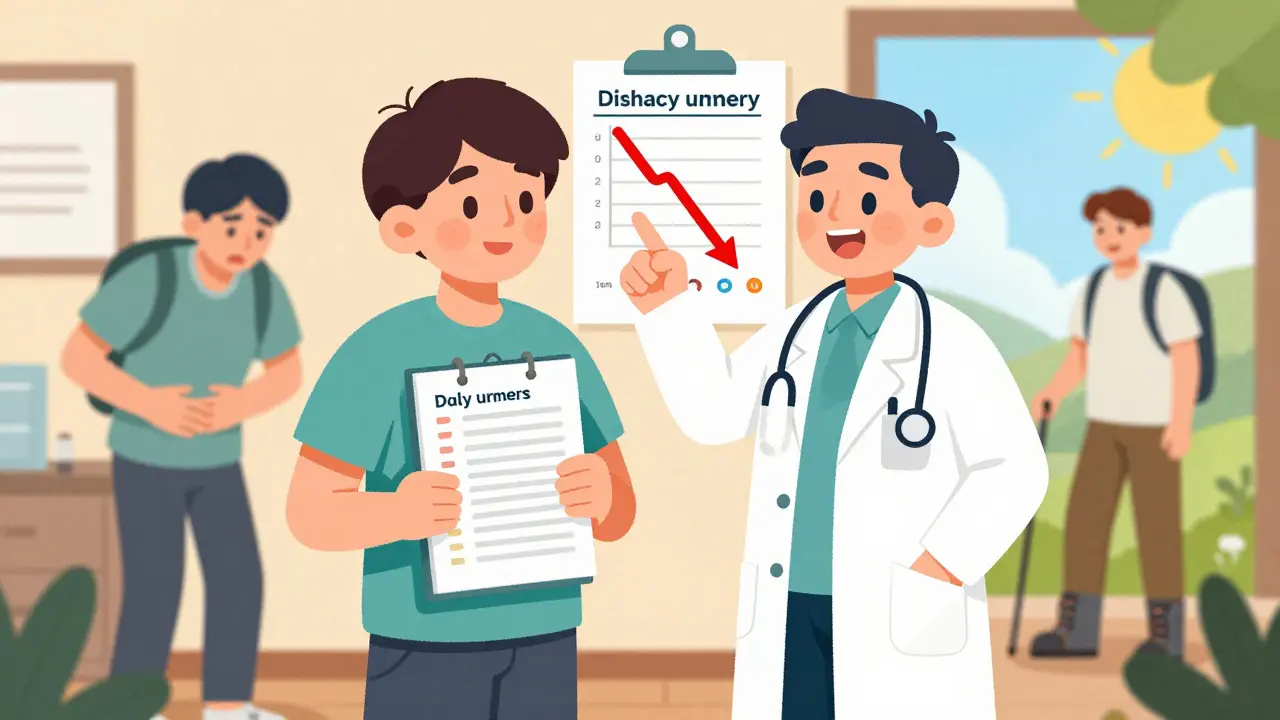
- Track your symptoms: Keep a daily log of stool frequency, nausea level (1-10), and what you ate.
- Ask your pharmacist: Can you switch from CellCept to Myfortic? It’s often covered the same way.
- Try a probiotic: Look for Lactobacillus GG - take it daily for 2 weeks.
- Take your dose with a small snack: Applesauce, toast, or yogurt can help.
- Request a drug level test: Ask your doctor to check your MPA trough level. If it’s above 3.5 μg/mL, a dose reduction may help.
- Don’t quit cold turkey: Stopping mycophenolate suddenly can trigger rejection. Always work with your transplant team.
Mycophenolate is powerful. But it doesn’t have to wreck your life. The key isn’t just tolerating the side effects - it’s managing them with precision. Small changes, backed by real data, can make all the difference.


10 Comments
lol at the 3g dose. my doc threw that at me like it was a protein shake. turned it down to 750mg twice and boom - no more bathroom marathons. 🤷♂️
THIS. IS. A. REVOLUTION! Why is this not on every transplant center’s wall?! People are dying from ignorance while doctors cling to dogma like it’s holy scripture! Mycophenolate isn’t a one-size-fits-all nuclear bomb - it’s a scalpel! And we’re using it like a sledgehammer!!!
I swear, the 'take it on an empty stomach' rule is just a myth created by pharmaceutical reps who’ve never had to eat a banana after vomiting. I take mine with peanut butter toast and haven’t missed a dose in 3 years.
They don’t want you to know this... but the real reason mycophenolate causes GI issues is because Big Pharma laced it with glyphosate to push more colonoscopies. You think the 40% reduction with Myfortic is coincidence? It’s not. The coating hides the toxin. Ask yourself - who profits from your colitis?
I want to say thank you for writing this - really, truly. I was on CellCept for 18 months and thought I was broken. I’d cry every morning before work because I was too nauseous to eat. Then I switched to Myfortic, started taking it with oatmeal, and added a probiotic. It didn’t fix everything, but it gave me back my life. You’re not alone. And you’re not weak for needing help. This is medicine - not magic. It’s science. And science listens.
The MPA trough level data is statistically underpowered. N=89? That’s a pilot. Also, why no control for CYP2C8 polymorphisms? The entire field is built on anecdotal pharmacokinetics. And don’t get me started on probiotics - microbiome science is still in the Stone Age.
Life is suffering. The body is a temple of decay. Mycophenolate is just a mirror. We fight nature with chemistry. But nature always wins. The gut knows truth. The pills are illusions. Eat rice. Breathe. Let go. You are not your disease. You are the silence between heartbeats.
One thing people miss: the timing of the dose matters more than most think. Taking it at 7am and 7pm - not 7am and 11pm - gives your gut a rhythm. Your digestive system has circadian rhythms too. If you’re taking your second dose right before bed, you’re basically telling your intestines to throw a party. Try syncing it with your natural rhythm. It’s not magic - it’s chronopharmacology.
Switched to Myfortic last year. Took a while but now I’m basically back to normal. Probiotic helped too. Honestly? The biggest thing was just talking to someone who’d been there. You’re not crazy. It’s not all in your head. And you don’t have to suffer to be a good transplant patient.
I was ready to quit. I had diarrhea for 10 weeks straight. Lost 15 pounds. Thought I’d lose the kidney. Then I tried the applesauce trick - just a spoonful with my pill. Two days later, I ate a whole bowl of ice cream without panic. I’m not saying it’s perfect. But it’s possible. Don’t give up. There’s a version of this drug that can work for you. You just gotta hunt for it.