
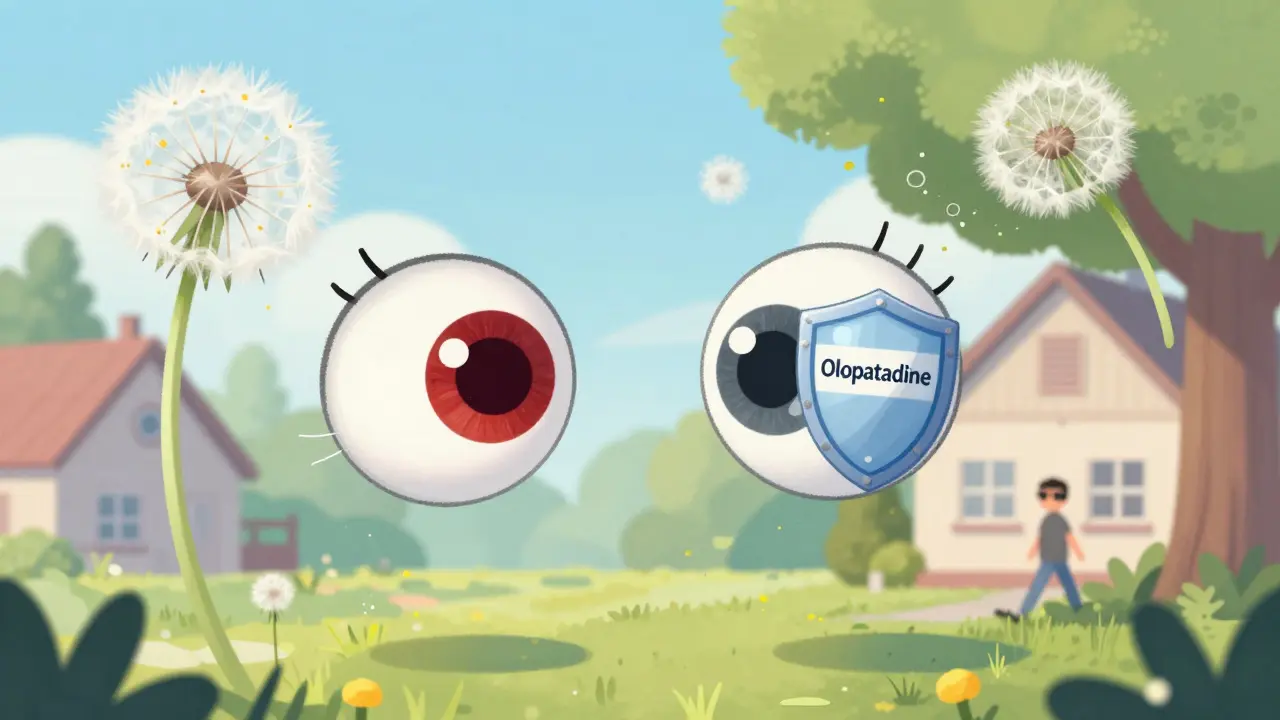
When your eyes burn, water nonstop, and feel like they’re being scratched from the inside, it’s not just tiredness. If you’re dealing with itching, redness, and swelling that shows up every spring or when you pet your cat, you’re likely dealing with allergic conjunctivitis - the medical term for eye allergies. Unlike pink eye caused by infection, eye allergies aren’t contagious. They’re your body’s overreaction to things like pollen, dust mites, or pet dander floating in the air. About 40% of people in the U.S. deal with this every year, and it’s just as common in places like Perth, where spring pollen counts are climbing fast.
What’s Really Happening in Your Eyes?
Your eyes are covered by a thin, delicate membrane called the conjunctiva. When allergens land on it - say, a puff of grass pollen or a cloud of cat hair - your immune system goes into overdrive. Mast cells in the conjunctiva release histamine, a chemical that triggers inflammation. That’s what causes the itch, the redness, and the watery eyes. It’s not a bug. It’s not dirt. It’s your body’s alarm system going off for no good reason.
Studies show that 92% of people with eye allergies report intense itching as their worst symptom. Redness hits 88%, and 85% say their eyes water constantly. Swollen eyelids? That’s 76%. And if you’ve ever had dark circles under your eyes that won’t go away, those are called allergic shiners - a telltale sign of chronic eye allergies.
Here’s how to tell if it’s allergies and not infection:
- Allergic: Clear, watery discharge. Intense itching. Symptoms flare up on windy days or after being outside.
- Viral: More discharge (often yellowish), less itching. Usually starts in one eye and spreads.
- Bacterial: Thick yellow or green pus. Eyes may be crusted shut in the morning.
If you’re unsure, skip the guesswork. A simple eye exam can rule out other conditions - especially since 20% of people who think they have allergies actually have dry eye disease or another issue.
The Best Antihistamine Eye Drops: What Actually Works?
Not all eye drops are created equal. Some promise quick relief but leave you worse off later. Others cost a fortune but deliver results that last all day. Here’s what the data says about the most effective options.
First-Generation: Fast but Flawed
Products like Naphcon-A (pheniramine) work fast - sometimes in under 5 minutes. But they’re short-lived. You’ll need to reapply every 4 to 6 hours. And for about 25% of users, they sting like crazy when you put them in. Not ideal if you’re trying to get through a workday or pick up the kids.
Second-Generation: The New Gold Standard
These are the drops most eye doctors recommend today:
- Olopatadine (Pataday, Patanol): One drop, lasts 16-24 hours. In FDA trials, itching scores dropped from 2.8 to 0.7 on a 4-point scale within 3 minutes. Pataday Once Daily Relief is now the top-prescribed option for seasonal allergies.
- Ketotifen (Zaditor, Alaway): Works in 3-5 minutes, lasts 8-12 hours. Less expensive than Pataday. Generic versions cost as little as $13 for a 2.5mL bottle.
- Epinastine (Elestat): Also a dual-action drop, but requires twice-daily dosing.
Why are these better? They don’t just block histamine. They also stabilize mast cells - meaning they stop the allergic reaction before it even starts. This dual action makes them more effective than older drops.
Here’s how they compare:
| Product | Active Ingredient | Onset | Duration | Stinging Risk | Cost (2.5mL) |
|---|---|---|---|---|---|
| Pataday Once Daily | Olopatadine 0.2% | 3 minutes | 16-24 hours | Low (5%) | $43 (brand) |
| Zaditor / Alaway | Ketotifen 0.025% | 3 minutes | 8-12 hours | Low (8%) | $13 (generic) |
| Naphcon-A | Pheniramine | 5 minutes | 4-6 hours | High (25%) | $15 (OTC) |
| Visine-A | Tetrahydrozoline | 1 minute | 4-8 hours | Medium | $8 (OTC) |
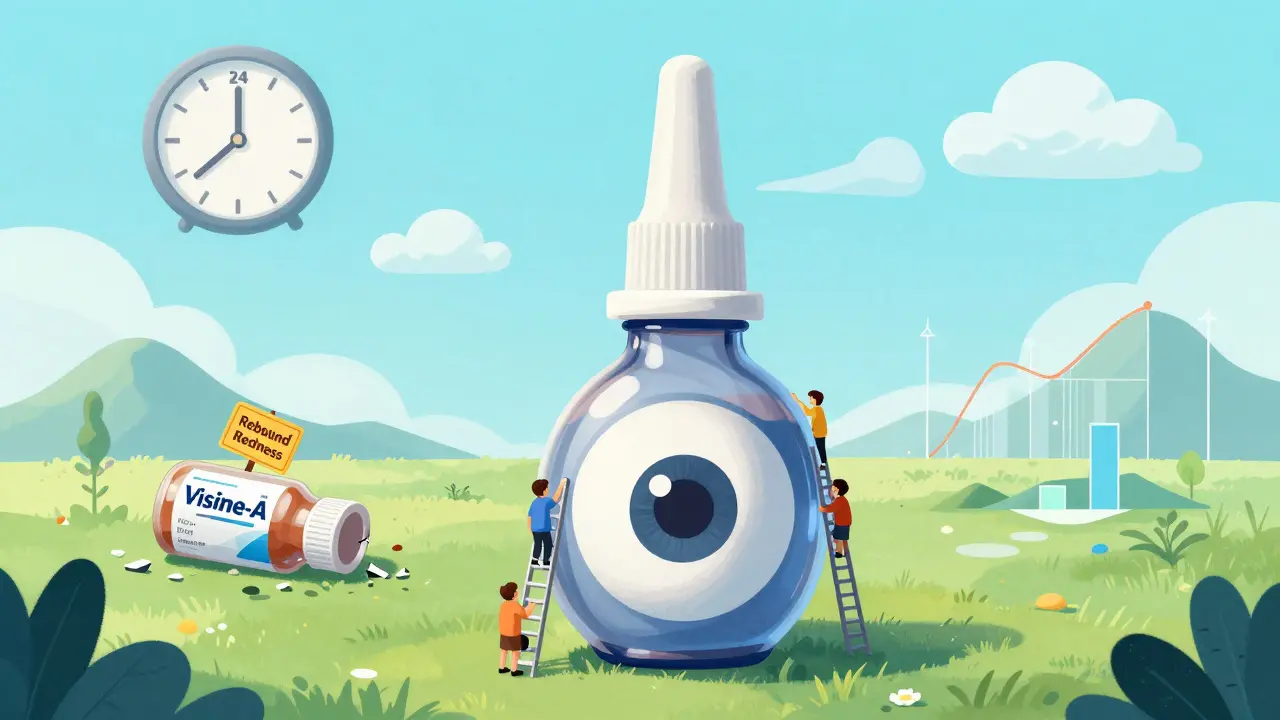
One big red flag: Visine-A and similar decongestant drops. They make redness vanish fast by shrinking blood vessels. But if you use them for more than 3 days, your eyes bounce back worse than before. In fact, 65% of long-term users develop rebound hyperemia - where the redness becomes permanent. Avoid them unless it’s a one-time emergency.
What About Oral Antihistamines?
You might think Zyrtec or Claritin will fix your itchy eyes. They help with sneezing and runny nose - yes. But for your eyes? They’re hit or miss. A 2022 study found that 40% of people using oral antihistamines actually got worse dry eye symptoms. That’s because these pills dry out your tear glands. If you’re already prone to dry eyes, this could make things worse.

When You Need More Than Drops
If your symptoms are severe, or if drops alone aren’t cutting it, your doctor might suggest:
- Corticosteroid drops (like loteprednol): Used short-term for flare-ups. Can raise eye pressure or cause cataracts if used too long.
- Allergy shots or sublingual tablets: These train your immune system over time. It takes 6-12 months to see results, but 60-80% of people report major improvement after 3-5 years. This is the only treatment that changes the disease itself.
Real-World Tips That Actually Help
Medication helps - but avoiding triggers helps even more. Here’s what works:
- Wash your face after being outside. A simple rinse removes pollen from skin and eyelashes.
- Use preservative-free artificial tears 4-6 times a day. They flush out allergens and soothe irritation. Look for single-use vials - no preservatives means less risk of irritation.
- Wear wraparound sunglasses outdoors. Studies show they cut pollen exposure by half.
- Keep windows closed during high pollen days. Use AC instead.
- Change pillowcases twice a week. Dust mites love warm, sweaty skin.
And here’s how to put drops in right - because 50% of people do it wrong:
- Tilt your head back.
- Pull down your lower eyelid to make a little pocket.
- Hold the bottle without touching your eye.
- Squeeze one drop into the pocket.
- Close your eye gently for 30 seconds. No blinking hard - that just pushes the drop out.
Pro tip: Keep your drops refrigerated. Colder drops feel better and reduce swelling faster.
What People Are Saying
On Reddit and Amazon, users are clear:
- Pataday gets the most praise: “Works within minutes and lasts all day.”
- Zaditor gets called “the best value” - especially if you don’t have insurance.
- Many warn against Visine-A: “Used it for 5 days. My eyes got worse than ever.”
- One user summed it up: “Pataday in the morning + cold compress = manageable symptoms.”
What’s Coming Next
The future of eye allergy treatment is promising. New drops like Bepreve (bepotastine) are now FDA-approved for once-daily use. And researchers are testing inserts that release medicine slowly for up to 3 months - no daily drops needed. Biologic drugs targeting specific allergy pathways are also in early trials.
But here’s the reality: pollen counts have risen 21% globally since 1990. Climate change is making allergy seasons longer and stronger. That means more people will need better treatments - and better habits.
When to See a Doctor
If you’ve tried antihistamine drops for 2 weeks and your eyes still burn, water, or blur your vision - it’s time to see an eye doctor. You might have:
- Undiagnosed dry eye disease
- A hidden infection
- An autoimmune condition like Sjögren’s syndrome
Don’t wait. Your eyes aren’t just annoying - they’re vital. And there’s always a better solution if you don’t give up.

9 Comments
Man, I wish I’d known all this before I went through that whole ‘Visine-A nightmare’ phase. Used it for a week straight because my eyes looked red after gardening. Thought it was helping-then woke up one morning like I’d been stabbed in the eyeballs. Never again. Zaditor’s my new BFF now. $13 and it just works. No sting, no rebound, no drama.
Pataday is straight-up magic. I used to have to carry tissues like a human snot rocket, but now? I just drop one in, close my eyes, and pretend I’m in a spa. Cold compress on the side? Chef’s kiss. Also, refrigerating the bottle? Genius. It’s like a tiny icy hug for your eyeballs. And yes, the ‘allergic shiners’ thing? That was me. Dark circles looked like I’d been up for three days straight. They faded within a week. Science is cool.
wait i just realized i’ve been putting the drops in wrong this whole time?? i was just squeezing and blinking hard like a confused owl. no wonder they never lasted. thanks for the step-by-step-gonna try this tomorrow. also, pillowcases twice a week? that’s my new life motto. i’m gonna buy like 10 extra ones. i’m a mess but i’m a clean mess now.
92% report intense itching? 88% redness? Where’s your data from? A pharmaceutical ad? You say ‘studies show’ like it’s gospel, but you never cite them. And why no mention of the fact that olopatadine is just a repackaged version of an older drug with a new marketing campaign? You’re selling drops like they’re holy water. Meanwhile, the real solution is just staying inside during pollen season. But that’s too simple, right? Too bad you can’t monetize common sense.
As someone from Perth, I can confirm-spring here is a war zone. I used to think I was just allergic to cats, but turns out it’s the grass pollen that’s the real villain. Wraparound sunglasses? Game-changer. I bought a pair from a surf shop and now I look like a spy, but my eyes don’t feel like they’re full of sand anymore. Also, refrigerating the drops? Yes. It’s like a mini ice pack for your face. Australians know cold relief.
Interesting how we treat eye allergies like a bug to be eradicated, when really it’s just our immune system screaming, ‘Hey! Something’s off!’ Maybe instead of suppressing it with drops, we should be asking why it’s so hyperactive. Is it hygiene hypothesis? Pollutants? Or just… too much sanitization? I’ve seen people in rural India with zero allergies and zero eye drops. Just… peace. Maybe we’re overmedicalizing a natural response. Not saying don’t use the drops-just wonder if we’re missing the bigger picture.
OMG YES to the pillowcase thing!! I just started washing mine every 3 days and my eyes stopped burning at night?? I thought it was the AC, but nah. It was all the dead skin and dust mites in my pillow. I’m now a pillowcase hoarder. 5 sets. 2 in the wash. 1 in the dryer. 1 on my bed. 1 in my purse. I’m a mess but my eyes are happy. Also, cold compress = life. I keep a frozen water bottle wrapped in a sock next to my bed. It’s weird. It’s genius.
While I appreciate the practical advice, I must emphasize the importance of professional evaluation before self-diagnosing allergic conjunctivitis. The differential diagnosis includes not only dry eye disease and infections but also contact lens-related inflammation, meibomian gland dysfunction, and even early signs of autoimmune conditions. Relying solely on symptom checklists without slit-lamp examination may delay critical interventions. Furthermore, while over-the-counter antihistamines are convenient, their long-term ocular surface effects remain understudied. Always consult an optometrist or ophthalmologist before initiating chronic therapy, particularly in patients with preexisting corneal pathology or systemic autoimmune disorders.
I just wanted to say thank you for writing this. I’ve been dealing with this for years and felt so alone. I didn’t know it was called allergic conjunctivitis. I thought I was just ‘sensitive.’ Now I know it’s common. And that I’m not crazy for needing a cold compress every afternoon. I’m going to try the preservative-free tears. And maybe stop touching my eyes. (I’ll try.)