
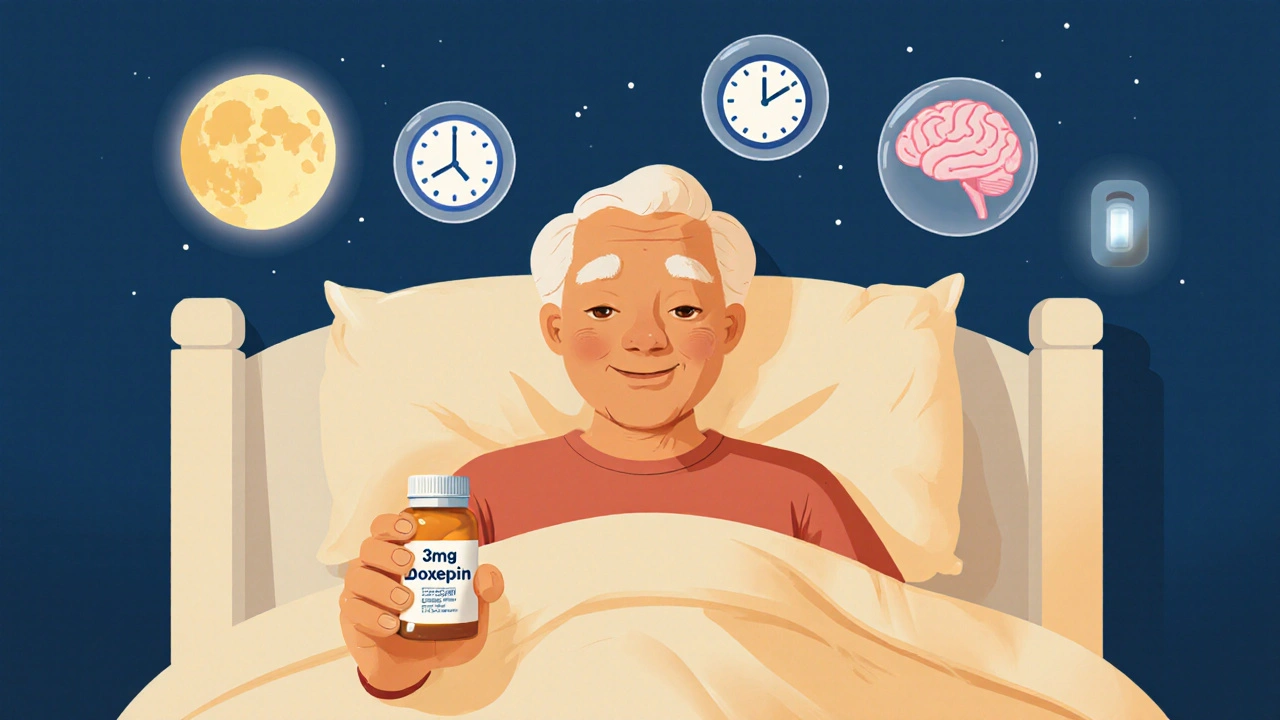
Insomnia isn’t just a nuisance for older adults-it’s a serious health risk. About 30-48% of people over 65 struggle with sleep that lasts at least three months, leaving them tired, unsteady, and mentally foggy. And while sleep meds are often the first thing doctors reach for, many of them are dangerously outdated. The real question isn’t which pill works best-it’s which one won’t hurt you.
Why Old Sleep Pills Are Risky for Seniors
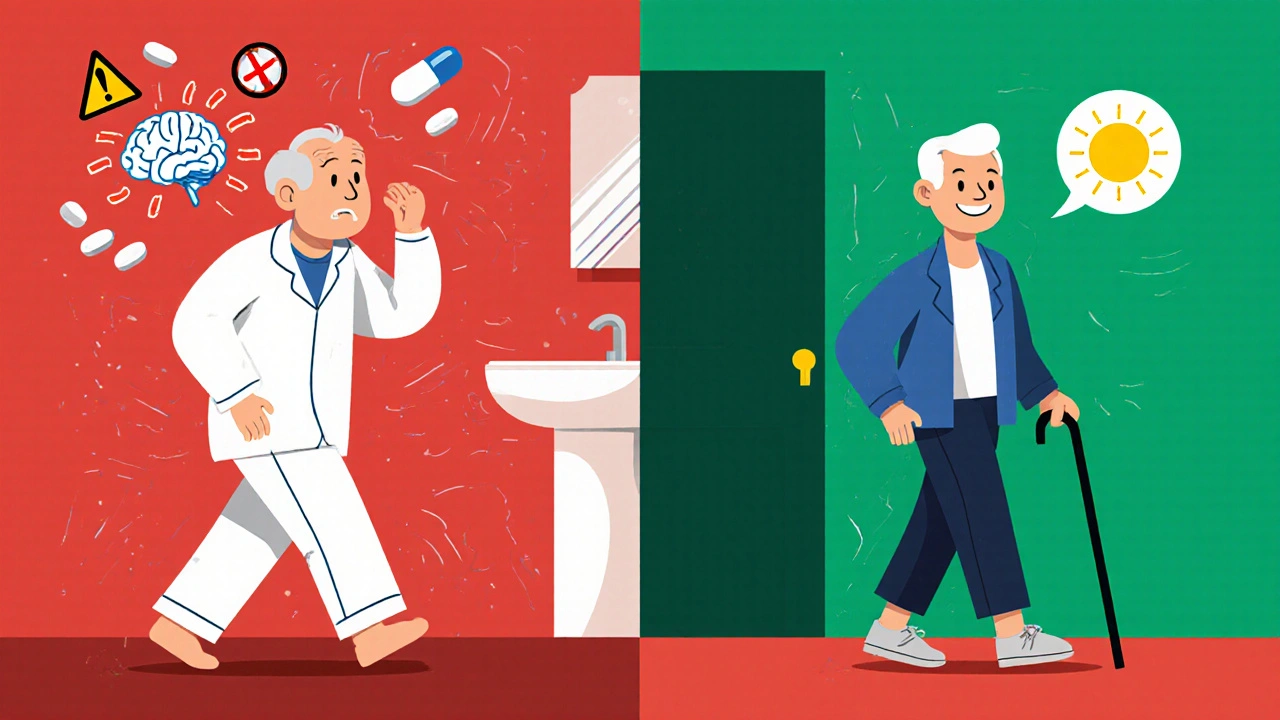
For decades, benzodiazepines like lorazepam and triazolam were the go-to for insomnia. But today, we know better. These drugs don’t just help you sleep-they increase your chances of falling by 50% and raise your risk of hip fractures. A 2024 study showed seniors on these meds were 2.3 times more likely to have treatment-related side effects than those on placebo. Even worse, they blur thinking, slow reaction time, and can make memory problems worse in people already at risk for dementia. The American Geriatrics Society stopped recommending them in 2012-and updated that warning in 2019. Yet, in 2023, 7.2 million older adults on Medicare still got benzodiazepines for sleep. That’s nearly half of all insomnia prescriptions. Why? Because many doctors still default to what they learned in medical school, and patients ask for something that “works fast.”What Works Better-and Safer
The best sleep aid for older adults isn’t a drug that knocks you out. It’s one that helps you sleep naturally, without next-day grogginess or balance problems. Three options stand out based on safety, evidence, and real-world use.Low-Dose Doxepin (3-6 mg)
This is not the high-dose antidepressant you might know. At just 3 to 6 mg, doxepin becomes a selective histamine blocker-targeting only the brain’s sleep-wake switch. It’s FDA-approved specifically for sleep maintenance insomnia in seniors. In clinical trials, it improved sleep efficiency by over 6% compared to placebo. More importantly, only 12% of users reported next-day drowsiness at this dose. On Drugs.com, users gave it a 7.2/10 rating, with many saying it gave them “5 extra hours of solid sleep without the hangover.” And at $15 a month for the generic, it’s one of the most affordable options.Ramelteon (8 mg)
Ramelteon works like melatonin but is stronger and longer-lasting. It targets the brain’s natural sleep clock, helping you fall asleep faster without sedating you. It doesn’t cause dependence, doesn’t impair balance, and has almost no risk of next-day effects. A 2016 review found it reduced sleep onset time by nearly 10 minutes and added over 23 minutes of total sleep. The downside? It doesn’t help much if you wake up in the middle of the night. But for seniors who can’t fall asleep at all, it’s one of the safest first choices. Dr. Karl Doghramji calls it “a valuable first-line option” because the side effect profile is nearly invisible.Lemborexant (5-10 mg)
Approved in 2019, lemborexant is a new class of drug called an orexin receptor antagonist. It doesn’t force sleep-it gently reduces the brain’s wake drive. In a 12-month trial of adults over 65, it cut time to fall asleep by 15 minutes, reduced nighttime wake-ups by 21 minutes, and added 43 minutes of total sleep. Users reported a “natural feeling sleep” and minimal morning grogginess. Satisfaction rates hit 72%. But there’s a catch: it costs about $750 a month without insurance. Many Medicare plans require prior authorization. Still, for seniors who can afford it-or have good coverage-it’s one of the most effective and safest options available today.What to Avoid
Even if they’re not benzodiazepines, some sleep drugs still carry too much risk for older adults.- Zolpidem (Ambien): Commonly prescribed, but linked to sleepwalking, confusion, and falls. Over 34% of users report next-day drowsiness. A small but dangerous number experience “sleep-related behaviors” like driving while asleep.
- Eszopiclone (Lunesta): Similar risks to zolpidem. Even at low doses, it can leave seniors feeling foggy the next day.
- Temazepam: Though better than triazolam, it still increases fall risk and is not recommended as first-line by any major geriatric guideline.
- Sedating antihistamines (like diphenhydramine): Found in over-the-counter sleep aids like Tylenol PM or Benadryl. These block acetylcholine-a brain chemical critical for memory. Long-term use is linked to higher dementia risk.
Non-Medication First: The Gold Standard
Before any pill, the American Academy of Sleep Medicine and the American College of Physicians say the best treatment for insomnia is Cognitive Behavioral Therapy for Insomnia (CBT-I). It’s not a quick fix-it takes 4 to 8 weeks of structured sessions. But the results last. Studies show CBT-I improves sleep quality better than any medication, and the benefits stick around for years. Yet, a 2024 national poll found 63% of older adults prescribed sleep meds were never told about CBT-I. Why? Access is limited. Few geriatricians offer it. Insurance doesn’t always cover it. But digital versions-like apps approved by the FDA-are becoming more available. One app, reSET-O, got clearance in 2023 for insomnia linked to opioid use. Similar tools for seniors are on the way.Dosing and Monitoring: What Doctors Should Do
If a medication is needed, it must be started low and slow.- Start with the lowest dose: 3 mg doxepin, 8 mg ramelteon, 5 mg lemborexant.
- Wait 2 to 4 weeks before deciding if it’s working.
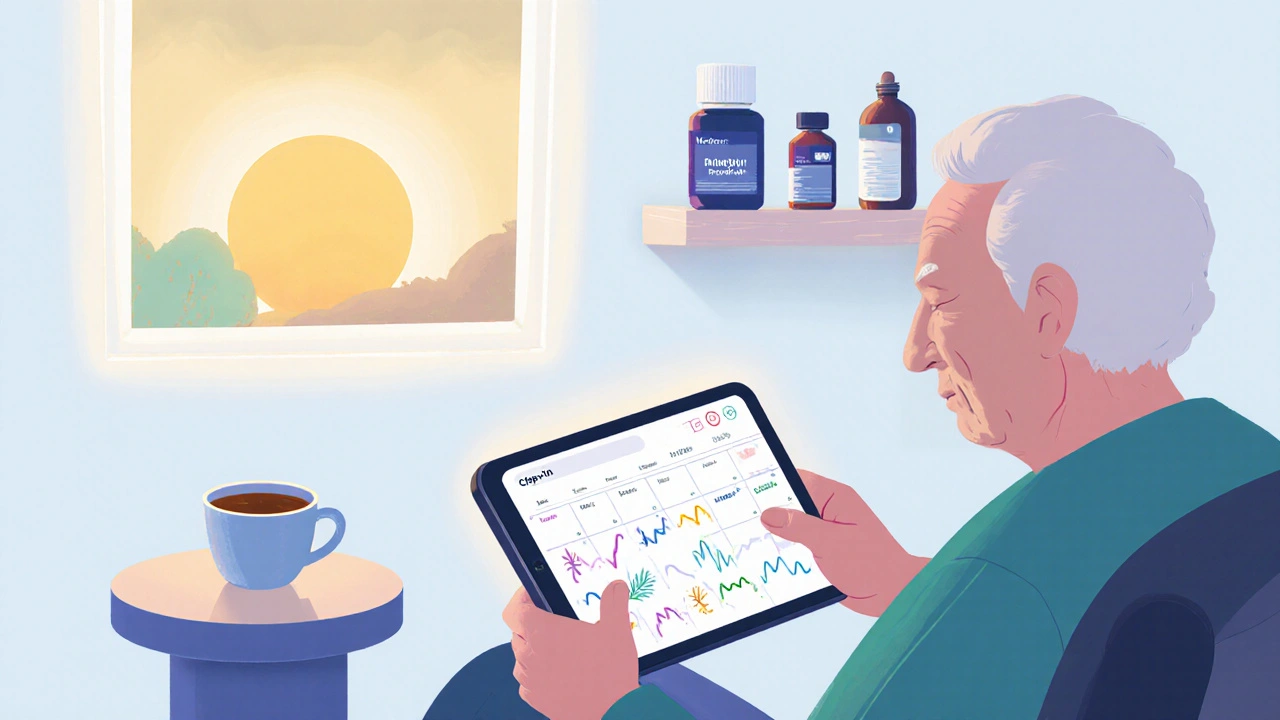
- Track sleep with a diary-not just how long you slept, but how rested you felt.
- Check fall risk with the Timed Up and Go test.
- Test kidney and liver function before starting any new drug.
- Use the Epworth Sleepiness Scale to measure next-day drowsiness.
The Cost and Access Problem
The safest options aren’t always the most accessible. Low-dose doxepin costs $15. Ramelteon runs $50-$80. Lemborexant hits $750. Medicare Part D plans require prior authorization for lemborexant in 78% of cases. Many seniors simply can’t afford the best options. That’s why low-dose doxepin and controlled-release melatonin (2 mg) are the most sustainable choices. A 2024 cost analysis found doxepin delivers quality-adjusted life years at $12,500 per year-far cheaper than lemborexant’s $48,700. Insurance companies are starting to notice. CMS now penalizes providers who overprescribe benzodiazepines. That’s pushing more clinics toward safer, cheaper alternatives.What’s Coming Next
A new drug called danavorexton (TAK-994), a selective orexin 2 receptor agonist, is in Phase 3 trials and results are expected in late 2025. Early data suggests it may improve sleep without the dizziness or balance issues seen with other drugs. If approved, it could become the next benchmark for safety. But the real shift isn’t in new pills-it’s in how we think about sleep. We’re moving from “give me something to knock me out” to “help me sleep like I used to.” That means combining the right medicine with good habits: fixed bedtimes, morning light exposure, no screens before bed, and avoiding caffeine after noon.Final Takeaway
Older adults need sleep-but not at the cost of safety. The best medication is the one that helps you sleep without making you dizzy, confused, or prone to falling. For most, that means starting with CBT-I. If that’s not possible, low-dose doxepin or ramelteon are the safest bets. Lemborexant is powerful and well-tolerated, but cost and access limit its use. Avoid benzodiazepines, z-drugs, and antihistamines. And never assume a pill is safe just because a doctor wrote it.Improving sleep in older adults isn’t about finding the strongest drug. It’s about finding the smartest one.
What’s the safest sleep medication for seniors?
The safest options are low-dose doxepin (3-6 mg) and ramelteon (8 mg). Both have minimal risk of falls, dizziness, or next-day grogginess. Lemborexant is also safe but expensive. Avoid benzodiazepines, zolpidem, and over-the-counter antihistamines like diphenhydramine.
Can older adults take melatonin for insomnia?
Yes, but only controlled-release melatonin (2 mg), not the quick-release versions sold in stores. Controlled-release helps maintain sleep through the night, not just helps you fall asleep. It’s safe, non-habit-forming, and has no known interaction with other medications. Many seniors find it helpful for sleep onset, though it’s less effective for staying asleep.
Why are benzodiazepines dangerous for older adults?
Benzodiazepines slow brain activity too much in older adults, leading to dizziness, confusion, and poor balance. They increase fall risk by 50% and raise the chance of hip fractures by 40-50%. They also impair memory and can worsen dementia symptoms. The American Geriatrics Society strongly advises against them as first-line treatment.
Does CBT-I really work better than pills?
Yes. Studies show CBT-I improves sleep quality more than any medication-and the results last for years. Medications often lose effectiveness over time and come with side effects. CBT-I teaches lasting skills like sleep restriction, stimulus control, and managing anxious thoughts about sleep. It’s the gold standard, but access remains limited.
How long should seniors take sleep medication?
Most sleep meds should be used for only 4 to 5 weeks. Long-term use increases dependence and side effect risks. Low-dose doxepin is an exception-it can be used safely for months or even years if needed. Always have a plan to taper off, even if you feel better. Regular check-ins with your doctor are essential.
What should I ask my doctor before taking a sleep med?
Ask: ‘Is this the safest option for someone my age?’ ‘Have you checked my fall risk and other medications?’ ‘Can we try CBT-I first?’ ‘What are the side effects I should watch for?’ ‘How long should I take this?’ And ‘Is there a cheaper alternative?’


12 Comments
Look, I’ve been dealing with insomnia since I turned 70, and I’ve tried everything from melatonin gummies to that weird purple pill my neighbor swears by. The thing no one talks about is how the whole system is rigged-doctors get paid to prescribe, not to educate. I finally got on low-dose doxepin after my pharmacist pulled me aside and said, ‘Sir, you’re not sleeping-you’re being sedated.’ It’s been six months now, no falls, no brain fog, and I actually remember my granddaughter’s name. $15 a month? That’s cheaper than my morning coffee and way less likely to make me forget where I put my keys.
And yeah, CBT-I sounds like a chore, but I did it through a VA app. Four weeks of logging bedtimes and telling myself ‘you’re not in danger if you’re awake’-and now I don’t even reach for the meds unless I’m traveling. It’s not magic. It’s just smarter.
Why are we still letting people get benzos like they’re aspirin? I’ve seen grandpas stumble into Walmart at 2 a.m. because they took triazolam and thought they were in their 30s again. We’re not fixing sleep. We’re just drugging people into compliance.
And don’t even get me started on Tylenol PM. That’s just diphenhydramine in a fancy coat. My aunt took it for 12 years. She got dementia. Coincidence? I don’t think so.
We need to treat sleep like a vital sign, not a nuisance to be silenced with chemicals. The science is there. The alternatives exist. We just need the will to stop being lazy.
And if your doctor says ‘it’s fine’ without asking about your balance or your other meds? Find a new doctor. Simple as that.
Benzos = senior death waltz. Doxepin 3mg = quiet win. Lemborexant? Rich people’s sleep.
CBT-I? Still waiting for my invite.
Another Western medical propaganda piece. You ignore traditional African sleep hygiene-warm milk, ancestral chants, grounded earthing. No drug is safe if the soul is unbalanced. This ‘science’ is just chemical control disguised as care. The FDA is a pharmaceutical puppet. Your ‘safe’ drugs are still poisons with PR.
And why no mention of kola nut or bitter leaf tea? These are centuries-tested. But no, let’s patent a 750-dollar orexin blocker and call it progress.
Did you know the WHO quietly classified insomnia as a ‘managed condition’ in 2021 so they could push more pills? The real reason they banned benzos isn’t safety-it’s because the new drugs are 12x more profitable. Lemborexant? Made by a company that also makes opioid patches. Coincidence? I think not.
And CBT-I? That’s just the government’s way of getting you to self-medicate with worksheets while they cut mental health funding. They don’t want you cured-they want you compliant.
My neighbor’s sister took ramelteon and started sleepwalking into her neighbor’s yard. The cops had to escort her back. That’s not safety-that’s a lawsuit waiting to happen.
They’re all lies. Sleep is a spiritual state. You can’t pharmacologize the soul.
This is one of the most balanced and well-researched pieces I’ve read on senior sleep issues. The emphasis on CBT-I and cautious medication use is exactly what’s needed. Too many older adults are being prescribed drugs with side effects that outweigh the benefits. The data on doxepin and ramelteon is compelling, and the warning about antihistamines is long overdue.
I hope this reaches more primary care providers. A simple conversation about sleep hygiene and non-pharmacological options could prevent so many falls and cognitive declines. Thank you for writing this.
Let me tell you something-this isn’t just about pills. It’s about dignity. My father used to wake up every night at 3 a.m. and sit in his chair, staring at the wall. He didn’t say anything. He just looked tired. We gave him diphenhydramine because it was easy. He didn’t sleep better-he just became quieter. That’s not treatment. That’s surrender.
When we switched him to low-dose doxepin and started a nightly routine-warm tea, reading, no screens-he started sleeping through the night. Not because of magic. Because we treated him like a person, not a problem.
CBT-I is not a luxury. It’s a right. Seniors deserve to wake up feeling rested, not drugged. And yes, access is broken. But we can fix it. Community centers, libraries, telehealth-these aren’t pipe dreams. They’re practical. We just need to stop thinking sleep is a medical emergency and start treating it like a human need.
I’ve seen too many older adults lose their independence because they were given the wrong pill. Don’t let your parent or grandparent be another statistic. Ask the questions. Push for CBT-I. Demand a fall risk check. It’s not being difficult-it’s being a family member who cares.
And if your doctor says ‘it’s just aging’? Tell them to go back to med school. Sleep isn’t a side effect of getting old. It’s a pillar of health. And we’re failing our elders by treating it like an afterthought.
Oh wow, a doctor actually wrote something that doesn’t sound like a pharmaceutical ad? Who knew?
So lemme get this straight-we’ve got a 750-dollar pill that works better than a $15 one, but only if you’ve got good insurance and a lawyer on speed dial? And the ‘safe’ option is the one that’s been around since the 80s but nobody talks about because it’s not trendy?
And CBT-I? Sure, it works. But only if you’ve got time, patience, and a therapist who doesn’t charge by the minute. Meanwhile, my 78-year-old neighbor got a 30-day script for Ambien and now she’s calling the police because she thinks her cat is a Russian spy.
Thanks for the info. Now can we please get this printed on a billboard next to the pharmacy?
OMG YES THIS IS SO IMPORTANT 🙌 I’ve been telling my mom for years not to take Benadryl for sleep and she just says ‘it works’ 😭
She’s on doxepin now and she says she actually remembers what she had for breakfast 🥹
Also CBT-I is a GAME CHANGER I did it online and it felt like therapy for my brain 🤯
Why is this not on every doctor’s website??
And lemborexant is so expensive but my cousin got it covered through VA so maybe ask your provider??
Also PLEASE stop giving seniors zolpidem it’s like giving a grandpa a chainsaw to cut his own hair 😭
Thank you for writing this I’m sharing with everyone I know 💌
My dad’s on doxepin. 3 mg. No drama. No falls. He sleeps like he’s 40 again. Took six months to get the doc to stop the Ambien. Said it was ‘just habit.’
CBT-I? We did the free app from the VA. 20 minutes a day. No magic. Just discipline.
Wish more people knew this stuff. Simple, safe, cheap. Why isn’t this the default?
Oh please. You think this is about safety? It’s about profit margins. Doxepin? Generic. Ramelteon? Barely profitable. Lemborexant? That’s the real product. That’s the one they’re pushing because it’s patent-protected and Medicare will pay for it if you scream loud enough.
And CBT-I? Too labor-intensive. Too human. Too hard to bill. The system doesn’t want you to heal. It wants you to consume.
Don’t be fooled. This isn’t medicine. It’s marketing with a stethoscope.
Can I ask you something? My mom’s 74 and she takes melatonin but she also takes blood pressure meds and a statin. Is that okay? I’m scared she’s mixing things. I don’t want her to have a stroke. Can you tell me if melatonin interacts with lisinopril? I looked online but I got confused. I just want her to sleep safely.
I’m a geriatric nurse. I’ve seen it all. The benzodiazepine patients? They’re the ones in the ER after midnight, confused, bruised, holding their hip. The ones on doxepin? They’re at the community center, laughing with their book club, remembering their grandkids’ birthdays.
I’ve watched families cry because their parent got prescribed Ambien for ‘a few nights’-and now they’re on it for five years. That’s not treatment. That’s institutional neglect.
And CBT-I? I’ve had patients who were skeptical, who said ‘I’ve tried everything’-and then they did the sleep restriction and stimulus control and they cried because they hadn’t slept like that in decades.
This isn’t about pills. It’s about respect. It’s about seeing an older adult as someone who deserves to wake up without a fog, without a fall, without a lifetime of regret.
So if you’re reading this and you’re a caregiver, a child, a friend-don’t let the system win. Ask the hard questions. Demand the safer option. Push for the therapy. Because sleep isn’t a luxury. It’s a lifeline.
And if your doctor won’t listen? Find another one. There are still good ones out there. We’re just not loud enough.