
Steroid Infection Risk Calculator
This tool estimates your infection risk based on corticosteroid dosage and duration. Calculations follow data from the article regarding how steroid dose and treatment length impact immune suppression.
Prevention Recommendations
Why Corticosteroids Make You More Vulnerable to Infections
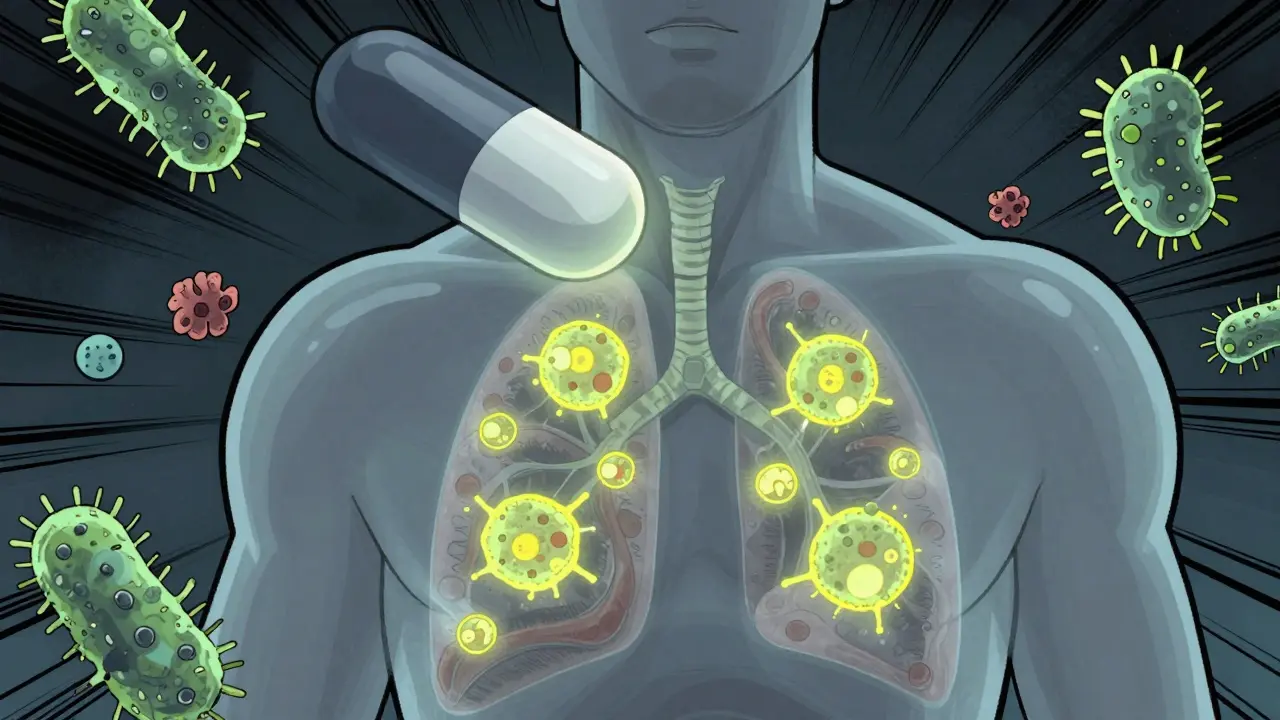
When you take corticosteroids like prednisone or methylprednisolone for arthritis, lupus, or asthma, you’re not just calming inflammation-you’re quietly turning down your body’s defense system. These drugs mimic cortisol, the natural stress hormone your adrenal glands make, but at doses far higher than your body ever produces. At those levels, they don’t just reduce swelling and pain-they shut down key parts of your immune response. And that’s where the danger begins.
Most people think of infections as something you catch from a sick coworker or dirty food. But with corticosteroids, the threat often comes from germs already inside you. Corticosteroids suppress your T cells-the immune soldiers that hunt down viruses, fungi, and bacteria hiding inside cells. That’s why tuberculosis, which most people carry harmlessly in their lungs, can suddenly flare up. It’s why a common fungus called Pneumocystis jirovecii, usually harmless, can turn into a life-threatening pneumonia. And why shingles, a virus you’ve had since childhood, can reappear with brutal force.
Unlike antibiotics or antivirals that target specific bugs, corticosteroids weaken your entire cellular defense network. They reduce the number of lymphocytes, cripple macrophages, and block the signals your immune cells use to call for backup. The result? A quiet, invisible vulnerability. You might not feel sick, but your body’s alarm system is muted.
How Much Risk Are You Actually Facing?
The risk isn’t the same for everyone. It depends on two things: how much you’re taking and how long you’ve been on it.
If you’re on less than 10 mg of prednisone per day for a few weeks, your infection risk is only slightly higher than normal. But once you hit 20 mg/day for more than 3 to 4 weeks, your risk jumps sharply. For every extra 10 mg per day, your chance of a serious infection goes up by 32%. That’s not a small increase-it’s a steep climb.
At doses above 20 mg/day for over a month, your risk of Pneumocystis pneumonia rises to 1.5-5%. That’s not rare. In fact, 18.7% of all PJP cases in immunocompromised people happen in steroid users. Mortality rates hit 30-50% if it’s not caught early. Tuberculosis reactivation becomes 7 to 7.7 times more likely. Herpes zoster (shingles) occurs nearly 3 times more often than in people not on steroids.
And here’s the hidden part: you might not show the usual signs. Fever? Sometimes absent. Redness? Often muted. Swelling? Less obvious. That’s because corticosteroids blunt inflammation-the very thing your body uses to signal infection. A patient might feel fine, then suddenly crash because no one noticed the early warning signs.
What Infections Should You Be Watching For?
Not all infections are created equal when you’re on steroids. Some are common. Others are rare-but deadly.
- Pneumocystis jirovecii pneumonia (PJP): A fungal lung infection that strikes when your T cells are down. Symptoms: dry cough, shortness of breath, low-grade fever. Often mistaken for a cold or bronchitis.
- Tuberculosis (TB): Reactivates from dormant infection. Symptoms: night sweats, weight loss, persistent cough, fatigue. Screening is mandatory before starting high-dose steroids.
- Herpes zoster (shingles): A reactivation of chickenpox virus. Causes painful, blistering rash, usually on one side of the body. Risk is 2.8-6.5 per 100 person-years on steroids vs. 1.2-2.0 in healthy people.
- Invasive fungal infections: Candida (thrush, esophagitis) and Aspergillus (lung infections) become more common. Especially dangerous in people with diabetes or lung disease.
- Bacterial infections: Pneumonia, urinary tract infections, and skin abscesses occur more often and can spread faster.
What’s surprising? Antibodies-the part of your immune system that responds to vaccines-are mostly unaffected. That means you can still build protection from vaccines like flu or COVID-19. But your T cells, which fight off viruses and fungi inside cells, are the ones being hit hardest.
How to Prevent Infections While on Steroids
Prevention isn’t optional. It’s essential. And it starts before you even take your first pill.
1. Screen for latent infections first. If you’re starting 15 mg/day or more of prednisone for longer than a month, you must be tested for tuberculosis. Use an interferon-gamma release assay (IGRA) or skin test. If it’s positive, treat the latent TB before starting steroids. That cuts reactivation risk by 90%.
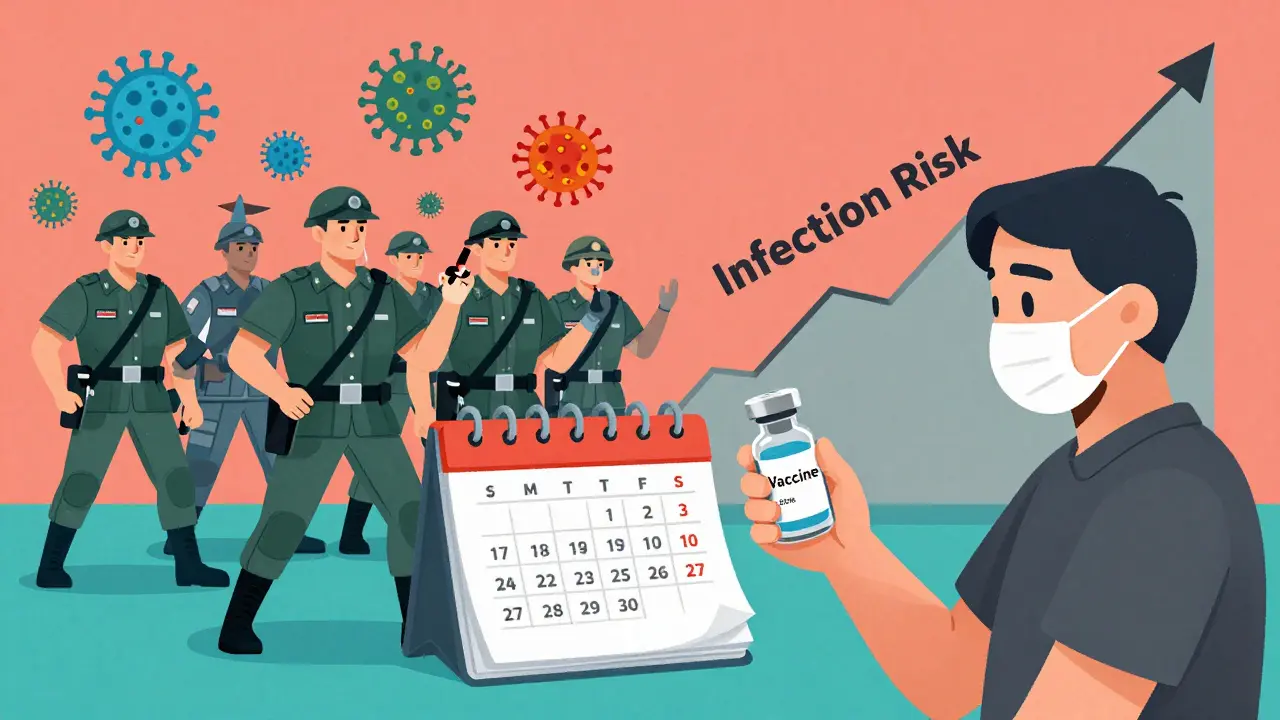
2. Get vaccinated-before you start. Live vaccines (like MMR, varicella, nasal flu) are dangerous on steroids. You need them done at least 2 weeks before starting therapy. Inactivated vaccines (flu shot, pneumonia shot, COVID-19 shots) are safe and recommended. But here’s the catch: your body may not respond well. One study found only 42% of people on >20 mg/day prednisone developed protective antibodies to the flu vaccine, compared to 78% of healthy people. Still, it’s better than nothing.
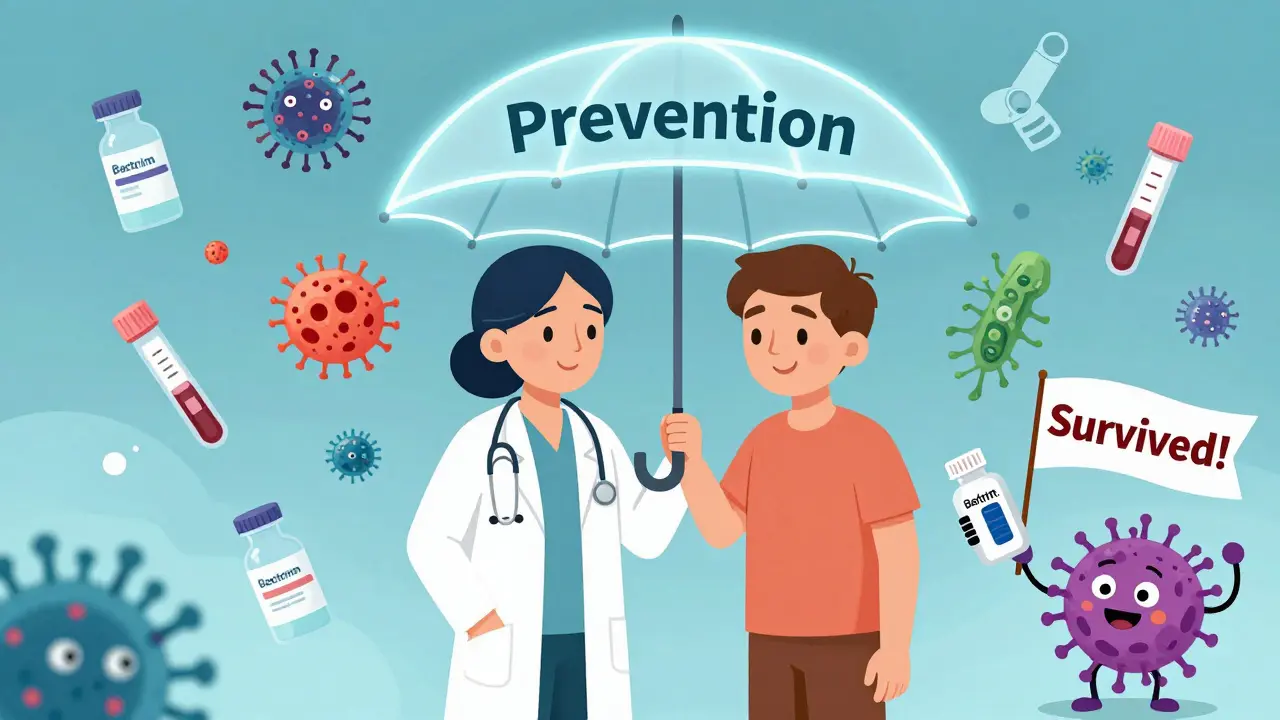
3. Take prophylaxis if you’re high-risk. If you’re on ≥20 mg/day prednisone for more than 4 weeks, you need PJP prophylaxis. Trimethoprim-sulfamethoxazole (Bactrim) is the gold standard. It cuts PJP risk from 5.1% down to 0.3%. If you’re allergic, alternatives like dapsone or atovaquone work too.
4. Monitor your blood counts. A simple CBC can show if your lymphocytes are dropping. If your absolute lymphocyte count falls below 1,000 cells/μL, you’re in high-risk territory. Doctors should check this every 2-4 weeks during high-dose therapy.
5. Watch your chest if you’re in a TB-endemic area. If you’re on >15 mg/day prednisone for more than 3 months, get a chest X-ray every 6-12 months. Early detection saves lives.
Lower the Dose, Lower the Risk
The most powerful tool you have isn’t a drug-it’s time. The longer you’re on high-dose steroids, the higher your risk. That’s why doctors now push for rapid tapering.
Studies show that patients who taper steroids quickly-over weeks instead of months-have 37% fewer infections than those who stay on high doses for too long. The goal isn’t just to control your disease. It’s to get off steroids as soon as safely possible.
This is where steroid-sparing drugs come in. Methotrexate, azathioprine, and biologics like TNF inhibitors can take over the job of controlling inflammation. Many rheumatologists now start these within 4 weeks of beginning steroids. One patient on Reddit shared: “My rheumatologist switched me to methotrexate after 3 months on prednisone. No flares in 6 months. Haven’t had a single cold.” That’s the ideal outcome.
And the future? Drugs like vamorolone-a new type of steroid that reduces inflammation without crushing T cells-are already in trials. In Duchenne muscular dystrophy, vamorolone gave the same benefits as prednisone but with 47% fewer infections. That’s not science fiction. It’s the next step.
What Patients Need to Know
You’re not alone in worrying about this. Many patients feel stuck: “I need the steroids to function, but I’m terrified of getting sick.”
Here’s what works:
- Know your symptoms. If you develop a fever, cough, rash, or unexplained fatigue-call your doctor immediately. Don’t wait. Don’t assume it’s just a bug.
- Carry a steroid card. It tells emergency staff you’re immunosuppressed. That changes how they treat you.
- Practice basic hygiene. Wash hands. Avoid crowds during flu season. Don’t touch your face.
- Get educated. Patients who received structured infection education had 28% fewer hospitalizations.
And remember: your doctor isn’t ignoring the risk. They’re balancing two threats: your disease flaring up, and your body becoming vulnerable. The goal isn’t to avoid steroids entirely-it’s to use them smartly.
What’s Next for Steroid Therapy?
The field is shifting from one-size-fits-all to precision medicine.
New risk calculators now combine your steroid dose, how long you’ve been on it, your age, diabetes status, and even your CD4+ T cell count to predict your infection risk with 89% accuracy. Some labs are testing for genetic markers that show who’s more likely to have a severe immune response to steroids.
In the next five years, we may be able to say: “Your genes mean you’re highly susceptible to steroid-induced immunosuppression. We’ll start you on a biologic right away.”
For now, the message is clear: corticosteroids are powerful, but they’re not without cost. With the right precautions, you can use them safely. Without them, the risks are real-and preventable.



12 Comments
This is one of the clearest breakdowns of steroid risks I've ever read. The part about PJP and lymphocyte counts? Gold. I'm a nurse in rheumatology and I hand this out to every new patient on >20mg. Vaccines before starting? Non-negotiable. And yes, Bactrim prophylaxis saves lives. No drama, just facts.
They don't want you to know this but steroids are just the gateway drug to Big Pharma's real product: lifelong immunosuppression. Next thing you know you're on biologics, then IVIG, then a 'specialized' clinic with monthly infusions. They profit from your vulnerability. Wake up.
I am from India where TB is everywhere and still people take steroids like candy. No screening? No prophylaxis? Just 'beta dard hai, thoda dard hai' and off they go. This article should be mandatory reading for every quack in Delhi who prescribes prednisone for 'allergies'. The ignorance is lethal. And no, 'natural remedies' won't save you from PJP.
You think this is bad? Wait till you find out the CDC quietly changed the PJP prophylaxis guidelines in 2022 because the drug companies lobbied to keep people on Bactrim longer. The real risk isn't the infection-it's the profit margin on antibiotics and antifungals. They want you dependent. And don't get me started on how they suppress the data on steroid-induced diabetes.
Let's be real. The entire medical model is built on managing side effects instead of curing root causes. Steroids are a Band-Aid on a hemorrhage. You're not 'controlling inflammation'-you're chemically silencing your body's attempt to heal itself. The real question isn't how to prevent infections while on steroids-it's why we're prescribing them at all. Why not fix the gut? The mitochondria? The epigenetics? No, easier to just mute the immune system and call it a day. We've turned medicine into a suppression industry.
I get why Kyle's being dramatic but honestly? He's got a point about the profit motive. I've seen docs push steroids because they're cheap and fast. But Jessie here is right-prophylaxis works. My cousin was on 40mg for lupus, got Bactrim, got her flu shot, got her TB screen. No infections in 3 years. It's not magic. It's just smart. Don't be scared. Be prepared.
The ethical imperative here is clear: informed consent must extend beyond the prescription bottle. Patients deserve to understand not merely the statistical risks, but the phenomenological experience of immunosuppression-the quiet erosion of bodily autonomy. This article, while clinically precise, fails to articulate the existential weight carried by those who live under this pharmacological shadow. We must do better.
Minor correction: the 32% increase per 10mg is from the 2021 JAMA study, not the 2019 one everyone cites. Also, the CD4+ T cell threshold for high risk is actually 350 cells/μL, not 1000. And yes, vamorolone data is promising-phase 3 results look solid. But it's not FDA approved yet. Don't get ahead of the science.
I'm a PT who works with autoimmune patients. One thing I wish more docs said: movement helps. Light walking, yoga, tai chi-keeps lymph flowing, boosts NK cell activity. Doesn't replace prophylaxis, but it's a free, side-effect-free tool. Also, sleep > 7 hours. No joke. Your immune system repairs itself when you're not staring at your phone at 2am.
Thank you for this ❤️ I was scared to tell my doctor I wanted to taper faster but now I have the data. I'm on 15mg and already feeling better with yoga and turmeric. Not a cure but I feel like I'm not just waiting to get sick anymore.
I got the shingles shot last week and my doc said it was fine even though im on 10mg prednisone. she said my lymph count is still okay. i dont know if i believe her but i hope shes right
In the UK, we're starting to see steroid stewardship programmes in NHS rheumatology clinics. It's not perfect, but the shift toward early steroid-sparing agents is real. I've seen patients go from 40mg to 5mg in six months with methotrexate. The fear of flares is real-but so is the fear of pneumonia. Balance, not fear, is the goal.