

Antibiotic Sun Safety Calculator
Calculate Your Safe Sun Exposure Period
Based on FDA and Skin Cancer Foundation guidelines for doxycycline and TMP-SMX (Bactrim)
Doxycycline
Photosensitivity fades in 3-5 days after stopping
TMP-SMX (Bactrim)
Photosensitivity can last 10-14+ days after stopping
When you're prescribed doxycycline or TMP-SMX (Bactrim, Septra), most people focus on fighting the infection. But there's another, less talked about side effect that can turn a sunny day into a painful mistake: photosensitivity. This isn't just a mild rash-it's your skin reacting to sunlight like it's been set on fire, even on cloudy days or through a window. If you're taking one of these antibiotics, ignoring sun safety isn't just inconvenient-it can lead to severe burns, long-term skin damage, and increase your risk of skin cancer.
What Exactly Is Antibiotic-Induced Photosensitivity?
Photosensitivity means your skin becomes overly reactive to ultraviolet (UV) light because of a drug you're taking. With doxycycline and TMP-SMX, this isn't rare-it happens in about 1 in 5 people. The reaction isn't an allergy in the traditional sense. Instead, the antibiotic molecules in your skin absorb UV rays, especially UVA (320-400 nm), and turn them into harmful energy that burns your skin cells from the inside out. There are two types of reactions. The first, and far more common (about 95% of cases), is phototoxic. This looks like a bad sunburn-red, hot, peeling skin-usually appearing within 30 minutes to 24 hours after sun exposure. The second, photoallergic, is rarer. It shows up as an itchy, eczema-like rash, often delayed by 1-3 days. Both are preventable. But if you don't know what you're dealing with, you might blame the weather, your sunscreen, or even your skin type.Why Doxycycline and TMP-SMX Are High-Risk
Not all antibiotics cause this. Penicillin? Minimal risk. But doxycycline and TMP-SMX are among the worst offenders. Studies show that around 20% of people taking 200 mg of doxycycline daily develop phototoxic reactions. Even worse, demeclocycline-a close relative-caused reactions in nearly all patients in some trials. TMP-SMX works differently. Its sulfamethoxazole component absorbs UV light and triggers a chemical chain reaction that damages skin cells. What makes it especially tricky? The reaction can last for weeks after you stop taking it. You might think you're safe once your course ends, but your skin is still primed to burn. One patient in Perth told me they got a severe burn walking to their mailbox two weeks after finishing Bactrim. That’s not an outlier-it’s documented. The FDA and Skin Cancer Foundation both list these two drugs as top-tier photosensitizers. They don't just warn-you're legally required to get this info in the medication guide. Yet, many patients still don't hear it from their doctor.How Much Sunlight Is Too Much?
You don’t need to be at the beach. UVA rays penetrate clouds, car windows, and office glass. That means sitting near a window at work, walking the dog in the morning, or even gardening can trigger a reaction. The minimum dose of UV needed to cause a burn-the minimum erythema dose-can drop by up to 50% while you're on these drugs. In plain terms: your skin burns twice as fast. Peak UV hours in Perth (10 a.m. to 4 p.m.) are the most dangerous. But even early morning or late afternoon exposure adds up. One study found patients on tetracyclines developed burns after just 15 minutes of midday sun. That’s less time than it takes to walk to the bus stop.What Sun Protection Actually Works
Standard advice-"wear sunscreen"-isn't enough. Here’s what does:- SPF 30+ broad-spectrum sunscreen, applied 15 minutes before going outside, and reapplied every two hours-or after sweating or wiping your skin. Look for zinc oxide or avobenzone; they block UVA better than chemical filters alone.
- UPF 30+ clothing. Regular cotton T-shirts offer only UPF 5-10. That means 20% of UV gets through. Sun-protective shirts, pants, and hats are worth the investment. A wide-brimmed hat cuts UV exposure to your face and neck by 50%.
- Stay in shade. Even under an umbrella, reflected UV from sand, water, or concrete can reach you. Seek shade during peak hours.
- Don’t rely on windows. UVA passes right through glass. If you sit by a window at home or in your car, you’re still exposed.
How Long Do You Need to Stay Protected?
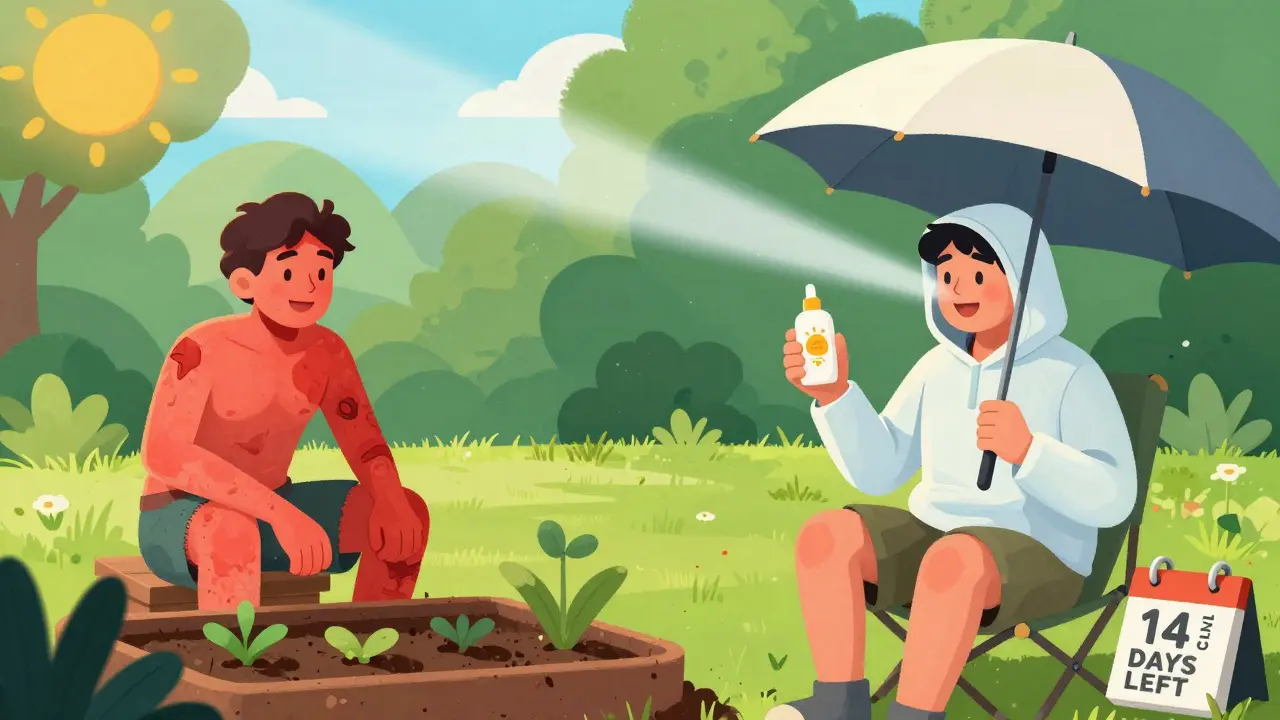
For doxycycline: protect yourself for the entire time you're taking it, plus a few days after. Most reactions fade within 3-5 days of stopping the drug. For TMP-SMX: this is where people get caught off guard. The drug lingers in your system. The Skin Cancer Foundation and multiple dermatology practices warn that sensitivity can last weeks after your last pill. One patient stopped Bactrim on a Friday and got a full-body burn on the following Saturday while on a day trip. That’s not rare. Plan for at least 10-14 days of extra caution after finishing your course.What If You Already Got Burned?
If you notice redness, pain, or blistering:- Get out of the sun immediately.
- Cool the area with damp cloths-not ice.
- Use aloe vera or fragrance-free moisturizer. Avoid petroleum-based products-they trap heat.
- Take ibuprofen for pain and inflammation.
- Don’t pop blisters. They protect the healing skin underneath.
- Call your doctor if the burn covers a large area, blisters, or doesn’t improve in 48 hours.
Why So Many People Ignore the Warning
Here’s the problem: most patients don’t get clear instructions. A 2023 study found nearly 40% of people on photosensitizing antibiotics stop sun protection within the first week. Why? They think it’s "just a little sun." They forget. They assume their sunscreen is enough. Or worse-they were never told. Doctors often assume patients know. Pharmacists are rushed. Medication guides are buried in plastic bags. The result? People get burned because the risk wasn’t communicated clearly.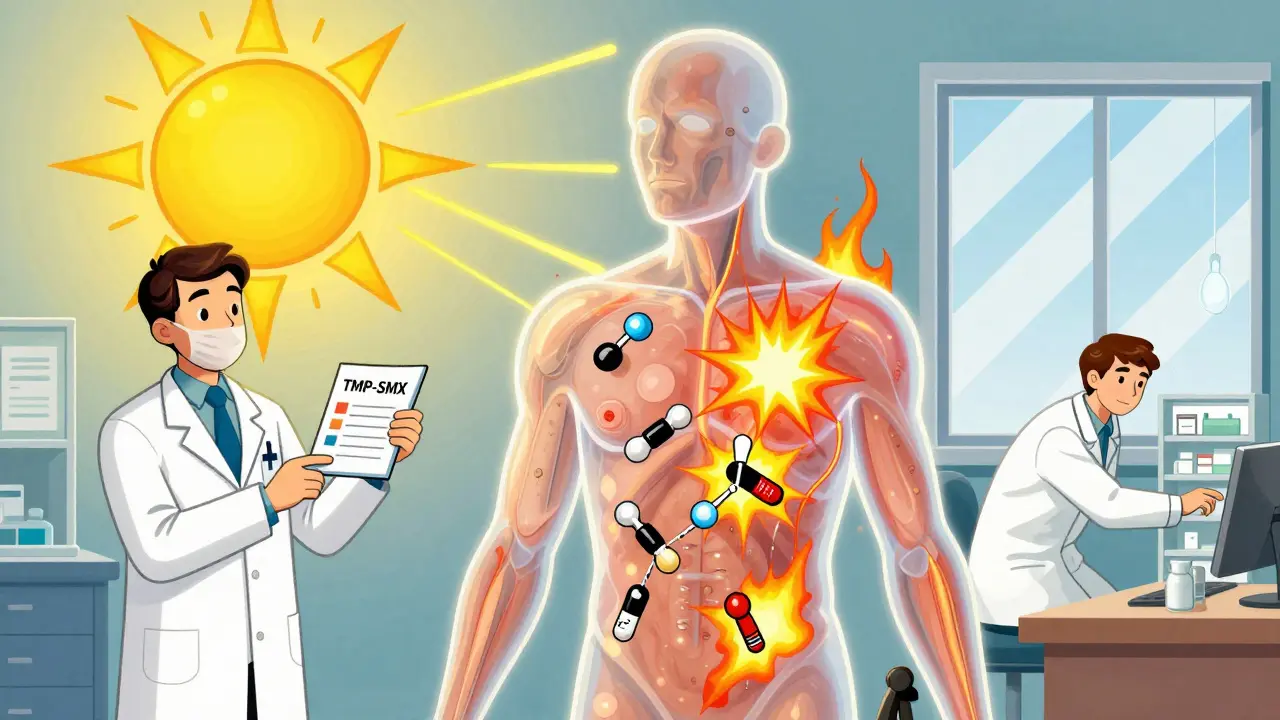
What You Can Do Right Now
If you're on doxycycline or TMP-SMX:- Check your prescription label. If it mentions "sun sensitivity" or "avoid sunlight," you’re in the high-risk group.
- Apply broad-spectrum SPF 30+ every morning-even if you’re staying indoors.
- Wear a wide-brimmed hat and long sleeves when outside.
- Keep a small bottle of sunscreen in your bag, car, and desk drawer.
- Set a phone reminder: "Sun protection-still taking antibiotics."
- After finishing your course, keep being careful for at least two more weeks.
What About Other Antibiotics?
Some others carry risk too:- Fluoroquinolones (ciprofloxacin, levofloxacin): moderate risk. Watch out.
- Thiazide diuretics (like hydrochlorothiazide): often taken with antibiotics. Double risk.
- NSAIDs (ibuprofen, naproxen): can worsen photosensitivity when combined with antibiotics.
Final Thought: This Is Preventable
You didn’t sign up for a sunburn while fighting an infection. Photosensitivity from doxycycline or TMP-SMX isn’t a minor side effect-it’s a real, documented, and avoidable danger. Millions of people take these antibiotics every year. Most never have a problem. Why? Because they protected their skin. Don’t let convenience beat caution. Your skin will thank you. And you’ll finish your treatment without a painful, avoidable setback.Can I still go outside if I’m on doxycycline or Bactrim?
Yes, but you must be extremely careful. Avoid direct sun between 10 a.m. and 4 p.m. Always wear broad-spectrum SPF 30+ sunscreen, UPF 30+ clothing, and a wide-brimmed hat. UVA rays penetrate glass, so even sitting near a window can trigger a reaction. Limit exposure and never rely on sunscreen alone.
How long after stopping antibiotics does sun sensitivity last?
For doxycycline, sensitivity usually fades within a few days after stopping. For TMP-SMX (Bactrim), it can last up to two weeks or longer. Even if you feel fine, your skin may still be vulnerable. Wait at least 10-14 days after your last dose before assuming you’re safe in the sun.
Does sunscreen block UVA rays completely?
No. SPF only measures UVB protection. Look for "broad-spectrum" on the label, which means it also protects against UVA. Ingredients like zinc oxide, titanium dioxide, or avobenzone are most effective. Reapply every two hours-sweat, water, and rubbing reduce effectiveness.
Can I use tanning beds while on these antibiotics?
Absolutely not. Tanning beds emit intense UVA radiation-far stronger than natural sunlight. Using them while on doxycycline or TMP-SMX can cause severe burns, blistering, and permanent skin damage in minutes. This is not a risk worth taking.
Are there alternatives to doxycycline or TMP-SMX that don’t cause sun sensitivity?
Yes, depending on your infection. For urinary tract infections, nitrofurantoin or fosfomycin are low-risk options. For acne or Lyme disease, azithromycin or amoxicillin may work instead. But not all infections can be treated with low-risk drugs. Never switch antibiotics without talking to your doctor. The risk of untreated infection is often greater than the risk of sun sensitivity.
Is photosensitivity the same as an allergic reaction?
No. Phototoxic reactions are chemical burns caused by the drug reacting with UV light. They’re not immune-mediated like allergies. Photoallergic reactions involve the immune system but are rare. Both cause skin damage, but phototoxic is far more common and easier to prevent with sun protection.
Can I take vitamin D supplements instead of sun exposure?
Yes. If you’re avoiding sun to prevent burns, vitamin D supplements are a safe alternative. Most adults need 600-800 IU daily. Ask your doctor to check your levels if you’re concerned. You don’t need sun to make vitamin D-your body can get it from food and supplements.
What should I do if I get a bad sunburn while on these antibiotics?
Get out of the sun immediately. Cool the area with damp cloths. Use aloe vera or fragrance-free moisturizer. Take ibuprofen for pain and swelling. Do not pop blisters. If the burn covers a large area, blisters, or doesn’t improve in 48 hours, see a doctor. You may need a prescription cream or oral steroids to reduce inflammation.

8 Comments
Just finished my last doxycycline pill-still wearing a hat indoors. I don’t care what anyone says: if your skin turns into a lobster after 10 minutes outside, you’re not "being dramatic." You’re just ignorant of pharmacology.
And yes-I read the medication guide. Most people don’t. That’s the problem.
While I appreciate the thoroughness of this guide, I must note that the term 'photosensitivity' is often misapplied in lay contexts. Technically, phototoxicity is a non-immunologic reaction, whereas photoallergy involves T-cell mediation-two distinct mechanisms.
Nonetheless, the practical advice remains sound: broad-spectrum sunscreen, UPF clothing, and temporal avoidance of UV exposure are non-negotiable.
People are dying because they think a little sunscreen is enough. That’s not negligence-it’s selfishness. You think your 15-minute walk to the mailbox is harmless? No. You’re risking melanoma for convenience.
My cousin got third-degree burns from Bactrim. She’s got scars that will never fade. Don’t be her.
STOP BEING LAZY.
Hey everyone, I just want to say-I’m from India, and trust me, we know about sun and meds. We’ve been dealing with this for generations, even before antibiotics. My grandma used to say, 'If your medicine says sun, then sun is your enemy.'
Here’s the thing: it’s not just about sunscreen. It’s about mindset. Wear your hat like armor. Carry your sunscreen like your phone. Set reminders like your life depends on it-because it kinda does.
And if you’re on TMP-SMX? Even if you feel fine? Still. Be. Careful.
I’ve seen so many young people burn their skin and then blame the sun. No. The sun didn’t betray you. Your ignorance did.
But here’s the good news: you can fix this. Right now. Today. Put on a shirt. Slap on zinc oxide. Stay in the shade. You got this. 💪🌞
And if you’re reading this while sitting by a window? Move. Seriously. UVA doesn’t care if you’re comfy.
Bro, I took doxycycline for acne and thought I was fine because I wore sunscreen. I got burned so bad I looked like a boiled crab. My mom cried. My dog hid under the bed.
Don’t be me. Just don’t. You think you’re invincible? You’re not. You’re a walking UV target.
And yeah, I’m mad. I’m still mad. Two weeks after stopping, I went to the park and got roasted. No warning. No mercy.
Just… please. Read the damn guide. Wear the hat. Live.
Been on Bactrim for a UTI. Got burned on day 3 even though I was under an umbrella. 🤦♂️
Turns out, concrete and sand reflect UV like a mirror. Who knew?
Now I wear a full-coverage rash guard, sunglasses, and a sun hat. Even to the grocery store.
Still alive. Still not a lobster. 🙌
PS: Vitamin D supplements? Lifesaver. No sun needed.
It is, in fact, lamentable that the dissemination of pharmaceutical warnings remains so inadequate. The FDA’s labeling protocols are technically sufficient, yet their implementation is catastrophically fragmented across clinical, pharmacy, and patient-facing channels.
One might argue that the burden of education should not rest solely upon the patient-but when systemic failure occurs, the individual must become their own advocate.
Thus, the advice presented herein is not merely prudent-it is bioethically imperative.
So… I just spent 14 days avoiding the sun like it was a dragon. And guess what? I didn’t die.
Turns out, life doesn’t end when you can’t tan. Who knew?
Also, my sunscreen bottle is now permanently in my purse. Like my wallet. Or my dignity.
Still alive. Still pale. Still not mad.
Thanks for the reminder, internet.
…Now if you’ll excuse me, I’m going to hide under a blanket and drink iced tea.