

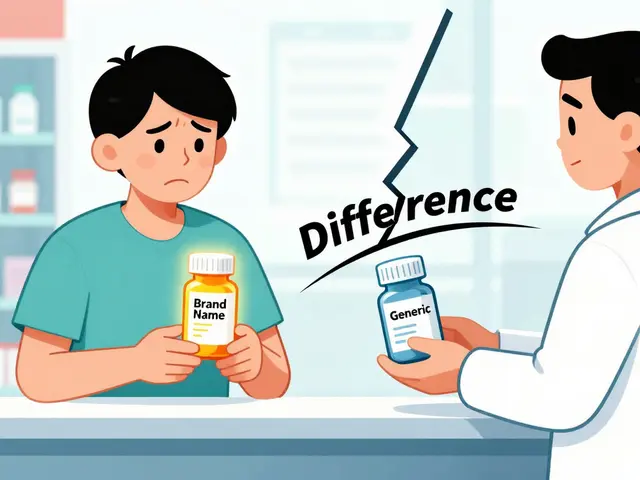
Switching from a brand-name drug to a generic version seems simple - same active ingredient, lower price, right? For most medications, that’s true. But for NTI drugs, even tiny differences can be dangerous. These aren’t ordinary pills. They sit on a razor’s edge between helping you and harming you. A small change in how your body absorbs the drug - something that’s perfectly acceptable for most generics - can push you into toxicity or leave you unprotected. And that’s why doctors, pharmacists, and patients are increasingly wary of automatic switches.
What Makes a Drug an NTI Drug?
NTI stands for Narrow Therapeutic Index. It means the difference between a dose that works and a dose that causes harm is incredibly small. Think of it like walking a tightrope. One step too far, and you fall. The FDA defines NTI drugs as those where small changes in blood concentration can lead to serious side effects or treatment failure. For example, warfarin - a blood thinner - needs to keep your INR (a blood test result) between 2.0 and 3.0. Go below 2.0, and you risk a stroke. Go above 3.0, and you could bleed internally. That’s a window of just 1 point. A 10% shift in how your body processes the drug can push you out of that range.
Other common NTI drugs include phenytoin (for seizures), lithium (for bipolar disorder), digoxin (for heart rhythm), and methadone (for pain or addiction). Phenytoin’s safe range? 10 to 20 mcg/mL. Above 20, you get dizziness, shaky eyes, and confusion. Below 10, seizures return. There’s no room for error.
Why Generic Bioequivalence Rules Don’t Work for NTI Drugs
The FDA requires generic drugs to prove they’re "bioequivalent" to the brand-name version. That means the amount of drug in your bloodstream must fall within 80% to 125% of the brand’s levels. That’s a 45% swing - acceptable for antibiotics or cholesterol meds. But for NTI drugs? That’s a problem.
Imagine two versions of warfarin. One delivers 100% of the expected dose. The other delivers 120%. That’s a 20% increase. For most drugs, no big deal. For warfarin? That could push your INR from 2.8 to 3.4 - enough to trigger bleeding. Or if the generic delivers only 80%? Your INR drops to 1.6. Now you’re at risk of a clot. Neither outcome is acceptable.
Studies show this isn’t theoretical. In the 1980s, patients switched from brand-name phenytoin to generics and started having breakthrough seizures. Others developed toxic levels and ended up in the hospital with neurological symptoms. Similar cases have been reported with carbamazepine, another epilepsy drug. Even today, some patients report unexplained changes in seizure control or INR levels after a pharmacy switch - even when the doctor didn’t change the prescription.

The Conflicting Evidence
Not all research agrees. A 2007 study in a large health plan found no significant difference in INR control when patients switched from Coumadin (brand warfarin) to a generic version. The authors concluded it was safe. But other studies contradict this. Some patients showed clear spikes or drops in INR after switching - even when diet, other medications, and lifestyle stayed exactly the same. Why the difference? Maybe it’s the specific generic manufacturer. Maybe it’s individual metabolism. Maybe it’s how the drug is formulated - the fillers, coatings, or how quickly it dissolves in the gut.
For antiepileptic drugs, the data is mixed. Some bioequivalence studies show generics work fine. But clinicians still see patients who suddenly have more seizures or side effects after a switch. And for opioids like methadone? The stakes are even higher. A slightly more potent generic could cause respiratory depression - slow, shallow breathing - which can be fatal, especially in opioid-naïve patients. Too weak? The patient’s pain returns, or withdrawal kicks in.
Who Decides? The Doctor, Not the Pharmacy
The American Medical Association (AMA) has been clear: the prescribing physician should decide whether a generic can be substituted for an NTI drug. Not the pharmacist. Not the insurance company. The doctor. That’s because only the doctor knows the patient’s history, their sensitivity to the drug, and how tightly their condition is being monitored.
Some states have laws that back this up. North Carolina, for example, has a legal definition of NTI drugs and restricts automatic substitution. Pharmacists can’t swap a brand for a generic without the prescriber’s OK - especially for drugs like lithium or digoxin.
But in many places, automatic substitution still happens. Insurance plans push for generics to save money. Pharmacies fill the cheapest option unless told otherwise. Patients assume it’s safe. And then they get sick.

What Patients Need to Know
If you’re on an NTI drug, here’s what you must do:
- Know your drug. Is it on the NTI list? Warfarin, phenytoin, lithium, digoxin, theophylline, methadone - these are the big ones.
- Ask your doctor if your prescription is brand-only or if a generic is safe for you.
- Never let your pharmacy switch your drug without telling you. If the pill looks different, ask why.
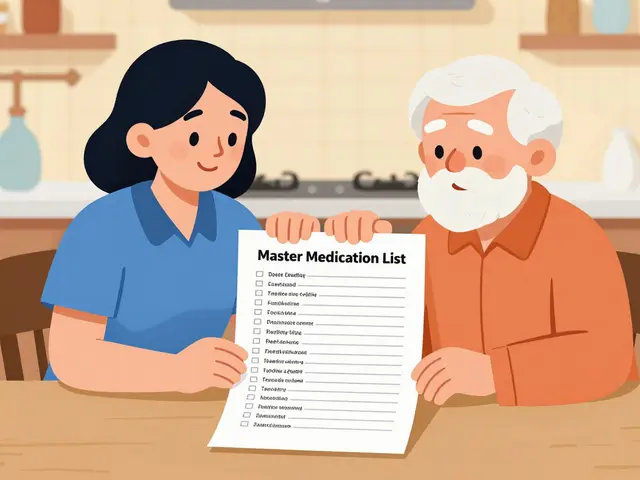
- Keep a medication list. Include the brand name, generic name, dose, and when you started. Share it with every provider.
- For warfarin, get your INR checked more often after any switch - even if you feel fine.
- Don’t assume generics are identical. Even if they’re the same chemical, the way they’re made can change how your body uses them.
Some experts say generic substitution for NTI drugs should be banned outright. Others say it’s fine if you monitor closely. The truth? There’s no one-size-fits-all answer. But the risk is real. And the consequences can be life-threatening.
The Bigger Picture
NTI drugs make up about 15-20% of commonly prescribed medications. That’s millions of people. The pressure to cut costs pushes pharmacies and insurers toward generics. But patient safety can’t be sacrificed for savings. The FDA acknowledges this tension. They’ve said they recommend "tighter bioequivalence limits" for NTI drugs - but they haven’t changed the rules yet.
What’s needed? Better data. More studies. And policies that treat NTI drugs differently. Until then, the safest approach is simple: if you’re on one, don’t switch unless your doctor says so. And if you do switch, monitor closely. Your life might depend on it.
Are all generic drugs unsafe for NTI drugs?
No, not all generics are unsafe. Many patients take generic NTI drugs without issues. But the risk is higher than with other medications. Because the therapeutic window is so narrow, even small differences in absorption can matter. That’s why switching should never be automatic - it needs a doctor’s approval and often closer monitoring.
Can I switch back and forth between brand and generic NTI drugs?
It’s not recommended. Each switch - even back to the original brand - can cause fluctuations in drug levels. For drugs like warfarin or phenytoin, repeated switching increases the chance of toxicity or treatment failure. Stick with one version unless your doctor advises otherwise.
Why doesn’t the FDA require stricter standards for NTI generics?
The FDA says current standards are adequate, but experts disagree. The 80-125% bioequivalence range was designed for most drugs, not NTI ones. Changing it would require new testing protocols, more data, and likely higher costs for manufacturers. There’s no consensus yet on what the new standard should be - which is why the debate continues.
What should I do if I notice side effects after switching to a generic?
Contact your doctor immediately. Don’t wait. For NTI drugs, symptoms like dizziness, confusion, unusual bleeding, seizures, or extreme fatigue could signal a dangerous change in drug levels. Bring your medication list and tell your doctor exactly when you switched. You may need a blood test to check levels and possibly switch back.
Are there any NTI drugs where generic substitution is considered safe?
Some studies suggest certain NTI drugs, like levothyroxine, may be safely switched under close monitoring. But even then, many doctors prefer to keep patients on the same brand. For warfarin, phenytoin, lithium, and digoxin, the risk is high enough that most experts recommend avoiding switches unless absolutely necessary and only with careful oversight.

11 Comments
I switched my mom from brand warfarin to generic last year and her INR went nuts. She ended up in the ER with a bleed. Now we only use the brand. No exceptions. I don't care how much it costs.
She's 72 and I'm not risking her life for a $10 savings.
The notion that bioequivalence standards may be universally applicable across all therapeutic classes is a reductionist fallacy. The human pharmacokinetic system is not a linear variable, but a dynamic, nonlinear, and highly individualized network. When the therapeutic window is measured in micrograms per milliliter, the assumption of interchangeability becomes ethically precarious.
One must question whether cost-efficiency, as a societal imperative, should supersede the principle of non-maleficence in pharmacotherapy.
Big Pharma and the FDA are in cahoots. They let generics in because they get kickbacks from the manufacturers. You think they care if you bleed out? No. They just want you to keep buying pills.
My cousin died after switching to generic lithium. They buried the report.
Google "FDA NTI coverup". You'll find the proof.
Pharmacokinetic variability in NTI drugs is not a myth - it's a documented pharmacodynamic anomaly. The 80–125% BE window was never validated for drugs with CVs <15% in Cmax and AUC.
And don't get me started on excipient interactions - the microcrystalline cellulose in generic phenytoin alters gastric transit time, which skews absorption kinetics in CYP2C9 poor metabolizers.
Insurance companies don't give a shit about CYP isoforms. They care about the bottom line.
That's why we're seeing iatrogenic toxicity spikes.
Why do we even let these foreign generic makers into our country? They don't follow our rules. India and China are dumping cheap pills that could kill people and we let it happen because we're too weak to stand up for ourselves.
My uncle got a seizure after switching to some Indian generic. That's not medicine, that's biological warfare.
Build our own labs. Ban imports. End this.
They don't want you to know this - but the FDA has known since 1998 that NTI generics are dangerous. They buried the studies. The same people who approved Vioxx approved these generics.
And now they're pushing automatic substitution because they're scared of lawsuits from the big pharma lobby.
My doctor told me to never switch - but my pharmacy did it anyway. I had to threaten to sue them to get my brand back.
They don't care about your life. They care about their quarterly earnings.
Oh wow, a 12-page essay on why generics might be slightly different? Groundbreaking. Next you'll tell me water can be wet.
My grandma takes generic digoxin for 10 years. Still alive. Still not in the ER. Maybe your fear is just your anxiety talking.
Also, I saved $200/month. I'm not giving that up for your drama.
This is one of the most thoughtful, well-researched pieces I’ve read on this topic in years. The nuance around therapeutic indices, the acknowledgment of individual variability, and the call for physician-led decision-making reflect exactly the kind of patient-centered care we need more of.
Thank you for highlighting that safety isn’t a cost center - it’s the foundation of medicine.
Let’s be honest - if you can’t afford the brand, you probably shouldn’t be on an NTI drug in the first place. These aren’t aspirin. They require constant monitoring, frequent labs, and a doctor who actually gives a damn.
Most people on generics don’t have that. They’re just getting a script, filling it, and hoping for the best.
That’s not healthcare. That’s roulette with your life.
I used to be a nurse. I’ve seen people die from these switches. Not dramatically. Not in a movie. Slowly. Quietly. In a hospital bed, confused, bleeding internally, wondering why their meds suddenly didn’t work.
And the worst part? No one takes responsibility.
The pharmacist says "it’s FDA approved." The doctor says "I didn’t authorize it." The insurance company says "it’s cheaper."
So who’s to blame?
Everyone. And no one.
That’s the real tragedy.
So what’s the actual data on how many people actually get hurt? Like, real numbers, not anecdotes.
I’m not saying it’s fine - I just want to know if it’s 1 in 1000 or 1 in 10000. Because if it’s rare, maybe the risk is worth the savings.
Also, is there a registry for adverse events from NTI switches? I’d like to look it up.