
Metformin Safety Checker
Assess Your Metformin Safety
This tool helps determine if metformin is safe for you based on your liver function and health status. Always consult your doctor before making treatment decisions.
Metformin is the most commonly prescribed drug for type 2 diabetes worldwide. But for people with liver disease, it comes with a warning: risk of lactic acidosis. This isn’t just a theoretical concern-it’s a real, life-threatening condition that can develop quietly and progress fast. Yet, the truth is more complicated than the old warnings suggest. Many patients with mild liver problems can safely take metformin. Others absolutely cannot. The key isn’t just avoiding the drug-it’s knowing when and how to use it safely.
What Is Lactic Acidosis, and Why Does Metformin Cause It?
Lactic acidosis happens when lactate builds up in your blood faster than your body can clear it. Normal lactate levels are below 2 mmol/L. When they hit 5 mmol/L or higher, and your blood pH drops below 7.35, you’re in danger. Symptoms? Nausea, vomiting, stomach pain, weakness, and rapid breathing. In severe cases, you can go into shock or need a ventilator. Metformin doesn’t create lactate. It interferes with how your body uses it. The drug blocks mitochondrial complex I, a key part of energy production. This forces your cells to rely more on anaerobic metabolism, which produces lactate as a byproduct. Normally, your liver clears that lactate. But if your liver is damaged, it can’t keep up. That’s the problem. The risk is low-only 3 to 10 cases per 100,000 people per year. But when it happens, it’s serious. About 28% to 47% of patients with severe lactic acidosis die. That’s why doctors have been cautious.Why Was Metformin Banned in Liver Disease?
Back in the 1990s, metformin was linked to lactic acidosis because its older cousin, phenformin, had killed people. Phenformin was pulled from the market in 1977 after causing hundreds of deaths. Metformin was seen as safer, but regulators didn’t want to take chances. So in 1998, Medsafe and other agencies declared metformin contraindicated in all chronic liver disease. That rule stuck for decades. But here’s the problem: it wasn’t based on solid evidence. Most of the warnings came from case reports-single patients with multiple risk factors: alcohol abuse, kidney failure, infection, or overdose. Not from studies of people with stable fatty liver or compensated cirrhosis. Fast forward to 2024. A major case report in Cureus reviewed decades of data and found almost no evidence that metformin causes lactic acidosis in patients with non-alcoholic fatty liver disease (NAFLD). In fact, some studies suggest metformin might actually help NAFLD by reducing liver fat and inflammation.Who Should NOT Take Metformin?
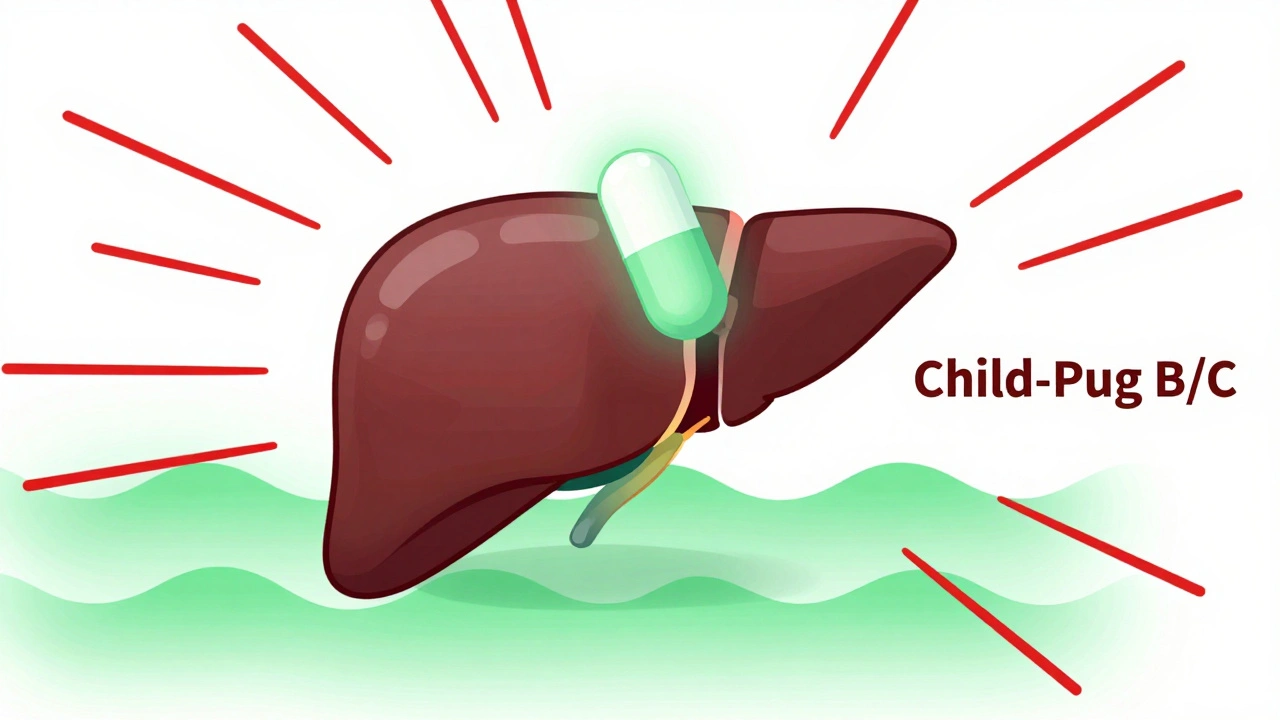
There are clear red flags. If you have any of these, avoid metformin:- Decompensated cirrhosis (Child-Pugh Class B or C)
- Acute liver failure
- Severe alcohol-related liver damage with active drinking
- Shock, sepsis, or acute heart failure
- Severe kidney impairment (eGFR below 30 mL/min/1.73m²)
Who CAN Take Metformin Safely?
Here’s where things change. If you have:- Non-alcoholic fatty liver disease (NAFLD) without fibrosis
- Compensated cirrhosis (Child-Pugh Class A)
- Mild elevation in liver enzymes with stable function
How to Monitor for Lactic Acidosis
If you’re on metformin and have liver disease, you need a simple monitoring plan:- Check liver enzymes (ALT, AST) every 3 months
- Measure serum lactate if you feel unusually tired, nauseous, or have abdominal pain
- Keep track of kidney function (eGFR) monthly if you’re over 65 or have other risk factors
- Stop metformin if you’re hospitalized, dehydrated, or having surgery
What to Do If Lactic Acidosis Happens
If you suspect lactic acidosis-sudden nausea, vomiting, confusion, fast breathing, or low blood pressure-get to a hospital immediately. Don’t wait. Treatment is straightforward but urgent:- Stop metformin right away
- Give IV fluids to restore blood pressure
- If pH is below 7.20, give sodium bicarbonate
- If pH is below 7.0 or lactate is over 20 mmol/L, start hemodialysis
Metformin vs. Other Diabetes Drugs in Liver Disease
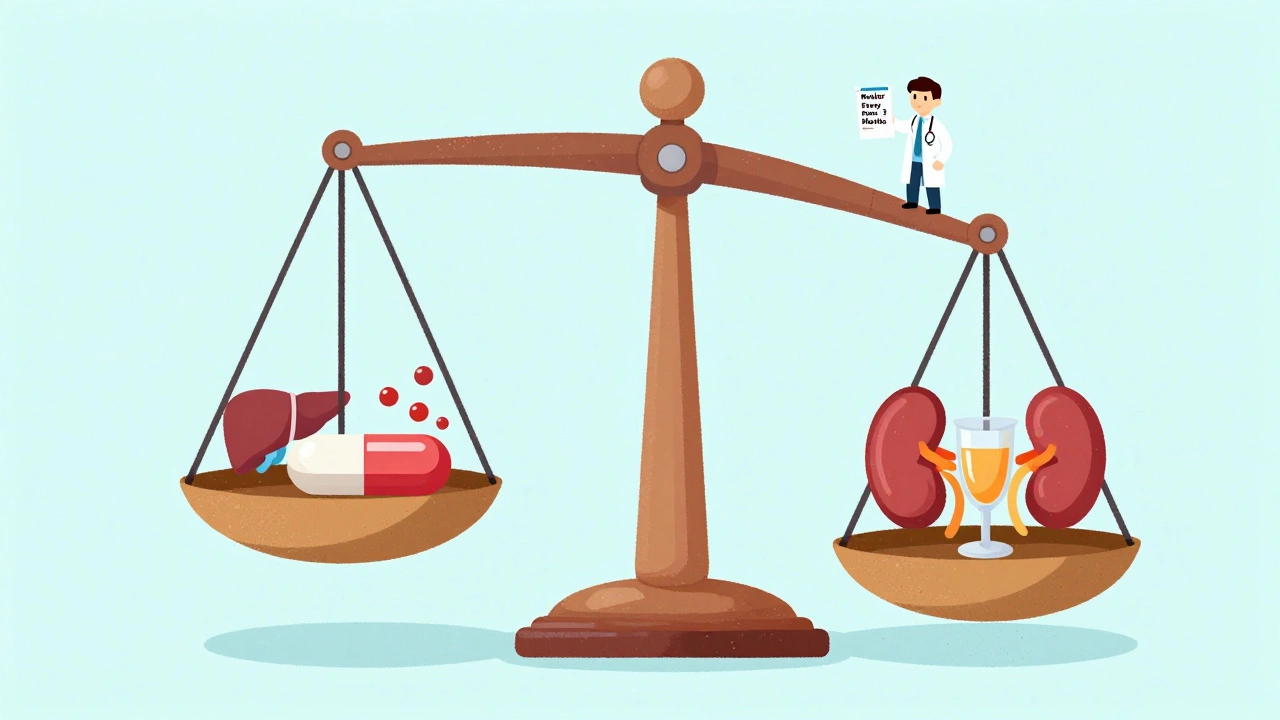
You might wonder: if metformin is risky, what’s better?- SGLT2 inhibitors (like empagliflozin): Safe in mild liver disease. Reduce heart and kidney risk. May worsen dehydration.
- GLP-1 agonists (like semaglutide): Safe in compensated cirrhosis. Help with weight loss and liver fat. Can cause nausea.
- Insulin: Always safe. But causes weight gain and hypoglycemia.
Real-World Use: What Doctors Are Actually Doing
In practice, doctors are changing their minds. From 2015 to 2022, metformin use in NAFLD patients rose by 22%, according to FDA adverse event data. Why? Because the data says it’s safe. A 2023 study in Liver International followed 1,200 patients with NAFLD and type 2 diabetes on metformin for five years. Only two developed lactic acidosis-and both had other major problems: alcohol relapse and kidney failure. The rest? Stable blood sugar, better liver enzymes, no complications. The fear of lactic acidosis is real. But the fear of not treating diabetes is worse. Uncontrolled diabetes accelerates liver damage. It increases the risk of cirrhosis, liver cancer, and death.Bottom Line: Safe Use Checklist
Here’s what you need to know to use metformin safely with liver disease:- ✅ Do use metformin if you have NAFLD or Child-Pugh Class A cirrhosis
- ❌ Do NOT use if you have Child-Pugh Class B or C cirrhosis
- ✅ Monitor liver enzymes every 3 months
- ✅ Stop metformin before surgery or contrast scans
- ✅ Restart only after you’re eating, hydrated, and stable
- ✅ Check lactate if you feel unwell
- ✅ Avoid alcohol completely
- ✅ Don’t take metformin if your eGFR is below 30
What’s Next?
The MET-REVERSE trial results are due in late 2025. If they confirm what early data suggests-that metformin is safe and beneficial in mild liver disease-we may see a major shift in global guidelines. For now, the evidence is already strong enough to support cautious use in stable patients. Don’t let outdated warnings keep you from a drug that could protect your liver and your life. Talk to your doctor. Get your liver function checked. Ask about lactate levels. Make an informed choice-not a fearful one.Can I take metformin if I have fatty liver disease?
Yes, if your fatty liver disease is mild or moderate and your liver function is stable (Child-Pugh Class A), metformin is not only safe-it may help reduce liver fat and inflammation. Many doctors now consider it a first-line option for type 2 diabetes in patients with NAFLD. Always get liver enzymes and kidney function checked before starting and every 3 months after.
Is lactic acidosis common with metformin?
No, it’s very rare. Only 3 to 10 cases occur per 100,000 people per year. Most cases happen in patients with multiple risk factors-like kidney failure, severe infection, or advanced liver disease. In people with stable, mild liver disease, the risk is even lower than in the general diabetic population.
Why was metformin banned in liver disease if the risk is low?
It was banned in the 1990s because of fear, not evidence. The older drug phenformin caused many deaths from lactic acidosis, so regulators assumed metformin was the same. But metformin is cleared by the kidneys, not the liver, making it much safer. Decades of research now show the original warning was too broad. Guidelines are finally catching up.
What should I do if I feel sick while taking metformin?
If you have nausea, vomiting, stomach pain, weakness, or rapid breathing, stop metformin and seek medical help immediately. These can be early signs of lactic acidosis. Don’t wait. Get your blood tested for lactate and pH. If you’re dehydrated, have an infection, or are about to have surgery, stop metformin before and only restart when you’re fully recovered.
Are there safer alternatives to metformin for people with liver disease?
Yes. GLP-1 receptor agonists like semaglutide and SGLT2 inhibitors like empagliflozin are safe in most liver disease patients and don’t carry lactic acidosis risk. But they don’t offer the same liver-protective benefits as metformin. Insulin is always safe but can cause weight gain. The best choice depends on your liver function, weight, and other health issues. Talk to your doctor about your options.
Can I take metformin if I drink alcohol occasionally?
No. Alcohol impairs your liver’s ability to clear lactate and increases metformin’s risk of causing lactic acidosis-even in small amounts. If you have liver disease, avoid alcohol completely. If you’re trying to quit, talk to your doctor. There are safer diabetes medications available.
How often should I get my liver checked if I’m on metformin?
Every 3 months if you have any liver disease. Check ALT, AST, bilirubin, and albumin. If your levels are stable and you feel fine, you may extend it to every 6 months. But if your liver enzymes rise sharply or you develop symptoms, stop metformin and get further testing. Never ignore changes in how you feel.

14 Comments
Metformin in NAFLD isn't just safe-it's a game-changer. The data's been piling up for years, and we're still clinging to 1998 guidelines like they're gospel. Liver enzymes up? Monitor. eGFR below 30? Hold it. But stable Child-Pugh A? No reason to deny someone a drug that reduces hepatic fat and improves insulin sensitivity. We're over-treating risk and under-treating disease.
Real talk: I've had three patients with compensated cirrhosis on metformin for 5+ years. No lactic acidosis. Better HbA1c. Lower ALT. One even lost 12kg. The fear is outdated. The evidence isn't.
Stop using phenformin-era panic to justify clinical inertia.
Interesting. But let’s not forget that correlation ≠ causation. Just because metformin is associated with improved liver enzymes doesn’t mean it’s *responsible*. Could be lifestyle. Could be weight loss. Could be placebo effect masked by statistical noise.
Also, 0.02% incidence? That’s statistically insignificant in a population of 10,000. We’re talking about a drug that’s been on the market for 60+ years, and we still don’t have a definitive RCT proving safety in *all* compensated cirrhosis.
Just saying… maybe we’re rushing to rewrite guidelines before the data is mature. 🤔
OMG I just read this and cried. I have NAFLD and type 2 and my doctor told me to stop metformin because of my ‘liver issues’-but I’ve been feeling SO much better since I started it. My energy? Sky-high. My cravings? Gone. My A1c? Down to 5.8.
Why did no one tell me this was okay?! I felt so guilty taking it. Like I was playing Russian roulette with my liver. This article is a lifeline. Thank you. 🙏❤️
As a hepatology nurse practitioner, I’ve seen the shift firsthand. Five years ago, I’d automatically discontinue metformin for any ALT >40. Now? I check Child-Pugh, assess albumin, evaluate volume status-and if the patient is stable, I say ‘go ahead.’
The real danger isn’t metformin. It’s the myth that liver disease = automatic contraindication. We’ve been denying patients effective, affordable, liver-protective therapy based on fear, not science.
And yes-I’ve seen lactic acidosis. Twice. Both in patients with sepsis, AKI, and alcohol abuse. Not one had isolated NAFLD. The data is clear. We need to update our protocols.
Metformin is safe for mild liver disease stop being scared of a drug that saves lives and money the liver clears lactate not metformin the kidneys do that so if your kidneys are fine and your liver is compensated you are fine stop overmedicating people with insulin because you are scared of side effects that dont exist in real life
I’m so tired of people acting like this is some revolutionary breakthrough. I’ve been on metformin for 12 years. My liver enzymes have been elevated since I was 28. No one ever told me to stop. No one ever said ‘you’re at risk.’
Now suddenly it’s ‘safe’? What about all the people who were told to stop and then got worse? What about the weight gain? The insulin dependence? The depression from being told ‘you can’t take this anymore’?
This isn’t new information. It’s just the medical system finally catching up to what patients have been doing for years.
This is one of the clearest, most balanced summaries I’ve seen on metformin and liver disease. Too many clinicians still treat all liver dysfunction as a binary: safe or banned.
The nuance here-Child-Pugh A vs. B/C, stable vs. decompensated-is exactly what we need. And the monitoring protocol? Spot on. Three-month LFTs, lactate checks with symptoms, holding before contrast or surgery.
Also, the point about SGLT2i and GLP-1 agonists being safe but lacking liver protection? Critical. We’re replacing a drug that helps the liver with ones that just don’t hurt it. That’s not progress. That’s compromise.
USA doctors are finally waking up. Took long enough. In Europe they’ve been prescribing metformin to fatty liver patients for years. Meanwhile, here we’re still stuck in the 90s with blanket bans.
And don’t get me started on the ‘alcohol is always bad’ rule. I know guys who have one beer a week and their liver is fine. But nope-zero tolerance. It’s not medicine, it’s moral panic.
Also, if you’re on metformin and you’re drinking? You’re dumb. Not the drug’s fault. 😅
Oh wow. So now metformin is a liver superhero? Next you’ll tell me aspirin cures cancer.
Let’s be real. You’re cherry-picking trials. The MET-REVERSE trial isn’t even published. The Cureus case report? One paper. The VA study? Small sample. And you ignore the fact that most lactic acidosis cases are *silent* until it’s too late.
Also, why is everyone so eager to blame ‘outdated guidelines’? Maybe because the guidelines were right? Maybe because the stakes are too high to gamble?
Just saying. I’d rather be cautious than bury someone because I trusted a blog post.
Think of your liver like a filter. Metformin doesn’t make poison. It just makes the filter work harder. If the filter is broken, it backs up. But if it’s just dusty? Clean it. Keep using it.
Doctors used to say ‘don’t drive if you have a cough.’ Now we know: if you’re not feverish, go ahead.
Same here. Don’t stop metformin because your liver is a little tired. Stop it when it’s on life support.
Let’s be honest-this is just pharmaceutical lobbying disguised as science. Metformin is cheap. SGLT2 inhibitors? $600/month. GLP-1s? $1,000. Who benefits if we keep prescribing metformin?
And why is everyone suddenly so confident? Because one study said ‘maybe’? Where’s the long-term mortality data? Where’s the RCT with hard endpoints?
This isn’t medicine. It’s wishful thinking wrapped in a clinical guideline.
And yes-I’ve seen patients die from lactic acidosis. It’s not ‘rare.’ It’s catastrophic. And once it happens, you can’t undo it.
My grandma’s on metformin. Has NAFLD. Drinks tea. Walks 3 miles a day. No alcohol. Her ALT was 85. Now it’s 42. She says she feels like she’s 40 again.
Meanwhile, her cousin? Stopped metformin, started insulin, gained 30 pounds, and now needs a knee replacement.
So yeah. Maybe the ‘safe’ drug isn’t the one that makes you feel worse.
Also-why is everyone so scared of a 70-year-old pill? We’re not talking about gene therapy here. 😅
Look I’ve been in the medical field for 18 years and I’ve seen this movie before. Remember when we thought statins were bad for the liver? Then we found out they’re actually hepatoprotective. Same thing with metformin. The liver doesn’t metabolize it, the kidneys do. So if your kidneys are good, your liver can handle it even if it’s fatty.
And here’s the kicker: metformin reduces hepatic gluconeogenesis which reduces fat accumulation in the liver. So it’s not just safe-it’s therapeutic. You’re not just avoiding harm-you’re reversing damage.
Also, the 2023 Liver International study? 1200 patients. Five years. Only two lactic acidosis cases. Both had alcohol relapse AND eGFR under 25. So it’s not metformin. It’s the combo of three risk factors. That’s not a drug problem. That’s a patient management problem.
And yes-I tell all my NAFLD patients to keep taking it. Unless they’re drinking, in shock, or have AKI. Then we pause. But we don’t quit. We reassess. And we restart when stable.
Also, don’t forget: uncontrolled diabetes kills liver cells faster than metformin ever could. So if you’re scared of metformin, you’re more scared of diabetes than you realize. 😅
For anyone scared about metformin: talk to your doctor. Get your labs. Check your eGFR. Check your Child-Pugh. If you’re stable? You’re probably fine.
And if you’re not sure? Ask for a lactate test. It’s cheap. Takes 10 minutes.
This isn’t about being brave. It’s about being informed. We’ve been scared for too long. The science is here. Now it’s time to use it.
And if you’re still nervous? Try SGLT2i or GLP-1. But don’t forget-you’re losing the liver protection. That matters.
You got this. 💪